
Featured High-Efficiency HEPA & Specialty Filters
Precision-engineered replacement elements and industrial HEPA modules direct from our certified cleanroom manufacturing facilities.





Global Air Filtration Landscape: Market Drivers & Regulatory Mandates
Understanding the transition from traditional air filtration to high-efficiency sub-micron particle arrestance across commercial, medical, and high-tech manufacturing ecosystems.
The global demand for high-efficiency particulate air (HEPA) filters has experienced a paradigm shift driven by stringent industrial cleanroom metrics, heightened occupational safety regulations, and growing commercial awareness of indoor air quality (IAQ). Modern industrial infrastructure—ranging from sub-nanometer semiconductor fabrication plants to biopharmaceutical containment units—requires filtration efficiencies that exceed standard mechanical arrestance. The benchmark standard, defined historically by EN 1822 and modernized under ISO 29463, dictates that a true HEPA filter must trap at least 99.97% of airborne particles sized 0.3 micrometers (μm), known as the Most Penetrating Particle Size (MPPS).
In the commercial market, specifying high-performance HEPA solutions requires balancing filtration efficiency against aerodynamic drag (initial pressure drop). High resistance to airflow forces HVAC blowers to consume exponentially higher kilowatt-hours, driving up Total Cost of Ownership (TCO). Consequently, the global market is shifting away from traditional coarse fiberglass media toward engineered ePTFE membranes and electrostatic meltblown synthetic composites that optimize the trade-off between particle capture velocity and pressure loss.
E-E-A-T Technical Note: MPPS represents the exact particle size at which mechanical filtration mechanisms (impaction, interception, and diffusion) reach their lowest combined efficiency point. Filters certified under ISO 29463-5 are rigorously scanned using condensation particle counters (CPC) or laser particle spectrometers to verify zero local penetration across the entire pleat pack.
| Filter Classification | Global Standard (EN 1822 / ISO 29463) | Overall Efficiency (@ MPPS) | Local Penetration Limit | Primary Application Sectors |
|---|---|---|---|---|
| E11 (EPA) | ISO 15 E / ISO 20 E | ≥ 95% | N/A | Commercial HVAC, High-End Residential, Pre-filtration |
| H13 (HEPA) | ISO 35 H / ISO 40 H | ≥ 99.97% / ≥ 99.95% | 0.25% | Medical Devices, Consumer Purifiers, Pharma Cleanrooms |
| H14 (HEPA) | ISO 45 H / ISO 50 H | ≥ 99.995% | 0.025% | Semi-conductor SMT Lines, Sterile Injectable Filling Lines |
| U15 (ULPA) | ISO 55 U / ISO 60 U | ≥ 99.9995% | 0.005% | Sub-micron Microelectronics, Nanotech Labs, Biosafety Level 4 |
Material Science & Sub-Micron Separation Physics
A deep dive into fibrous media matrix physics, electrostatic charge enhancement, and gas-phase adsorption laminates.
Tri-Layer Composite Media Structure
Engineered by laminating a spunbond protective scrim with electrostatically charged meltblown nonwovens. This multi-density architecture guarantees high dust holding capacity (DHC) while preventing surface blinding under heavy PM2.5 loading.
ePTFE Nanofiber Technology
For high-temperature and chemically aggressive environments, expanded Polytetrafluoroethylene (ePTFE) provides a uniform pore matrix. Features sub-micron node-to-fibril structures delivering 99.99% efficiency at ultra-low static pressure loss.
Dual-Phase Odor & VOC Removal
By integrating virgin coconut-shell activated carbon pellets into wire-mesh backed substrates, our composite filters achieve concurrent mechanical PM capture and gas-phase adsorption of formaldehydes, benzene, and sulfur compounds.
Particle Capture Mechanisms Explained
The collection of particulate matter within high-efficiency media relies on four fundamental physical mechanisms acting across varying velocity vectors and mass scales:
- Impaction: Heavy particles (>1.0μm) possess sufficient momentum to break away from air streamlines and collide directly with filter fibers.
- Interception: Medium-sized particles (0.3μm - 1.0μm) follow air streamlines but make physical contact with fibers as the streamline passes within one particle radius of the fiber surface.
- Diffusion: Sub-micron particles (<0.1μm) are subject to Brownian motion, oscillating randomly in air currents. This increased path length dramatically raises the probability of fiber contact.
- Electrostatic Attraction: Electret-treated fibers induce dipole moments in neutral passing particles, pulling them onto fiber walls without reducing airflow aperture sizes.
Tailored Filtration Solutions Across Mission-Critical Environments
From microelectronics assembly lines to airborne biosafety isolation, discover localized engineering deployment models.
Semiconductor & Electronics Cleanrooms
In ISO Class 3 to Class 5 cleanrooms, yield rates depend on zero particulate contamination. Our mini-pleat liquid tank gel seal HEPA and ULPA filters eliminate frame edge bypass leakage while maintaining laminar flow across ceiling grids (FFU units).
Pharmaceutical Biosafety & BIBO Systems
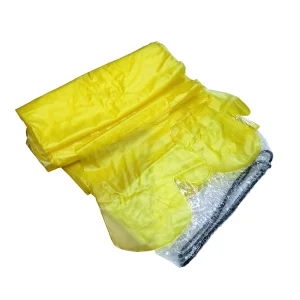
Hazardous containment facilities demand risk-free filter maintenance. Our specialized PVC Bag-In/Bag-Out (BIBO) replacement bags allow technicians to swap out infected HEPA elements without exposing maintenance staff or the environment to toxic bio-agents.
Commercial HVAC & Smart Urban Buildings
Modern architectural HVAC designs mandate energy-efficient MERV 13 to H13 conversion. Our low-pressure-drop pleated filters fit directly into existing standard AHU frames, drastically lowering annual operating energy bills.
Data Centers & High-Density Server Rooms
Microscopic dust accumulation causes thermal hot-spots and static damage. Custom cylindrical and pocket filter units provide heavy dust loading under continuous high-CFM airflow, prolonging IT infrastructure lifespans.
High-Speed Rail Transit & Mobile Units
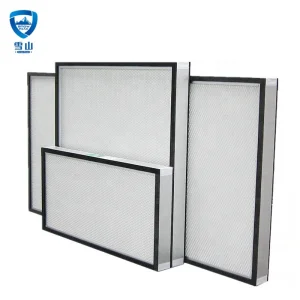
Cabin environments experience severe vibration and dynamic pressure pulses. Heavy-duty aluminum and stainless steel framed HEPA filters maintain frame rigidity and seal integrity under harsh transit cycles.
Consumer OEM & Aftermarket Refills
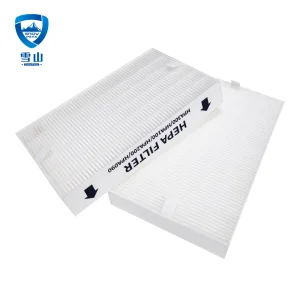
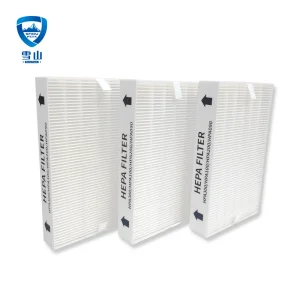
Customized aftermarket replacement filter sets designed to exact OEM dimensions for leading retail air purifier brands (including Honeywell, Coway, Levoit, and Blueair). Precision fit guarantees zero air bypass.
Shenzhen Manufacturing Synergy & Global Supply Chain Resilience
Leveraging the world’s leading hardware eco-system to deliver high-capacity output, rapid OEM tooling turnaround, and uncompromised cost efficiency.
Located in the heart of China’s advanced technology cluster in Shenzhen, our manufacturing facilities embody modern industrial efficiency. The proximity to raw material suppliers—ranging from specialized non-woven polymer extruders to stainless steel frame fabricators—reduces component lead-times to a fraction of traditional global benchmarks. This supply chain density translates into significant strategic advantages for international distributors, B2B procurement partners, and OEM brand owners.
Automated Pleating & Dispensing
Computerized high-speed pleating machinery maintains strict pleat pitch uniformity, preventing pleat collapse under high dynamic air pressure.
Four-Stage Integrated Quality System
Every production run executes strict IQC (Incoming), IPQC (In-Process), FQC (Final Quality), and OQC (Outgoing) inspections backed by DOP testing.
Rapid Prototyping & Tooling
Custom mold creation and prototype sampling completed in 3 to 5 business days, dramatically shortening time-to-market for innovative purifiers.
Our operational model bridges the gap between scalable high-volume output and flexible low-MOQ custom manufacturing. By keeping core polymer processing, glue-dispensing robotics, and frame assembly under one cleanroom-certified roof, we guarantee rigid batch-to-batch consistency and complete component traceability.
Technology Roadmap: The Next Era of Smart Air Filtration
Exploring next-generation developments in smart dynamic sensing, bio-based sustainable media, and ultra-low pressure drop technologies.
1. IoT & RFID Sensor Integration
Embedded RFID chips and differential pressure sensors communicate real-time loading metrics directly to building management systems (BMS), moving maintenance from fixed calendar dates to predictive condition-based schedules.
2. Bio-Based Sustainable Polymers
R&D efforts are focusing on fully biodegradable PLA (Polylactic Acid) spunbond support scrims and recyclable aluminum frames, reducing the environmental footprint of discarded spent filters.
3. Cold Catalyst Functional Layers
Advancing beyond passive carbon adsorption, cold catalysts break down gaseous pollutants like VOCs and formaldehyde at ambient temperatures into harmless water and carbon dioxide without chemical saturation.
4. Ultra-Low Pressure Drop Media
Next-gen electrospun nanofibers achieve targeted particle capture using up to 40% less fiber mass per square meter, drastically reducing blower energy requirements across commercial HVAC operations.
International Compliance, Quality Certifications & Global Logistics
Seamless international trade support, custom white-label branding, and rigorous regulatory compliance for global markets.
Operating in over 50 countries requires strict adherence to regional environmental and fire safety mandates. Our HEPA air cleaner elements are manufactured under rigorous ISO 9001 quality management standards and comply with international directives, including RoHS (Restriction of Hazardous Substances) and REACH (Registration, Evaluation, Authorisation and Restriction of Chemicals).
UL 586 & UL 900 Flame Resistance
Frame and media options crafted to self-extinguish under elevated temperature conditions, satisfying commercial building fire codes across North America and Europe.
Private-Label & Packaging Customization
From custom barcoding, retail color boxes, and anti-static polybag seals to laser-etched frame logos—we deliver ready-for-shelf inventory.
FOB, CIF & DDP Logistics Flexibility
Integrated shipping support from Shenzhen and Hong Kong ports with full export document clearance, insured sea freight, and air courier dispatch.
Specialized Replacement & Industrial Filter Media
Browse our extended product portfolio engineered for commercial purifiers, air handling units, and industrial dust collection systems.



Frequently Asked Technical & Sourcing Questions
Clear answers to technical parameters, quality verification procedures, and custom OEM ordering process.