
Featured OEM Filter Assemblies & Material Solutions
Explore our top-tier manufactured replacement air filters, custom HEPA units, and composite filter media rolls supplied to global OEMs, commercial facility management, and distributors.


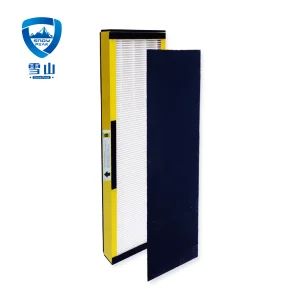



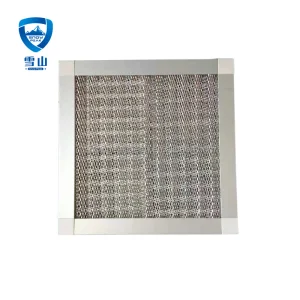

Global Landscape: Industrial Demand for Pollen & Bioaerosol Filter Media
As seasonal airborne allergen counts escalate globally due to shifting climate patterns and prolonged pollination cycles, the international market for high-efficiency pollen filter material has transitioned from a seasonal consumer commodity to a critical industrial and commercial HVAC requirement.
Allergen Micro-Physics
Pollen grains typically range from 10 to 100 micrometers (µm) in size, but sub-micron pollen fragments (0.5 to 2.5 µm) generated during thunderstorms or high humidity present significant respiratory risks. High-performance filter media must balance high coarse-particle capacity with fine sub-micron arrestance.
Commercial Air Quality Mandates
Modern building codes—including ASHRAE Standard 62.1 and European EN 16798 guidelines—now explicitly mandate MERV 13 to MERV 16 or ISO ePM1 / ePM2.5 rated air filtration media in public buildings, schools, and medical facilities to mitigate allergic rhinitis and occupational asthma.
Automotive Cabin Evolution
Tier-1 automotive suppliers are rapidly upgrading cabin air filtration specs. Standard single-layer dust media are being replaced by multi-tier electrostatically charged synthetic laminates and carbon-infused media capable of trapping 99% of ragweed, birch, and grass pollens while neutralizing harmful VOCs.
Engineering & Material Classification: Pollen Filter Media Synthesis
Selecting the appropriate filter substrate requires a deep understanding of polymer engineering, fiber diameter distribution, and surface density (GSM). As a premier manufacturer, we engineer four primary material configurations tailored to distinct industrial applications.
| Material Category | Fiber Composition & Structure | Efficiency Class (ISO 16890 / EN779) | Pressure Drop (@ 0.5 m/s) | Primary Commercial Use |
|---|---|---|---|---|
| Electrostatic Meltblown Non-Woven | Polypropylene (PP) with Corona electret charge injection | ePM1 55% - 85% / F7 - F9 | 15 - 35 Pa | Residential Air Purifiers, HVAC Secondary Stage, Automotive Cabin Filters |
| Thermobonded Synthetic Polyester (PET) | Coarse PET fibers with progressive density matrix | ePM10 70% / G3 - G4 | 10 - 22 Pa | Building AHU Pre-filtration, Outdoor Intake Vents, Window Pollen Screens |
| Carbon-Sandwich Composite Media | Meltblown + Granular Activated Carbon + Non-woven scrim | ePM2.5 65% + Odor Removal | 30 - 60 Pa | Dual-Action Cabin Filters, Urban Office Ventilation, Smog & Allergen Modules |
| PTFE/ePTFE Nanofiber Membrane Laminate | Expanded PTFE micro-porous membrane on spunbond grid | H13 - U15 (EN 1822) | 70 - 120 Pa | Medical Cleanrooms, Pharmaceutical Packaging, Semiconductor HVAC Intake |
Standard mechanical filtration relies strictly on impaction and interception, which requires dense fiber networks that dramatically increase system pressure drop. Our proprietary Corona Electret Charging Technology imparts a permanent electrostatic field within the polypropylene microfibers. This allows the filter media to pull polarized pollen allergens and micro-particles out of the air stream with an ultra-open web structure, lowering HVAC energy consumption by up to 35%.
China Manufacturing Efficiency & Supply Chain Dominance
Leveraging advanced polymer processing clusters in South China, our manufacturing infrastructure offers global buyers unmatched advantages in production scaling, cost containment, and precision quality assurance.
Fully Automated Meltblown Lines
Our facility operates state-of-the-art meltblown extruders equipped with online laser gauge control. This ensures uniform basis weight (GSM) tolerance within ±2%, preventing structural weak spots where pollen bypass could occur.
Integrated Four-Stage Quality Protocol
Every batch undergoes rigorous quality control: IQC (raw polymer chip purity), IPQC (real-time pressure drop & efficiency scanning), FQC (pleat integrity & burst strength), and OQC (microbial & moisture-proof export packaging testing).
Rapid Prototype & Custom Roll Slicing
We offer flexible conversion services including custom roll width slicing (100mm to 3200mm), continuous ultrasonic lamination, custom pleat-depth setting, and private-label packaging with lead times under 14 days for standard grades.
Localized Application Scenarios: Industry-Specific Integration
Pollen filter materials are deployed across vastly different environments. Customizing media formulations to target specific airborne contaminants ensures optimal system performance and longevity.
1. Residential HVAC & Portable Air Purifiers
In high-density residential developments and smart homes, our composite mini-pleated filter packs integrate seamlessly into OEM air purifiers (compatible with brands like Blueair, Honeywell, and Levoit). By combining high-dust-holding synthetic pre-layers with True H13 HEPA cores, these units achieve a CADR (Clean Air Delivery Rate) optimized for seasonal pollen removal without excessive motor noise.
2. Commercial Facilities & Educational Institutions
Schools, universities, and commercial office towers require large-scale HVAC pocket filters (G4 to F9 grades). Using our pocket filter roll media, filter converters fabricate rigid-frame pocket filters that arrest bioaerosols and mold spores at the fresh air intake, preserving indoor air quality (IAQ) and protecting downstream cooling coils from biological fouling.
3. Agricultural Greenhouses & Precision Farming
Modern commercial agriculture utilizes forced-air greenhouse ventilation to protect high-value crops from cross-pollination by wild plant varieties and airborne crop pathogens. Our hydrophobic synthetic polyester filter mesh provides high airflow rates while blocking unwanted pollen vectors, maintaining genetic purity in seed production environments.
4. High-Speed Rail & Public Transportation
Transit systems move millions of passengers daily through diverse ecological zones. Compact, vibration-resistant pleated filters engineered from flame-retardant (DIN 53438 / UL 900 certified) synthetic pollen media preserve passenger cabin comfort while enduring aggressive airflow fluctuations and moisture exposure.
Global B2B Procurement Guide: Key Technical Metrics to Evaluate
For procurement officers and quality managers sourcing raw filter media or OEM elements, evaluating supplier performance extends beyond initial unit price. The following matrix outlines essential engineering benchmarks for sourcing high-reliability pollen media.
1. Dust Holding Capacity (DHC)
Pollen particles can rapidly blind uniform media surfaces. Look for gradient density structures where larger fibers capture heavy pollen grains on the air-entering side, allowing fine microfibers on the air-leaving side to capture sub-micron soot and fine dust without exponential pressure spikes.
2. Energy Efficiency & Resistance Delta
Lower initial resistance directly translates to lower operational cost for commercial HVAC end-users. Evaluating media under ISO 16890 discharge testing (e.g., IPA vapor treatment) guarantees that the media retains mechanical arrestance even if electrostatic charges degrade over time.
3. Antimicrobial & Mold Resistance
Trapped pollen grains carry moisture and organic nutrients, making standard untreated filters susceptible to bacterial proliferation and fungal decay. High-grade pollen media should feature non-leaching antimicrobial treatments compliant with REACH and EPA certification standards.
Industry Trends: Next-Generation Air Filtration Technologies
The air filtration sector is undergoing rapid technological convergence driven by sustainability goals, IoT integration, and material science breakthroughs.
Bio-Based & Recyclable Polymers
Transitioning from traditional petroleum-based polypropylene to polylactic acid (PLA) and biodegradable synthetic substrates. Our R&D team is actively commercializing fully recyclable mono-material filter packs (PET media + PET frame) that simplify industrial waste processing.
Smart Sensor Compatible Media
Developing ultra-consistent impedance media optimized for integration with laser particulate sensors and differential pressure monitoring in IoT-enabled commercial air handling units, enabling predictive maintenance replacing fixed schedule filter changes.
Hybrid Catalysts for Deodorization
Integrating cold catalyst coatings into pollen filter media layers. These nano-coatings actively break down bio-odors, formaldehyde, and ozone at ambient room temperatures without requiring ultraviolet (UV) excitation.
Specialized Industrial & Roll Media Catalog
Complete your supply chain requirements with our full line of synthetic pre-filter rolls, cleanroom HEPA modules, and washable mesh filters.







Frequently Asked Questions (FAQ) for OEM Buyers & Engineers
Find authoritative answers regarding material performance, custom manufacturing capabilities, testing certifications, and international shipping logistics.
What particle size range does your pollen filter material target?
Our specialized pollen filter media is engineered to capture particles ranging from 0.3 µm up to 100 µm. While raw plant pollen generally ranges between 10 µm and 100 µm, our electret-charged meltblown layers effectively capture sub-micron pollen fragments (0.3–2.5 µm) generated during high humidity conditions, achieving over 99.9% filtration efficiency depending on the selected grade (MERV 11 to True H13 HEPA).
How does your factory prevent electrostatic charge decay in meltblown media?
We utilize advanced masterbatch electret formulas (incorporating organic electret additives) combined with high-voltage corona charging equipment. This process locks electrical dipoles deep within the polypropylene crystalline matrix, ensuring long-term shelf storage stability and resistance to discharge under normal temperature and storage conditions in accordance with ISO 16890 protocols.
Can you supply filter media in custom roll widths and slitting dimensions?
Yes. We provide comprehensive roll conversion services. We can slice non-woven, meltblown, and composite filter media rolls to your exact required width—from narrow 100 mm strips up to master rolls of 3,200 mm. Core inner diameters (e.g., 3 inches / 76 mm) and roll outer diameters can be customized for your automated pleating machinery.
Are your replacement air filters manufactured by the original purifier brands?
No. Shenzhen Snow Peak Clean Technology Co., Ltd. is an independent OEM/ODM manufacturer specializing in high-performance aftermarket replacement filters and raw media. Original brand names, trademarks, and model numbers (such as Honeywell, Blueair, Coway, or Guardian) are cited strictly to demonstrate compatibility for importers and distributors.
What certifications do your pollen and HVAC filter products hold?
Our manufacturing processes and filter media comply with major international testing frameworks. Products are tested according to ISO 16890, EN 779, EN 1822 (for HEPA grades), and ASHRAE 52.2 standards. Additionally, our materials meet RoHS, REACH environmental compliance, and UL 900 flame retardancy requirements upon request.
What is the typical Minimum Order Quantity (MOQ) and lead time for export orders?
For standard roll media grades, our MOQ starts as low as 500 kg or 1,000 square meters. For custom OEM pleated replacement filters, trial orders starting at 500 units are welcomed. Production lead time is typically 10 to 18 business days after sample approval and deposit confirmation, shipped directly from Shenzhen or Yantian sea ports.