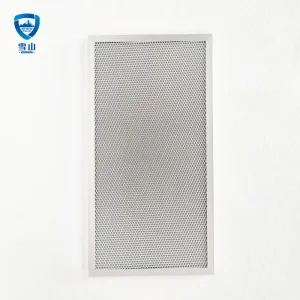
Featured OEM/ODM Air Filtration Products (Part I)
Explore our engineered composite air filters, activated carbon honeycomb matrices, and custom replacement filter assemblies designed for global brands and industrial applications.








1. Technical Architecture & Adsorption Dynamics of ODM Activated Charcoal
In modern air purification engineering, the transition from passive particulate filtration to chemical gas-phase remediation represents a critical paradigm shift. While HEPA (High-Efficiency Particulate Air) filtration successfully captures airborne matter down to 0.3 microns via interception, impaction, and diffusion mechanisms, gaseous contaminants such as Volatile Organic Compounds (VOCs), formaldehyde ($HCHO$), nitrogen dioxide ($NO_2$), sulfur dioxide ($SO_2$), and ambient odorous molecules bypass fiber meshes effortlessly due to their sub-nanometer molecular kinetic diameters.
Original Design Manufacturers (ODM) specializing in Activated Charcoal For Air Purifier Manufacturers utilize engineered pore structures to capture gaseous pollutants. The filtration efficacy depends heavily on the physical properties of the activated carbon matrix, including the Carbon Tetrachloride (CTC) value, Iodine Number, and Specific Surface Area calculated via the Brunauer-Emmett-Teller (BET) isothermal equation.
Physical Adsorption (Physisorption)
Physisorption relies primarily on non-specific Van der Waals dispersion forces across an expansive internal pore volume. Premium coconut-shell activated carbon matrices exhibit surface areas ranging between 1,000 m²/g and 1,600 m²/g. Micropores (diameters < 2 nm) drive the high-affinity condensation of low-molecular-weight VOCs like benzene, toluene, and xylene.
Chemical Adsorption (Chemisorption)
To capture highly volatile polar molecules such as Formaldehyde ($HCHO$), Hydrogen Sulfide ($H_2S$), and Ammonia ($NH_3$), unmodified carbon is chemically impregnated with target catalysts (e.g., $KMnO_4$, Potassium Hydroxide, or Phosphoric Acid). This induces irreversible covalent chemical bonding, turning harmful gases into stable solid salts.
| Activated Carbon Physical Metric | Standard Commercial Grade | ODM High-Performance Grade | Engineering Impact on Air Purifiers |
|---|---|---|---|
| Iodine Number (mg/g) | 600 - 800 mg/g | 1,050 - 1,300 mg/g | Directly correlates to small VOC molecule adsorption density. |
| CTC (Carbon Tetrachloride Activity) | 40% - 50% | 65% - 90% | Determines macro-pore volume and total organic vapor retention capacity. |
| Apparent Bulk Density | 0.45 - 0.55 g/cm³ | 0.38 - 0.48 g/cm³ | Lower density signifies higher micro-porosity per unit mass. |
| Hardness / Abrasion Resistance | 85% - 90% | > 97% | Prevents carbon micro-dust shedding across HEPA media downstream. |
2. Activated Charcoal Filter Form Factors for Air Purifier OEMs
Selecting the optimal media configuration is crucial for balancing gas adsorption speed, clean air delivery rate (CADR), pressure drop ($\Delta P$), and overall product service life. Custom original design manufacturing enables precise structural engineering tailored to specific air purifier footprints.
Extruded Honeycomb Carbon
Manufactured via ceramic/carbon slurry extrusion into rigid geometric cell arrays (e.g., 100 to 300 CPSI). Honeycomb structures provide minimal airflow resistance ($\Delta P < 15 \text{ Pa}$ at 1.5 m/s), making them ideal for high-CADR residential units requiring low noise levels.
Mini-Pleated Carbon Composite
Activated carbon particles are thermally bonded or sandwiched between non-woven meltblown layers and mini-pleated. This design combines PM2.5 particle filtration with gas phase removal into a single compact filter cassette.
Carbon Impregnated Polyurethane
Flexible open-cell reticulated foam coated with micro-fine activated carbon powder. Excellent for pre-filtration stages, trapping large hair/dust particles while eliminating primary household odors without restricting fan motor output.
3. China Supply Chain Advantages in ODM Air Filter Production
Global air purifier manufacturers rely on specialized Chinese production ecosystems due to unmatched vertical supply chain integration, rigorous quality control frameworks, and rapid prototyping capabilities. As a leading manufacturer based in Shenzhen, China, Snow Peak Clean Technology leads advanced gas-phase and particulate filtration engineering.
Raw Material Optimization & Impregnation
Direct sourcing of raw coconut shell carbon from premium tropical belts, coupled with in-house chemical impregnation lines, allows precise adjustment of chemical formulas based on target regional pollutants (e.g., high formaldehyde formulas for newly renovated homes in Asia vs. wildfire smoke formulas in North America).
Automated Precision Manufacturing
High-speed robotic pleating, automated hot-melt glue dispensing, ultrasonic edge sealing, and automated frame assembly ensure tight dimensional tolerances ($\pm 0.5 \text{ mm}$), preventing air bypass inside purifier chassis.
4. Global Industry Trends & Macro Market Solutions
The global air purification market is evolving rapidly from basic mechanical filtration toward multi-pollutant, intelligent air treatment solutions. Changing regulations, environmental shifts, and heightened consumer awareness are reshaping buyer demands across international markets:
Stricter Indoor Air Quality Standards
Compliance frameworks such as GB/T 18801-2022 (China), AHAM AC-1 (USA), and EN 16798 (Europe) require verifiable Formaldehyde Clean Air Delivery Rates (CADR) and high Cumulative Clean Mass (CCM) ratings (such as F4 and P4 levels).
Wildfire Smoke & VOC Remediation
Recurring seasonal wildfire events in North America and Australia have spiked demand for heavy-duty gas phase filters capable of adsorbing volatile organic compounds (VOCs), ozone ($O_3$), and hazardous airborne combustion byproducts.
Smart Filter Lifecycle Tracking
Modern purifiers utilize integrated RFID chips or differential pressure algorithms to track filter saturation, prompting consumers to replace filters based on actual chemical loading rather than simple timer intervals.
5. Application Scenarios Across Diverse Sectors
Activated charcoal filters engineered through ODM processes serve critical roles across residential, commercial, industrial, and transportation sectors:
Smart Residential Air Purifiers
Low-noise composite cylindrical or barrel filters combining H13 True HEPA with a modified coconut charcoal honeycomb core designed to eliminate pet dander, cooking odors, formaldehyde, and smoke in living spaces.
Commercial HVAC & Fresh Air AHU Systems
High-capacity rigid carbon cell panels and pleated V-bank modules installed in airport terminals, corporate office buildings, and hospital isolation rooms to purify ambient intake air from traffic exhaust and smog.
Automotive Cabin Air Filtration
Ultra-thin pleated composite filter layers engineered with wire mesh backing or meltblown supports, designed to protect passengers against roadside diesel exhaust fumes, $NO_x$, $SO_2$, and allergen particulates.
Industrial Cleanroom Gas Exhaust
Semiconductor manufacturing plants and pharmaceutical cleanrooms utilize heavy-duty gas phase chemical filters to trap acid gases, alkaline vapors, and organic solvent outgassing that could degrade silicon wafers.
6. End-to-End ODM Procurement & Product Customization Workflow
To ensure seamless integration with customer purifiers, Snow Peak applies a rigorous 5-stage ODM product development protocol for global enterprise clients:
1. Specification & CAD Modeling
Defining physical dimensions, frame material (ABS, cardboard, aluminum), gasket sealing requirements, target CADR/CCM goals, and pressure drop budgets.
2. Media Selection & Impregnation
Selecting optimal carbon granule sizes (e.g., 20x40 mesh vs. 40x60 mesh), CTC level, and chemical catalyst ratios based on specific pollutant targets.
3. Rapid Prototyping & Chamber Testing
Building functional samples within 3–5 business days and running 30m³ testing chamber trials for initial CADR, noise impact, and structural rigidity.
7. Technical Q&A for Air Purifier Manufacturers & Sourcing Teams
Detailed engineering answers to critical technical questions regarding activated charcoal selection, performance metrics, and procurement considerations.
The Iodine Value (measured in mg/g) indicates the micropore volume (0.8–2 nm) of the charcoal, directly reflecting its capacity to adsorb low-molecular-weight organic compounds. CTC (Carbon Tetrachloride Activity, percentage) measures meso- and macro-porosity suitable for larger hydrocarbon vapors. For high-end air purifiers, choosing an iodine value above 1,050 mg/g and a CTC above 70% delivers significantly faster initial VOC removal rates and longer operational lifespans before saturation.
Physical adsorption uses Van der Waals dispersion forces to trap non-polar molecules like benzene and gasoline vapors within carbon pores. However, light polar molecules like formaldehyde ($HCHO$) or ammonia ($NH_3$) desorb easily under ambient moisture changes. Chemically impregnated carbon is treated with metallic salts or acid/alkali catalysts that react chemically (chemisorption) with target gases, turning volatile pollutants into inert, solid non-volatile byproducts.
Carbon micro-dust shedding is mitigated by using high-hardness coconut shell carbon (abrasion hardness > 97%), applying water-based binders during composite bonding, and laminating non-woven dust-retention spunbond cover layers on both air-inlet and outlet faces of the filter assembly.
Balancing pressure drop and CADR requires optimizing carbon geometry. For example, extruded carbon honeycombs maintain straight laminar flow channels with ultra-low resistance ($\Delta P < 15 \text{ Pa}$), whereas mini-pleated granular composites increase contact surface area at slightly higher resistance. Fine-tuning pleat height, channel density, and granule size allows engineers to match the precise static pressure curves of client blower fans.
Coconut shell carbon possesses a denser microporous structure ideal for gaseous molecules, superior mechanical hardness that resists crumbling into dust, and higher purity with minimal ash content compared to coal-based alternatives, ensuring cleaner output air in indoor environments.
Yes, ODM customization supports full dimensional, structural, and aesthetic matching for aftermarket or replacement filter lines across major global brands, ensuring precise frame tolerances, sealing gasket alignment, and performance equivalency or upgrade options.
High relative humidity (> 70% RH) can lead to water vapor condensation in carbon micropores, competing with non-polar VOC molecules for adsorption sites. ODM chemical formulations incorporate hydrophobic catalytic treatments that maintain VOC adsorption efficiency even under elevated moisture conditions.
Snow Peak products comply with international environmental and health directives including EU RoHS, REACH chemical safety standards, CE certifications, ISO 9001 quality management standards, and GB/T 18801-2022 testing protocols.
Featured OEM/ODM Air Filtration Products (Part II)
Browse our additional catalog of specialized filter media rolls, HVAC pocket filters, honeycomb catalyst blocks, and replacement filter sets.