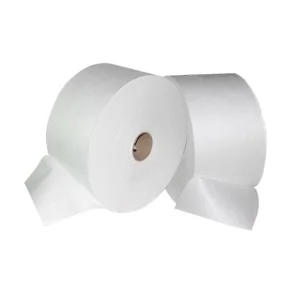
Industrial Air Filters & Replacement Media Showcase
Standard and customized air filtration solutions manufactured in state-of-the-art cleanroom facilities for global industrial and commercial applications.



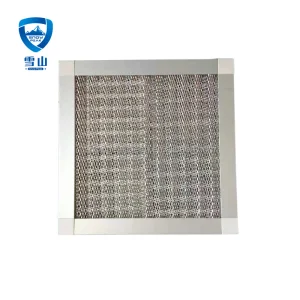



Understanding Gas-Phase Molecular Filtration in Air Handling Units
An engineering deep-dive into physical adsorption, chemical chemisorption, and structural design parameters for commercial and industrial AHU carbon filters.
In modern heating, ventilation, and air conditioning (HVAC) and dedicated Air Handling Units (AHUs), control of particulate matter via mechanical HEPA or MERV filtration represents only half of the indoor air quality equation. The second, equally critical dimension is Gas-Phase Molecular Contamination (GPMC) control. Volatile Organic Compounds (VOCs), acidic gases (such as sulfur dioxide $SO_2$ and hydrogen sulfide $H_2S$), basic gases (ammonia $NH_3$), and hazardous airborne toxins cannot be trapped by mechanical fibers regardless of their MERV rating. To abate these gaseous pollutants, high-performance Original Design Manufacturer (ODM) activated carbon filters must be integrated into the AHU airflow architecture.
Activated carbon operates primarily through Van der Waals forces within a highly porous internal structure. A single gram of high-grade virgin coconut-shell activated carbon possesses a specific surface area exceeding 1,000 to 1,200 m²/g. For targeted corrosive or low-molecular-weight gases, chemical impregnation (chemisorption) is applied to permanently convert toxic gases into inert salts.
Physical Adsorption (Physisorption)
Utilizes raw virgin granular or pelletized activated carbon for broad-spectrum VOC capture (toluene, benzene, xylene, solvents). Driven by pore size distribution spanning micropores (<2 nm), mesopores (2–50 nm), and macropores (>50 nm).
Chemical Chemisorption
Custom ODM chemical impregnation featuring potassium hydroxide ($KOH$), potassium iodide ($KI$), or phosphoric acid ($H_3PO_4$) chemically neutralizes acid gases, aldehydes, $H_2S$, and $NH_3$ where standard carbon fails.
Hybrid Composite Media
Engineered non-woven synthetic fibers embedded with activated carbon micro-particles. Combines low air resistance ($\Delta P$), dust holding capacity, and gas adsorption into a single space-saving pleated filter cassette.
AHU Carbon Filter Architectural Form Factors
Evaluating performance metrics, pressure drops, residence times, and application suitability across common ODM carbon filter designs.
| Filter Form Factor | Carbon Bed Depth | Air Velocity Range | Initial Resistance ($\Delta P$) | First-Pass Removal Efficiency | Primary Industrial Use Case |
|---|---|---|---|---|---|
| Rigid V-Bank Carbon Modules | 25 mm – 50 mm | 1.5 – 2.5 m/s | 75 – 120 Pa | 85% – 95% | Commercial AHU, Airport Terminals, Hospitals |
| Honeycomb Carbon Cassettes | 50 mm – 100 mm | 1.0 – 2.0 m/s | 45 – 85 Pa | 80% – 92% | Cleanroom AMC Control, Smart Home Purifiers |
| Pelletized Deep-Bed Trays | 75 mm – 300 mm | 0.5 – 1.2 m/s | 150 – 350 Pa | 98% – 99.9% | Wastewater Treatment, Chemical Plants, Petrochemical |
| Pleated Carbon Non-Woven Panels | 5 mm – 15 mm | 2.0 – 3.0 m/s | 35 – 65 Pa | 40% – 65% | Pre-filtration in HVAC, Light Commercial Offices |
Global Commercial & Industrial Demand Landscape
Driven by stringent indoor air quality standards (ASHRAE 62.1, ISO 16890, EN 13779), the global demand for custom ODM AHU carbon filters is experiencing exponential growth.
The global market for gas-phase filtration in air handling units is accelerating rapidly due to three regulatory and macroeconomic pillars: tightening environmental legislation, the expansion of high-tech semiconductor cleanrooms, and post-pandemic focus on healthy building certifications (LEED & WELL).
North America & Europe: Regulatory Standards
In North America, ASHRAE Standard 62.1 (Ventilation for Acceptable Indoor Air Quality) mandates chemical pollutant mitigation in urban centers with elevated ambient ozone and VOC levels. In Europe, ISO 16890 and EN 13779 / EN 16798 classify air handling system performance based on Outdoor Air (ODA) pollution levels, forcing commercial facility managers to specify multi-stage gas-phase filters to achieve Indoor Air (IDA) class 1 compliance.
Asia-Pacific: High-Tech Manufacturing Boom
The APAC region—led by semiconductor fabrication hubs in Taiwan, South Korea, China, and Southeast Asia—requires extreme gas-phase molecular contamination control. Airborne Molecular Contaminants (AMCs) such as organosilicon compounds, organic acids, and dopants can cause wafer defects at sub-3nm nodes. This necessitates ultra-pure ODM carbon modules custom-engineered for specific chemical break-through times.
China Factory Advantage: Scaling High-Precision ODM Air Filtration
Why leading global HVAC brands and industrial EPC contractors partner with certified Chinese ODM factories for carbon filter manufacturing.
Vertical Supply Chain Integration
From raw coconut-shell carbon pyrolysis and chemical impregnation to automated aluminum/galvanized frame roll-forming, Chinese manufacturing hubs provide complete supply chain control, minimizing lead times and raw material volatility.
Automated Robotic Assembly
High-speed automated pleating lines, computerized polyurethane (PU) gasket dispension, and robotic sealant applicators ensure zero air-bypass integrity and strict dimensional tolerances (±0.5mm) across mass production runs.
Rigorous QA & Testing Standards
Every ODM carbon filter design undergoes rigorous testing in accredited laboratories according to ISO 10121-1/2 (gas-phase air cleaning media testing) and ASHRAE 145.2, backed by full batch traceability.
Localized Application Scenarios for ODM AHU Carbon Filters
Customized filter configurations optimized for specific contamination environments across high-tech, medical, and municipal facilities.
1. Semiconductor & Microelectronics Cleanrooms
Primary Concern: Airborne Molecular Contaminants (AMCs), siloxanes, acid vapors ($HCl, HF$).
ODM Configuration: V-Bank high-capacity carbon cassettes filled with acid-impregnated or virgin coconut carbon. Designed with zero-outgassing polyurethane sealant to prevent secondary chemical contamination.
2. Hospitals, Healthcare & Vivariums
Primary Concern: Anesthetic gas vapors, disinfectant odors (isopropanol, glutaraldehyde), animal cage ammonia ($NH_3$).
ODM Configuration: Combination HEPA + Impregnated Carbon V-Bank filters. Phosphoric acid impregnated media neutralizes alkaline odors while maintaining $H13/H14$ particle retention.
3. Commercial Real Estate & Airports
Primary Concern: Jet engine exhaust fumes, diesel soot, traffic VOCs, formaldehyde from office furniture.
ODM Configuration: Low-pressure-drop honeycomb carbon filters or synthetic carbon pleated panels engineered for high airflow ($2.5 m/s$) with minimal energy penalty on AHU fan blowers.
4. Pharmaceutical Manufacturing & Laboratories
Primary Concern: Active Pharmaceutical Ingredients (API) cross-contamination, solvent vapors, toxic chemical exhaust.
ODM Configuration: Heavy-duty stainless steel frame carbon trays featuring vibration-proof internal baffles to eliminate carbon settling and channel bypass during continuous operation.
5. Municipal Wastewater & Sludge Processing
Primary Concern: Severe $H_2S$ (hydrogen sulfide) odor and mercaptans.
ODM Configuration: High-loading $KOH$-impregnated extruded carbon pellets in deep-bed containment housings, providing high breakthrough capacity (>20% weight uptake of $H_2S$).
6. Paint Spray Booths & Industrial Coating
Primary Concern: High-concentration solvent overspray, MEK, xylene, and aromatic hydrocarbons.
ODM Configuration: Multi-layer washable stainless steel mesh pre-filter paired with disposable high-capacity granular carbon beds to prevent media clogging from paint mist.
Industry Trends Shaping Next-Generation Gas Filtration
Emerging technological breakthroughs in molecular filtration media, IoT connectivity, and sustainable circular materials.
1. Nanofiber & MOF Composite Media
Metal-Organic Frameworks (MOFs) engineered into synthetic non-woven substrates are offering up to 5x higher gas adsorption capacity per unit mass compared to conventional activated carbon, revolutionizing low-profile AHU filter panels.
2. Smart AHU Filters with RFID & VOC Sensing
Integration of passive RFID tags and miniaturized solid-state TVOC sensors directly into filter frames allows BMS (Building Management Systems) to track filter saturation in real time, shifting maintenance from static schedules to predictive replacement.
3. Circular Economy & Carbon Thermal Reactivation
Global procurement teams are demanding eco-friendly ODM frameworks, featuring demountable aluminum frames that allow spent activated carbon media to be thermally reactivated rather than landfilled, cutting life-cycle carbon footprints by up to 60%.
Global Procurement Requirements & Quality SOP
A standardized framework for international procurement directors, engineering consultants, and OEM brand buyers when specifying ODM AHU carbon filters.
Key Technical Specifications to Define in RFQ
- Gas Target Species: Broad-spectrum VOCs, Acidic ($SO_2, H_2S$), Alkaline ($NH_3$), or Formaldehyde.
- Carbon Quality Parameters: Iodine Value (>1000 mg/g), CTC (Carbon Tetrachloride Value >60%), Apparent Density ($0.45–0.55 g/cm^3$).
- Frame Integrity & Construction: Galvanized Steel, Anodized Aluminum Alloy, Stainless Steel 304/316, or Moisture-Resistant Cardboard.
- Fire Safety Rating: Compliance with UL 900 or DIN 53438 (F1) flame retardancy standards.
- Dimension & Airflow Capacity: Nominal dimensions (e.g., $592 \times 592 \times 292 \text{ mm}$) and rated face velocity (e.g., $3400 \text{ m}^3\text{/h}$ at $85 \text{ Pa}$).
Factory Inspection & Audit SOP Checklist
- IQC (Incoming Quality Control): Verification of raw carbon pore size distribution via Nitrogen Adsorption Isotherm analysis.
- IPQC (In-Process QC): Automated monitoring of glue bead continuity, pleat spacing uniformity, and gasket adhesion strength.
- FQC (Finished Quality Control): Dimensional verification, initial pressure drop testing, and seal leak testing per batch.
- Packaging & Containment: Hermetically sealed poly-bagging with moisture-proof desiccant to prevent carbon pre-saturation during maritime transit.
Frequently Asked Questions (Q&A)
Expert engineering responses to common queries regarding ODM carbon filter design, performance optimization, and global logistics.
1. What is the difference between Iodine Value and CTC Value when specifying carbon filter media?
Iodine Value (mg/g) measures the adsorption of small molecules (pores <2 nm / micropores) and correlates directly with the carbon's ability to adsorb low-molecular-weight gases. A high-quality virgin coconut carbon filter typically exhibits an iodine number between 1,000 mg/g and 1,150 mg/g.
CTC Value (Carbon Tetrachloride Value %) measures the porosity for organic vapors (mesopores 2–50 nm) and represents broad-spectrum VOC holding capacity. Standard commercial carbon filters offer 50–60% CTC, whereas high-grade industrial gas-phase media should specify >70% CTC.
2. How do you prevent premature pressure drop build-up in AHU activated carbon filters?
Premature pressure drop in carbon beds is almost always caused by particulate dust clogging the microscopic carbon pores rather than gas saturation. To prevent this, a mandatory pre-filtration stage (ISO Coarse 85% / G4 or MERV 8 / MERV 11 pleated filter) must be installed upstream of the carbon module. This traps mechanical dust, lint, and aerosols, allowing the carbon bed to remain free for gas-phase adsorption.
3. How do relative humidity (RH) levels affect AHU carbon filter performance?
Relative humidity plays a critical role in physical adsorption. When air RH exceeds 60% to 70%, water vapor molecules begin competing aggressively with VOCs for carbon adsorption micropores through capillary condensation. This significantly reduces VOC removal efficiency. For high-humidity applications (>70% RH), chemically impregnated carbon or upstream dehumidification coils should be specified.
4. What chemical impregnations are available for targeting specific industrial gases?
Custom ODM impregnation formulations include:
- KOH (Potassium Hydroxide): Neutralizes acidic gases ($H_2S, SO_2, HCl, Cl_2$).
- H3PO4 (Phosphoric Acid): Target basic gases and alkali compounds ($NH_3$, amines).
- KI (Potassium Iodide): Specialized for mercury vapor and radioactive iodine capture.
- KMnO4 (Potassium Permanganate): Oxidizes ethylene, formaldehyde, and low-weight aldehydes.
5. What is breakthrough time in gas-phase filtration, and how is it calculated?
Breakthrough time is the duration required for downstream gas concentration to reach a predetermined threshold percentage (typically 5% or 10%) of the upstream challenge concentration. It is evaluated according to ISO 10121-2 testing protocols and depends on bed depth, superficial velocity (Empty Bed Contact Time - EBCT), gas concentration, and carbon weight loading.
6. How are ODM carbon filters packaged to guarantee zero pre-saturation during ocean freight?
Because activated carbon continuously adsorbs ambient gases, unsealed filters can lose up to 15–20% of their adsorption capacity during transit. Professional Chinese ODM factories vacuum-seal each individual filter unit in 0.1mm heavy-duty polyethylene barrier bags with activated desiccant packs, enclosed in heavy-corrugated double-wall master cartons to ensure 100% fresh capacity upon job site arrival.
7. What is the typical lead time and MOQ for custom-sized ODM AHU carbon filters?
For standard dimensions ($24'' \times 24'' \times 12''$ or $592 \times 592 \times 292 \text{ mm}$), typical sample delivery is 3 to 5 business days. Mass production lead time is approximately 15 to 20 days per 40ft container. Flexible minimum order quantities (MOQs) starting from 50–100 units allow buyers to conduct small-batch trial evaluations before committing to full container orders.
8. Can ODM carbon filters be designed to meet cleanroom outgassing requirements (low volatile silicone)?
Yes. Semiconductor and optical cleanroom applications demand zero organic outgassing from filter components. ODM cleanroom carbon cassettes utilize zero-outgassing PU foam sealants, hot-melt adhesives tested per ISO 14644-8 standards, and ultra-clean aluminum or ABS frames to prevent siloxane or phthalate contamination.
Complete Air Filter Series & Replacement Media Range
Explore our additional specialized filtration products engineered for commercial purifiers, dust collectors, and VOC control systems.