
Featured AHU Primary & Medium Efficiency Filter Media
Engineered roll goods, pleated substrates, and pocket filter media designed for Original Equipment Manufacturers (OEM) and custom ODM requirements across commercial HVAC and industrial ventilation systems.
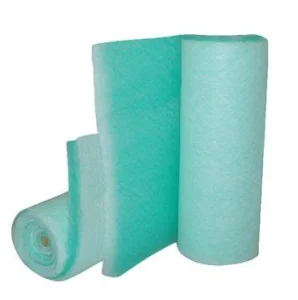







1. Technical Engineering of ODM AHU Filter Media
An authoritative analysis of filtration science, fiber composite aerodynamics, dynamic particulate capture mechanics, and thermodynamic performance in Air Handling Units (AHU).
An Air Handling Unit (AHU) serves as the respiratory lungs of central heating, ventilation, and air conditioning (HVAC) systems in commercial, industrial, and cleanroom infrastructure. Within an AHU, the filter media is the single most critical engineered component determining indoor air quality (IAQ), energy consumption ratios, system pressure differentials, and total operating expenses (OpEx).
Original Design Manufacturing (ODM) in AHU filter media requires deep chemical engineering expertise to balance polymer fiber diameter, non-woven matrix density, electrostatic charging persistence, and structural rigidity under high volumetric airflow rates (often exceeding 4,000 to 10,000 cubic meters per hour per filter bank).
Polymer Synthesis and Non-Woven Media Technologies
Modern ODM AHU filter media companies leverage four foundational polymer non-woven technologies to craft engineered media rolls and pleated elements tailored for distinct filtration stages:
- Meltblown Polypropylene (PP): Features sub-micron microfibers (1–5 μm diameter) produced via high-velocity hot air attenuation. Meltblown media is modified with corona charging (electret) to impart persistent electrostatic attraction, drastically reducing initial airflow resistance while maintaining exceptional capture efficiency for fine particulates ($PM_{2.5}$ and $PM_1$).
- Thermally Bonded & Needle-Punched Polyester (PET): Coarser synthetic fibers (10–30 μm) mechanically or thermally interlocked to build progressive-density gradient matrices. Ideal for primary coarse filtration (G2 to G4 / ISO Coarse) with exceptional dust-holding capacity (DHC) against large pollen, lint, and road dust.
- Micro-Glass Fiber Mat (Borosilicate): Continuous wet-laid glass microfibers arranged in a non-directional paper-like web. Offers unparalleled thermal resistance (up to $250^\circ\text{C}$), hydrophobic stability, and permanent mechanical filtration efficiency without reliance on electrostatic charge decay. Standard substrate for EPA, HEPA, and ULPA filters (E10–U17).
- Polycomposite & Carbon Laminated Media: Multi-layer composites fusing spunbond support layers, electret meltblown cores, and coconut-shell activated carbon micro-particles (or cold catalyst substrates) to achieve simultaneous particulate capture and gas-phase Volatile Organic Compound (VOC) abatement.
Filtration Standards Matrix: ISO 16890 vs. EN779 vs. ASHRAE 52.2
Global procurement teams must navigate cross-regional regulatory and testing standards when specifying ODM filter media. The transition from legacy EN779 standards to the comprehensive ISO 16890 global benchmark has reshaped how media efficiency is classified based on real-world urban particle spectrums ($ePM_1, ePM_{2.5}, ePM_{10}$).
| ISO 16890 Class | Legacy EN779 | ASHRAE 52.2 (MERV) | Target Particulate Size Range | Primary AHU Application |
|---|---|---|---|---|
| ISO Coarse 30%–85% | G2 – G4 | MERV 1 – MERV 7 | > 10 μm (Coarse dust, sand, lint) | AHU Pre-filter, Spray Booth Floor, Fresh Air Intakes |
| ISO ePM10 50%–85% | M5 – M6 | MERV 8 – MERV 12 | Sub-10 μm (Coarse urban aerosol, mold spores) | Commercial Office HVAC, Secondary Industrial Stage |
| ISO ePM2.5 50%–85% | F7 – F8 | MERV 13 – MERV 14 | Sub-2.5 μm (Atmospheric haze, combustion particles) | Hospitals, Data Centers, High-Occupancy Public Hubs |
| ISO ePM1 50%–95% | F8 – F9 | MERV 15 – MERV 16 | Sub-1.0 μm (Fine industrial smog, bacteria, viruses) | Pharmaceutical Air Intake, Semiconductor Pre-HEPA Stage |
Aerodynamic Dynamics: Differential Pressure ($\Delta P$) and Dust Holding Capacity (DHC)
The aerodynamic efficiency of AHU filter media is governed by Darcy's Law for porous media flow. As air flows through the fibrous matrix, the initial differential pressure ($\Delta P_0$) dictates the fan energy required to overcome resistance:
$\Delta P = \frac{\mu \cdot v \cdot t}{K}$ | where $\mu$ = dynamic viscosity, $v$ = face velocity, $t$ = media thickness, $K$ = intrinsic permeability.
ODM engineering focuses on optimizing media structure—employing continuous gradient density where outer layers capture coarse dust while inner layers trap micro-particles. This progressive depth filtration prevents rapid surface caking, flattening the pressure drop curve and maximizing Dust Holding Capacity (DHC in $g/m^2$) before reaching terminal pressure drop ($\Delta P_{final}$, typically 250 Pa for pre-filters and 450 Pa for secondary bag/pleated filters).
2. Localization Support & Compliance Engineering
Ensuring global filter media rolls and fabricated AHU products seamlessly meet regional building codes, flammability regulations, and environmental safety benchmarks across North America, Europe, and Asia-Pacific.
Fire Retardancy & Safety Compliance
AHU filter media installed in commercial building HVAC must satisfy strict fire safety standards to prevent flame propagation through ductwork. ODM products are engineered to pass UL 900 Class 1 and Class 2 flammability testing in the USA, as well as European DIN 53438 (F1/K1) flame retardancy standards.
Chemical & Outgassing Safety (REACH / RoHS)
For cleanroom AHU media used in microelectronics and pharmaceutical facilities, chemical off-gassing can ruin silicon wafers or contaminate biological cultures. ODM media formulations guarantee full compliance with EU REACH SVHC (Substances of Very High Concern) and RoHS 3 directives, ensuring zero heavy metals or volatile plasticizers.
Antimicrobial & Hydrophobic Modifications
In humid tropical climates or coastal installations, AHU media is prone to microbial growth and moisture saturation. Advanced localized ODM media integrates non-migratory biostatic treatments (such as pyrithione zinc formulations) to inhibit mold, fungal, and bacterial colonies, alongside hydrophobic coatings that maintain structural pleat stability under 100% relative humidity.
3. Supply Chain Ecosystem & Manufacturing Supremacy
Leveraging China's Pearl River Delta manufacturing hub to deliver unmatched cost efficiency, scale, rapid prototyping, and raw material access for global OEM buyers.
Shenzhen and Guangdong Province represent the world's dense epicenter for advanced air filtration manufacturing. The concentration of chemical polymer suppliers, non-woven texturing mills, precision machine builders, and international shipping ports creates a unique industrial ecosystem that offers distinct competitive advantages for global procurement leaders:
- End-to-End Vertical Integration: From masterbatch resin compounding and meltblown fiber extrusion to ultrasonic pocket welding, pleating, framework stamping, and automatic hot-melt sealing—every stage is executed within controlled manufacturing parks under ISO 9001 quality management systems.
- High-Speed Automated Pleating & Slitting Lines: Automated rotary knife and blade pleaters handle media widths up to 2.4 meters with micro-processor pleat height control (from 8 mm to 292 mm). High-speed slitters ensure pristine edge cuts without fiber fraying or particulate shedding.
- Agile ODM Prototyping & Custom Tooling: Custom media roll widths, composite GSM weights (from 60 $g/m^2$ to 600 $g/m^2$), and private-label backing wire meshes can be engineered, sampled, and bench-tested in wind tunnel facilities within 5 to 7 business days.
- Unrivaled Port Logistics & Export Freight Speed: Proximity to Shenzhen (Yantian / Shekou) and Guangzhou shipping terminals reduces overland trucking lead times to container vessels, enabling flexible FOB, CIF, or DDP delivery schedules across North America, Europe, the Middle East, and Southeast Asia.
4. Strategic Enterprise Procurement & TCO Optimization
A rigorous evaluation framework for corporate purchasing managers to balance initial unit price, fan energy consumption, quality assurance protocols, and long-term operating costs.
In enterprise-grade HVAC maintenance and equipment manufacturing, the purchase price of filter media accounts for only 15% to 20% of the total life-cycle cost. Electrical energy consumed by AHU supply fans pushing air through resistant filter media represents over 70% to 80% of the Total Cost of Ownership (TCO).
Four-Stage Strict Quality Assurance System
To eliminate batch-to-batch variation, leading ODM AHU media manufacturers implement a strict 4-tier quality gate system:
IQC Gate
Incoming Quality ControlLaser particle counter verification of incoming polymer resins, glass fibers, wire meshes, and frame stocks.
IPQC Gate
In-Process Quality ControlReal-time ultrasonic weld seam testing, pleat pitch inspection, and inline differential pressure monitoring.
FQC Gate
Final Quality ControlBatch sampling for ISO 16890 fractional efficiency testing, bursting strength, and thermal tolerance verification.
OQC Gate
Outmatched Quality ControlContainer packaging seal audits, pallet drop testing, moisture barrier wrapping, and export shipping document verification.
5. Next-Generation Trends in AHU Media Innovation
Key technological shifts reshaping the future of building air filtration, decarbonization initiatives, and intelligent air handling equipment.
Ultra-Low Resistance Nanofiber Coatings
Electrospun nanofiber webs (100–300 nm) deposited onto spunbond substrates create surface-loading filtration layers. Unlike conventional depth media that clogs internally, nanofiber media stops dust at the extreme surface, allowing easy pulse-jet cleaning and reducing fan static pressure requirements by 25% to 40%.
Sustainable & Bio-Based Polymeric Substrates
With corporate ESG commitments expanding globally, ODM manufacturers are deploying biodegradable PLA (Polylactic Acid) non-wovens and recycled PET (rPET) media rolls derived from post-consumer plastic waste, reducing supply chain carbon footprints without sacrificing dust holding metrics.
6. Localized Application Engineering Scenarios
Tailored ODM media formulations designed for extreme operational environments across key commercial and industrial sectors.
Commercial Office Towers & Smart Buildings
High-efficiency, low-pressure drop pocket media (F7/F8) optimized for VAV air handling systems, maintaining low sound levels and reducing annual electrical kilowatt-hour consumption.
Automotive Spray Painting Lines
Progressive-density fiberglass paint-stop floor rolls and thermal ceiling filter cotton (600G) engineered to capture overspray mist and ensure smooth, defect-free mirror finishes on vehicle bodies.
Microelectronics & Semiconductor Cleanrooms
Mini-pleat HEPA/ULPA media engineered with low-outgassing polyurethane sealant and aluminum separators, maintaining ISO Class 1 to Class 5 air purity standards.
7. Enterprise Procurement & Technical FAQ
Expert answers to critical questions asked by procurement directors, quality auditors, and HVAC engineers when sourcing ODM AHU filter media.
Specialized Industrial Air Filters & Replacement Products
Explore our extended series of containment bags, high-temperature HEPA units, VOC activated carbon media, and universal air purifier replacement sets.






