
Featured OEM/ODM Filtration Assemblies
Explore engineered filtration configurations developed for commercial, residential, and specialized industrial air purification systems.

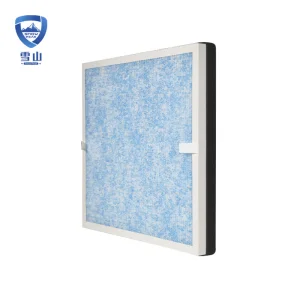


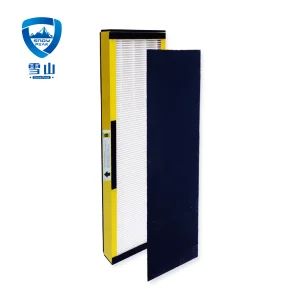



1. Executive Summary & Macro Industry Engineering Architecture
The global demand for high-efficiency indoor air quality (IAQ) remediation has transitioned from basic mechanical particulate removal to multi-stage, gas-phase, and bio-aerosol neutralization systems. As an original design manufacturer (ODM) and exporter specializing in Air Purifier HEPA and Activated Carbon filtration integration, operating in strict compliance with ISO 16890, EN 1822:2019, and AHAM AC-1 standards, maintaining technical clarity across the entire supply chain is mandatory for enterprise procurement managers.
Modern air purification relies on compound filter architectures where mechanical media (HEPA/ULPA) work synergistically with chemical adsorbents (impregnated activated carbon). Optimizing this dual-stage dynamic requires precise balancing of particle collection kinetics, fluid pressure drop, energy consumption, and gas-phase adsorption dynamics. This whitepaper details the engineering benchmarks, physical mechanisms, and manufacturing methodologies required to specify and scale enterprise-grade OEM/ODM filtration components globally.
Multi-Stage Compound Filtration Dynamics
Single-medium filters are insufficient for comprehensive indoor air remediation. High CADR (Clean Air Delivery Rate) purifiers rely on a multi-tier physical hierarchy:
Stage 1: Primary Pre-Filtration (G2-G4 / MERV 5-8)
Utilizing high-loft synthetic non-woven polyester or wire-mesh laminated rolls. Captures coarse particulate matter (PM10, hair, lint, pollen) above 10 microns, protecting downstream micro-fiber HEPA media from premature surface dust cake buildup and extending total operational longevity by 40% to 60%.
Stage 2: High-Efficiency Particulate Air (H13-U15 EN1822)
Fabricated using meltblown polypropylene micro-fibers or wet-laid glass fiber media with corona electret charge treatment. Mechanically captures respirable particles (PM2.5, PM0.3, bacteria, viruses) at the Most Penetrating Particle Size (MPPS) ranging from 0.1 to 0.3 micrometers.
Stage 3: Molecular Gas-Phase Adsorption
Employs virgin coconut shell activated carbon, porous carbon honeycombs, or catalytic carbon fabrics. Designed for volatile organic compounds (VOCs), formaldehyde, benzene, hydrogen sulfide, and odor molecules through Van der Waals physisorption and chemical chemisorption.
2. Global B2B Procurement Specifications & Market Requirements
Enterprise buyers, OEM brand owners, and industrial HVAC distributors face rigid operational constraints when procuring replacement filter cartridges and bulk media rolls. Sourcing strategies must account for regional compliance mandates, CADR-to-noise ratios, dimensional tolerances, and environmental degradation risks during overseas logistics.
| Filtration Grade | Testing Standard | Core Media Substrate | Target Pollutants | Industrial Application |
|---|---|---|---|---|
| Pre-Filter (G2-G4) | EN 779 / ISO 16890 Coarse | Thermally bonded Synthetic / PET Mesh | Dust, Hair, Coarse Sand (>10 µm) | HVAC Air Handlers, Air Purifier Intakes |
| Fine Filter (M5-F9) | EN 779 / ISO ePM10 / ePM2.5 | Meltblown Non-woven / Pocket Media | Fine Dust, Smog, Mold Spores (1-10 µm) | Commercial Air Systems, Cleanrooms |
| HEPA (H13-H14) | EN 1822 / IEST-RP-CC001 | Electret Polypropylene / Micro-Glass | PM2.5, Bacteria, Viruses (0.1-0.3 µm) | Medical, Residential Purifiers, Semiconductor |
| Gas-Phase (Carbon) | ASTM D2854 / GB/T 12496 | Coconut Shell Carbon / Impregnated Pellets | Formaldehyde, TVOCs, Ammonia, H2S | Offices, Auto Cabins, Industrial Exhaust |
Procurement Performance Benchmark Note
When specifying compound HEPA + Carbon ODM modules, calculating initial resistance vs CADR yield is critical. An increase of 10 Pa in initial resistance across a 250 CFM purifier assembly can increase blower motor noise by 3.5 dB(A) and decrease overall ErP energy efficiency rating by a full tier.
Supply Chain Considerations & Material Traceability
International buyers must ensure suppliers maintain complete lot-by-lot batch testing. Fractional filtration efficiency curves, flame retardancy ratings (UL 900 / UL 94-V0), RoHS/REACH chemical safety certifications, and structural integrity during high-humidity transit (95% RH at 40°C) must be validated prior to container shipment.
3. Material Science Roadmap: Fiber Engineering & Chemical Adsorption
The technical differentiation of premium ODM air purification elements lies in material science innovation. Modern micro-fiber extrusion and carbon modification techniques allow fine control over physical pore sizes and chemical reactivity.
A. Meltblown Polypropylene & Hydro-Electret Technology
Standard mechanical capture of 0.3 µm particles requires dense fiber networks that cause high pressure drops. To mitigate this, advanced ODM manufacturers employ Hydro-Electret charging. High-pressure water jets inject permanent dipoles into the polypropylene matrix during extrusion.
This electrostatic field attracts airborne particles without physically restricting airflow, maintaining high filtration efficiency (99.97%+ at 0.3 µm) while reducing initial airflow resistance by over 30%. This allows purifiers to achieve higher CADR numbers while maintaining silent low-RPM fan operation.
B. Activated Carbon Pore Size Engineering & Chemical Impregnation
Adsorption capacity is determined by internal surface area (measured in m²/g via BET nitrogen adsorption isotherms) and pore size distribution:
- Micropores (< 2 nm): Optimal for small gas molecules like benzene, toluene, and short-chain alkanes. Implemented with high-density coconut shell carbon (Iodine number > 1050 mg/g, CTC > 60%).
- Mesopores (2 - 50 nm): Crucial for larger organic vapors, odors, and carrier transport channels.
- Modified Catalytic Impregnation: Pure carbon cannot effectively capture low-molecular-weight polar compounds such as formaldehyde (CH2O) or ammonia (NH3). Carbon media is impregnated with functional catalysts (e.g., Polyethyleneimine - PEI, Potassium Permanganate - KMnO4, or Phosphoric Acid) to chemically convert hazardous gases into inert, harmless salts and non-toxic polymers through irreversible chemisorption.
4. Macro-Industry Engineering Solutions & System Integration
Deploying air filtration technology across commercial, residential, and cleanroom environments requires specialized design considerations tailored to specific structural layouts and operating conditions.
Smart Home & Consumer Appliances
Focuses on compact form factors, high aesthetic integration, round/cylindrical 360-degree intake geometries, RFID filter lifecycle monitoring compatibility, and low sound power output (<30 dB in sleep mode).
Commercial HVAC & Building Ventilation
Focuses on standardized modular pleat frame dimensions (24"x24"x2", 24"x24"x12"), low life-cycle power costs, flame-retardant card/metal frames, and high dust-holding capacity (DHC) under variable VAV airflow rates.
Cleanrooms & High-Temp Industrial Air
Requires deep-pleat aluminum separator HEPA constructions, silicone or polyurethane seamless gaskets, zero outgassing materials, and structural tolerance to continuous temperatures up to 250°C - 350°C.
5. Quality Control Protocols & Global Regulatory Compliance
To guarantee zero bypass leakage and consistent batch-to-batch efficiency across international shipments, ODM production lines must adhere to multi-stage quality assurance systems.
100% Automated Scanning Test
Every finished HEPA cartridge undergoes automated aerosol challenge testing (using DEHS or PSL aerosols) paired with dual particle counters to detect micro-pinhole leaks along pleat tips and frame sealings, verifying absolute compliance with EN 1822 MPPS standards.
Gas-Phase Adsorption Validation
Activated carbon media batches are sampled for Carbon Tetrachloride (CTC) activity (ASTM D3467), Iodine adsorption number (ASTM D4607), and apparent density to ensure gas removal performance remains stable throughout the product's shelf life.
Environmental & Structural Endurance
Modules undergo thermal shock testing (-30°C to +70°C), vibration endurance testing simulating oceanic freight conditions, and burst strength pressure tests to prevent media collapse under high filter loading.
6. Technical Q&A: Enterprise Procurement & Engineering FAQ
Detailed answers to technical and operational questions frequently raised by B2B buyers, OEM brand managers, and HVAC project engineers.
Additional Industrial Filter Media & Replacement Solutions
Browse our complete catalogue of OEM/ODM filter media rolls, replacement elements, and custom evaporative pad assemblies.




