Featured Industrial Carbon & HVAC Filtration Products
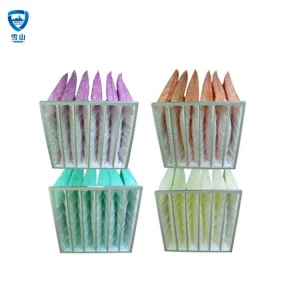

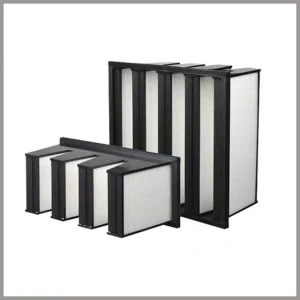
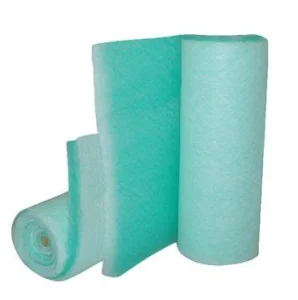


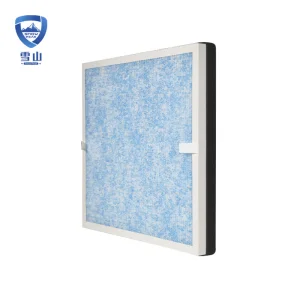
1. Global Commercial & Industrial Landscape of Carbon Air Filtration Systems
In modern industrial manufacturing and high-tier commercial infrastructure, airborne management has evolved far beyond traditional particulate matter (PM2.5/PM10) reduction. Global industrial compliance frameworks—such as ISO 16890, ASHRAE 62.1, EN 13779, and strict regional VOC (Volatile Organic Compounds) abatement directives—now demand integrated molecular air purification. Activated carbon air filtration systems stand at the front line of controlling hazardous gaseous pollutants, toxic vapors, and Airborne Molecular Contamination (AMC).
From advanced semiconductor fabrication cleanrooms where sub-ppb (parts-per-billion) gaseous acids cause wafer corrosion, to commercial high-rise HVAC, airports, and lithium-ion battery gigafactories, engineered molecular filters are essential operational assets. As an experienced ODM (Original Design Manufacturer) and OEM carbon air filter factory based in Shenzhen, China, Shenzhen Snow Peak Clean Technology Co., Ltd. supplies high-performance carbon matrices engineered for high adsorption capacity, low differential pressure drop, and extended thermal/chemical stability.
2. Engineering & China Supply Chain Manufacturing Advantages
Procuring custom ODM carbon filtration systems directly from top-tier Chinese clean-technology manufacturers provides global enterprises with unparalleled scalability, precision engineering, and total cost of ownership (TCO) optimization. Shenzhen's integrated industrial ecosystem enables rapid iteration from raw media formulation to fully engineered filter modules.
Cost Efficiency Without Quality Compromise
By leveraging direct access to premium virgin coconut shell carbon, coal-based activated carbon, and synthetic carbon fiber matrices, China manufacturing hubs achieve exceptional economy of scale. Advanced automated continuous-pleating and robotic perimeter-gasketing minimize labor overhead while ensuring 100% dimensional precision.
Advanced Chemical Impregnation Technology
Standard activated carbon struggles to adsorb light, non-polar, or reactive gases like formaldehyde ($HCHO$), hydrogen sulfide ($H_2S$), ammonia ($NH_3$), and sulfur dioxide ($SO_2$). Snow Peak’s ODM facility specializes in target-tailored chemical impregnations ($KI, KOH, H_3PO_4,$ and metal catalysts) to enable chemisorption for extreme industrial environments.
Rapid ODM Prototyping & Agility
From initial CAD modeling and air dynamics simulation to functional sample testing within 5 to 7 working days. Our in-house test rigs rigorously evaluate initial pressure drop, breakthrough time curves, and CTC (Carbon Tetrachloride) adsorption values per ISO 10121 and ASHRAE 145.2 standards.
3. Custom Structural Configurations & Technical Matrix
Snow Peak provides a broad portfolio of industrial carbon air filter configurations engineered to integrate seamlessly into Air Handling Units (AHUs), Fan Filter Units (FFUs), ductwork systems, and specialized OEM air purification equipment.
| Filter Configuration | Core Media Matrix | Target Pollutants | Standard Frame Materials | Key Operational Advantage |
|---|---|---|---|---|
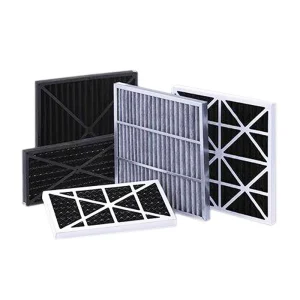
| Honeycomb Carbon Panels | Activated carbon granules filled in plastic/aluminum honeycomb mesh | VOCs, Benzene, Formaldehyde, Domestic Odors | Cardboard, Aluminum Alloy, ABS Plastic | Ultra-low airflow resistance, high rigidity, non-dusting design |
| Deep-Pleated V-Bank Carbon Modules | Carbon-laminated synthetic media or loose-fill carbon packs | High-concentration industrial exhaust, acidic/basic gases | Galvanized Steel, Anodized Aluminum, Heavy Plastic | Maximum media area, extended service life for high CFM systems |
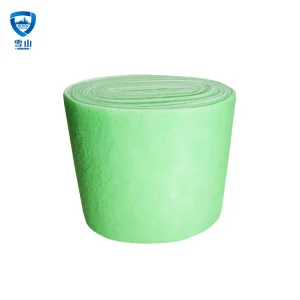
| Carbon Impregnated Media Rolls | Non-woven polyester fibers bonded with fine activated carbon powder | Coarse particulate pre-filtration + light gas phase adsorption | Roll Form / Cut-to-size sheets | Cost-effective pre-filter stage for paint booths and commercial HVAC |
| Extruded Carbon Canisters / Cartridges | Pelletized active carbon ($4mm/3mm$ pellets) with chemical impregnation | Severe VOC loads, $H_2S, SO_x, NO_x$, solvent recovery | Stainless Steel, Powder-Coated Carbon Steel | Extreme dwell time (residence time), refillable media construction |
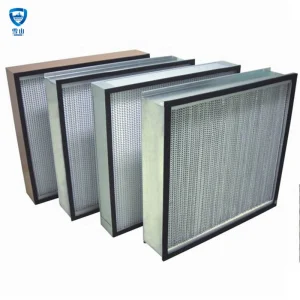
| Composite HEPA + Molecular Carbon Filters | Multi-layer meltblown H13 HEPA laminated with active carbon micro-spheres | Simultaneous PM2.5 (99.97%) + Molecular Gas Abatement | Polyurethane foam, Cardboard, Aluminum | All-in-one compact design for OEM home & medical air purifiers |
4. Industrial & Localized Application Scenarios
Different industrial environments exhibit distinct chemical profiles and airflow kinetics. Tailoring the ODM carbon filtration media to the precise chemical environment prevents premature saturation and bypass.
Microelectronics & Semiconductor Cleanrooms
Semiconductor lithography processes are hypersensitive to Airborne Molecular Contamination (AMC). Volatile organics, siloxanes, and acidic gases ($HCl, HF$) can cause irrecoverable optics haze and wafer defects. Snow Peak’s specialized cleanroom carbon V-bank filters deliver ultra-low outgassing (Zero-DOP/Organic) to guarantee ISO Class 1 to 5 air quality standards.
Automotive Spray Booths & Industrial Paint Lines
Solvent-based paints emit high concentrations of aromatic hydrocarbons (Xylene, Toluene) and volatile organic solvents. Utilizing fiberglass pre-filters (paint stop) paired with high-capacity pelletized carbon beds ensures full VOC capture before environmental exhaust release, meeting stringent municipal environmental protection agency limits.
Data Centers & Telecommunication Hubs
Corrosive gases such as hydrogen sulfide ($H_2S$) and sulfur dioxide ($SO_2$) present in urban or industrial outdoor air cause catastrophic silver and copper corrosion on server circuit boards (violating ISA-71.04 Class G1 standards). Impregnated chemisorption carbon modules protect multimillion-dollar IT hardware from micro-corrosion failures.
Commercial HVAC, Hospitals & Airports
Jet fuel exhaust fumes, ozone ($O_3$), nitrogen oxides ($NO_x$), and bio-odors severely degrade indoor air quality (IAQ) in airports and municipal hospitals. Synthetic pocket bag filters paired with low-resistance activated carbon media maintain high fresh-air turnover while optimizing energy consumption.
5. Global Procurement Guidance & Quality Governance
When sourcing industrial carbon air filtration systems at scale, enterprise procurement leaders must evaluate metrics beyond upfront unit price. Strategic air filtration selection balances adsorption capacity, operating pressure drop, and replacement lifecycle to achieve lowest Total Cost of Ownership (TCO).
Carbon Quality Parameters (CTC vs. Iodine Number)
Never specify "activated carbon" without establishing quantifiable benchmarks. High-performance gas-phase filtration requires an Iodine Number > 1000 mg/g (measuring micropore structure for small gas molecules) and a Carbon Tetrachloride (CTC) value > 60%–80% (measuring mesopore capacity for organic solvents).
Rigorous Quality Control (IQC to OQC)
Shenzhen Snow Peak operates a strict 4-stage quality management protocol: Incoming Quality Control (IQC) on raw carbon density and moisture; In-Process Quality Control (IPQC) during automated pleating; Final Quality Control (FQC) testing dimensional tolerances and seal integrity; and Outgoing Quality Control (OQC) for export-grade protective packaging.
Regulatory Compliance & Certifications
Our complete filter lineup conforms to international standards including CE, ISO 9001, RoHS, REACH, and fire-retardant standard UL 900. Export orders are shipped with comprehensive certificate of analysis (COA) documents confirming zero outgassing and verified adsorption capacity.
6. Future Trends in Carbon Air Filtration Technology
The molecular filtration sector is undergoing rapid technology transformation driven by ESG (Environmental, Social, and Governance) mandates, smart building integration, and material science innovations:
1. IoT-Enabled Smart Gas Saturation Monitoring
Legacy systems rely on static calendar maintenance, leading to either premature disposal or carbon saturation bypass. Modern ODM modules integrate embedded RFID or micro-gas sensors ($VOC/H_2S$) that monitor breakthrough curves in real time, alerting facility managers exactly when chemical capacity drops below 15%.
2. Regenerative & Low-Carbon Matrix Materials
Aligning with global decarbonization goals, research and development is shifting toward bio-based activated carbon derived from agricultural by-products and thermal-activatable carbon matrices that allow in-situ thermal desorption, extending filter operational lifespan by over 200%.
3. Nano-Catalytic Photo-Oxidation Composites
Merging physical activated carbon with room-temperature cold catalyst (TiO2/manganese dioxide) technology enables passive breakdown of trapped formaldehyde and ozone molecules into harmless $CO_2$ and $H_2O$, effectively self-regenerating the carbon adsorption sites.
7. Frequently Asked Questions (FAQ) - Industrial Sourcing & Engineering
Residence Time (seconds) = Carbon Bed Volume (m³) / Airflow Rate (m³/s).
For effective VOC removal, a minimum residence time of 0.1 to 0.2 seconds is recommended. For challenging chemisorption applications (e.g., $H_2S$ abatement), residence times of 0.25 to 0.5 seconds are required to ensure complete chemical conversion.
Complete Industrial Filtration Material & Replacement Series