
High-Efficiency Carbon Fiber & HEPA Filter Series
Directly manufactured engineered solutions with certified molecular containment rates and optimal aerodynamic profiles.
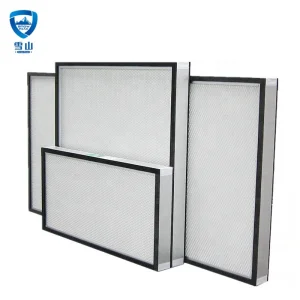


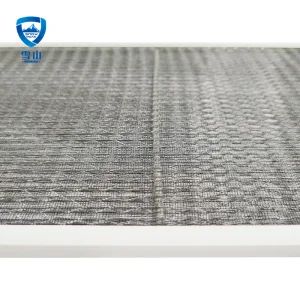
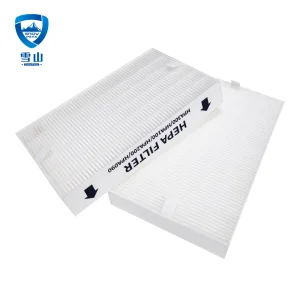
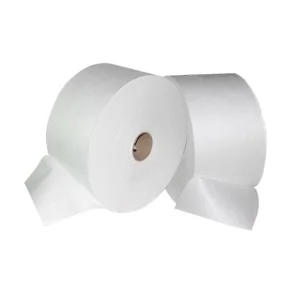

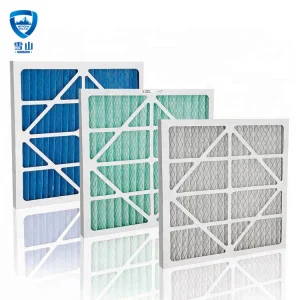
Activated Carbon Fiber (ACF) vs. Granular Activated Carbon (GAC)
Understanding the superior adsorption kinetics, low pressure drop, and structural non-shedding advantages of Activated Carbon Fiber in advanced air purification systems.
Direct Pore Exposure Kinetics
Unlike Granular Activated Carbon (GAC) where micropores are buried deep within complex macro-particle channels, Activated Carbon Fiber (ACF) features micropores directly open to the fiber surface. This eliminates internal diffusion resistance, achieving adsorption rates 10 to 100 times faster than traditional carbon granules.
Zero Particle Shedding Integrity
Industrial cleanrooms and semiconductor fabrication plants strictly forbid carbon black contamination. Modern ACF non-woven substrates bind high-purity carbon microfibers into continuous matrix strands. This entirely prevents carbon dust attrition, protecting downstream HEPA/ULPA filters and sensitive microelectronics.
Aerodynamic Uniformity & Low Pa
Traditional packed bed carbon filters generate high static pressure drops (often > 150 Pa), forcing HVAC fans to consume excessive energy. Pleated ACF media offers exceptional permeability with an initial pressure drop below 15 to 30 Pa at standard face velocities (1.5 m/s), reducing facility power loads.
| Performance Parameter | Activated Carbon Fiber (ACF) | Granular Activated Carbon (GAC) | Carbon Impregnated Foam |
|---|---|---|---|
| Specific Surface Area (BET) | 1,200 – 2,200 m²/g | 800 – 1,100 m²/g | 400 – 700 m²/g |
| Pore Diameter Distribution | Predominantly Microporous (< 2.0 nm) | Broad (Micro, Meso & Macropores) | Irregular Macroporous |
| Desorption / Regeneration Energy | Low Thermal Input (Rapid Release) | High Thermal Mass (Slow Release) | Not Suitable for Regeneration |
| VOC Breakthrough Time (Toluene) | Extended (3x Longer Horizon) | Moderate (Subject to Tunneling) | Short (Rapid Saturation) |
| Airflow Resistance Index | Ultra-Low (Uniform Non-woven) | High (Dense Particle Bed) | Low to Moderate |
Commercial & Industrial Demand Driving Carbon Fiber Filtration
Stringent environmental regulations, semiconductor scaling, and commercial IAQ standards are reshaping global procurement mandates across major continents.
Semiconductor & Semiconductor Fabs (AMC Abatement)
As microchip fabrication progresses below 3nm nodes, Airborne Molecular Contaminants (AMCs) such as organic siloxanes, phthalates, and acidic gases cause irreversible wafer defects. Custom ODM Carbon Fiber filters serve as critical chemical filtration stages in Fan Filter Units (FFUs) and Makeup Air Units (MAUs), capturing gaseous pollutants down to parts-per-billion (ppb) levels.
Commercial Buildings & WELL Standard Compliance
Modern commercial office towers, luxury hotels, and municipal spaces require dual-action filtration under ISO 16890 and ASHRAE 62.1 standards. Incorporating ACF composite layers into MERV 13-16 pleated filters allows HVAC systems to scrub fine particulate matter (PM2.5/PM1.0) while simultaneously adsorbing urban ozone (O3), nitrogen dioxide (NO2), and vehicle exhaust odors.
Automotive & Transportation Cabin Air Modules
Electric Vehicle (EV) OEMs are turning cabin air filtration into a primary brand differentiator ("Bioweapon Defense Modes"). Engineered multi-layer carbon fiber composite media delivers high adsorption kinetics against sulfur dioxide (SO2), benzene, and hazardous VOCs within compact dashboard spaces without straining vehicle thermal management blowers.
China Factory Efficiency & ODM Supply Chain Integration
How end-to-end industrial clusters in Shenzhen enable rapid prototyping, mass production economies of scale, and uncompromised quality assurance.
Integrated Precursor-to-Filter Production
China leads global precursor fiber synthesis (Viscose, Pitch, and PAN-based matrices). Direct integration from high-temperature carbonization and physical activation to ultrasonic non-woven lamination cuts out intermediary markups, yielding a 30–40% cost reduction compared to European or North American converters.
Rapid Prototyping & Agile Tooling
Engineering custom filter sizes, non-standard frame extrusions (aluminum alloy, ABS, galvanized steel, flame-retardant cardboards), and specific pleat geometry takes under 7 days from initial CAD design to physical sample delivery, allowing brand partners to capitalize on market opportunities swiftly.
4-Tier Quality Control System (IQC to OQC)
Every batch of raw carbon fiber undergoes CTC (Carbon Tetrachloride) activity verification and BET surface area testing. Assembly operates under strict ISO 9001 and ISO 14001 guidelines with automated hot-melt glue bead dispensing, continuous leak detection, and computerized airflow resistance testing.
Customized Industrial & Commercial Deployment Profiles
Tailored Carbon Fiber Air Filter configurations designed for targeted environmental challenges.
1. Lithium-Ion Battery Super-Factories
Challenge: NMP (N-Methyl-2-pyrrolidone) solvent vapors created during electrode coating compromise dry room purity and operator safety.
Solution: Custom heavy-duty carbon fiber deep-pleat bank filters with chemical impregnation tailored specifically for high-capacity NMP organic vapor absorption.
2. Bio-Pharmaceutical & API Production Facilities
Challenge: Airborne active pharmaceutical ingredients and unpleasant fermentation odors must be eradicated prior to cleanroom recirculating exhaust.
Solution: H13 HEPA combined with a dense ACF carbon fabric layer, offering complete bacterial particulate capture plus instantaneous active ingredient vapor adsorption.
3. Industrial Paint & Spray Booth Exhausts
Challenge: High-velocity airstreams containing heavy paint mist and volatile organic paint thinners (Xylene, Toluene).
Solution: Multi-stage filtration featuring a primary G4 fiberglass paint-stop, followed by an M5 ceiling filter, and finalized by high-durability ACF rolls for VOC odor elimination.
Emerging Trends in Carbon Fiber Filtration Technology
Key technological shifts shaping the next decade of air filtration and molecular gas containment.
Catalytic Impregnated Carbon Fibers
Next-generation ACF filters integrate metal catalysts (such as manganese oxide or precious metal nano-particles) directly onto carbon surfaces. Rather than merely storing formaldehyde or hydrogen sulfide, these catalytic ACF media actively break pollutants down into harmless H2O and CO2 at ambient room temperatures.
Nano-Fiber Electrospun Hybrid Composites
By combining electrospun polymer nano-fibers with activated carbon microfiber matrices, manufacturers can achieve ePM1 99% particulate retention alongside gas phase adsorption in a ultra-thin 2mm media thickness, empowering ultra-sleek smart air purifiers and HVAC cassettes.
Sustainable & Bio-Based Precursor Sourcing
To support global Net-Zero carbon targets, ODM manufacturing is shifting toward bio-derived agricultural waste fibers (such as coconut husk and bamboo cellulose) activated using low-emission microwave thermal processes, reducing the embodied carbon footprint of industrial filter replacements.
Technical Procurement Checklist for B2B Buyers
Key engineering parameters to specify when issuing RFQs for custom ODM Carbon Fiber Air Filters.
1. Adsorption Capacity Metrics
Always request standard test data: Carbon Tetrachloride (CTC) value (should exceed 60% for high-grade ACF), Iodine Number (mg/g), and Benzene Adsorption Rate. Higher numbers ensure extended operational lifespans between maintenance intervals.
2. Frame & Structural Integrity
Match structural framing to the deployment environment: Moisture-resistant beverage board for standard HVAC units, Anodized Extruded Aluminum for cleanroom FFUs, or injection-molded ABS for consumer purifiers with integrated EPDM gaskets to eliminate bypass.
3. Compliance & Certification Standards
Ensure filters conform to international benchmarks: ISO 16890 for general HVAC classification, EN 1822 / IEST-RP-CC001 for HEPA/ULPA components, UL 900 for flammability ratings, and RoHS/REACH compliance for chemical safety.
ODM Carbon Fiber Air Filter Engineering FAQ
Detailed answers to common procurement, engineering, and OEM integration inquiries.
What is the difference between OEM and ODM services for carbon fiber air filters?
How does Activated Carbon Fiber (ACF) compare to traditional granular carbon in VOC removal?
Can carbon fiber air filters be customized with HEPA filtration layers?
What frame options are available for custom industrial orders?
- Anodized Aluminum / Galvanized Steel: Ideal for high-humidity HVAC, industrial exhaust, and cleanrooms.
- Injection-Molded ABS / Plastic: Precision fit for commercial air purifiers and automotive cabins.
- Moisture-Resistant Cardboard / Beverage Board: Cost-effective disposable frames for commercial ventilation.
How do you prevent carbon dust shedding from carbon fiber filters in cleanrooms?
What is the typical lead time for custom sample prototypes and mass orders?
What quality assurance tests are conducted on carbon filter shipments?
- IQC: Testing carbon precursor BET surface area, weight uniformity (g/m²), and CTC activity rating.
- IPQC: Monitoring pleat spacing, hot-melt glue line integrity, and frame dimension tolerances.
- FQC: 100% initial pressure drop (Pa) and efficiency scanning under specified CFM flow rates.
- OQC: Drop-testing retail packaging, anti-static seal verification, and carton palletizing checks.
Are your carbon filters compliant with international environmental standards?
Industrial, Commercial & Specialized Filter Solutions
Explore our broader industrial catalog ranging from pre-filter rolls to multi-stage replacement systems.





