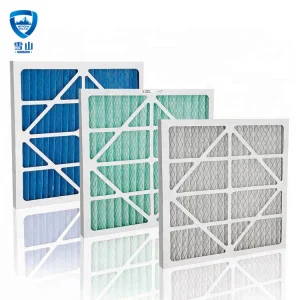
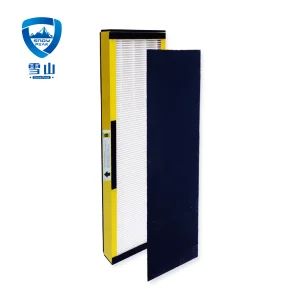
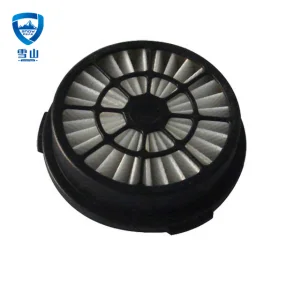
Featured OEM Air & Molecular Filtration Media
High-performance air purifier replacement modules and industrial carbon filtration units manufactured to exact international standards.
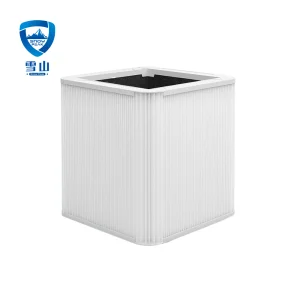
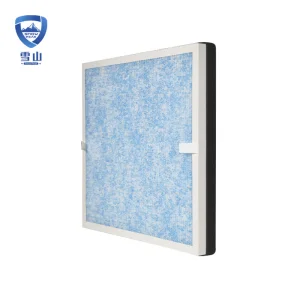

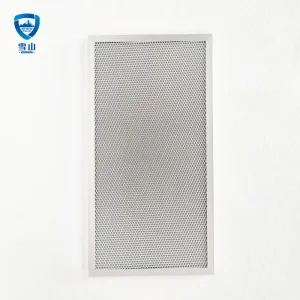


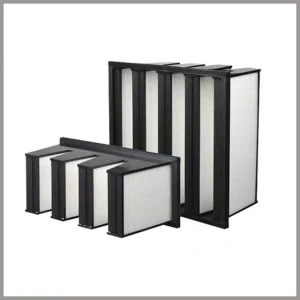
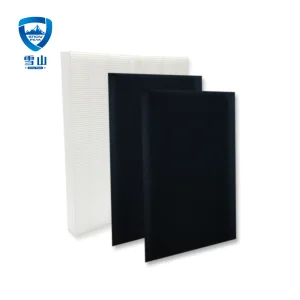
Material Science & Pore Engineering: Coconut Shell Activated Carbon Media
An engineering analysis of virgin coconut shell activated carbon, pore structure distribution, and micro-surface functionalization for critical gas-phase contaminant removal.
E-E-A-T Technical Insight: Coconut carbon media derived from selected Cocos nucifera shells exhibits an extraordinarily high micro-pore ratio (>85% of total pore volume under 2nm diameter), delivering superior specific surface area exceeding 1,200 m²/g. This structural characteristic provides up to 50% greater kinetic adsorption capacity for volatile organic compounds (VOCs) and low-molecular-weight airborne pollutants compared to coal- or wood-based activated carbons.
Microporous Architecture
Coconut shell raw materials undergo controlled multi-stage thermal steam activation at temperatures reaching 900°C–1100°C. This precise reaction mechanism yields a predominant micropore volume (<20 Å), ideal for trapping tiny molecular gases, light hydrocarbon solvents, formaldehyde, and atmospheric ozone.
Custom Catalytic Impregnation
To capture non-polar or inorganic compounds such as H2S, NH3, SO2, and acid gases, our ODM lab formulates specialized catalytic coatings. By chemically impregnating the carbon matrix with potassium hydroxide (KOH), potassium iodide (KI), or phosphoric acid (H3PO4), chemisorption kinetics are increased tenfold.
Superior Mechanical Hardness
Dust generation is a major failure point in HVAC and air purification systems. Our coconut carbon media processes maintain a high ball-pan hardness rating (>98%), minimizing structural degradation, attrition during transport, and airflow resistance spike over extended operational lifespans.
Physical & Chemical Property Benchmark (ASTM Standards)
| Property Parameter | Test Standard Method | Premium Grade (Air Filtration) | Water/Liquid Phase Grade | Catalytic Impregnated Grade |
|---|---|---|---|---|
| Iodine Number | ASTM D4607 | 1,050 – 1,250 mg/g | 950 – 1,100 mg/g | 900 – 1,050 mg/g |
| Carbon Tetrachloride (CTC) | ASTM D3467 | 60% – 85% | 50% – 65% | 55% – 75% |
| Ball-Pan Hardness | ASTM D3802 | ≥ 98% | ≥ 97% | ≥ 96% |
| Apparent Bulk Density | ASTM D2854 | 0.43 – 0.52 g/cm³ | 0.48 – 0.55 g/cm³ | 0.50 – 0.60 g/cm³ |
| Total Ash Content | ASTM D2867 | ≤ 3.0% | ≤ 5.0% (Acid-Washed ≤ 1%) | ≤ 4.5% |
| Moisture Content (As Packed) | ASTM D2867 | ≤ 3.0% | ≤ 5.0% | ≤ 8.0% |
Technology Roadmap & Next-Generation Carbon Innovation
Pioneering green thermal activation processes, zero-carbon manufacturing pathways, and AI-optimized pore functionalization.
Dynamic Kiln Automation
Integrating IoT-driven multi-stage rotary kilns with dynamic temperature and steam control algorithms. Real-time feedback optimizes activation kinetics, guaranteeing minimal lot-to-lot Iodine variance (<±25 mg/g).
Nitrogen-Doped Matrices
Next-gen research focuses on surface nitrogen functionalization via low-temperature plasma treatment. This creates enhanced chemical active sites that break down formaldehyde and ozone without heavy chemical leachates.
Zero-Carbon Thermal Loop
Our eco-focused manufacturing methodology channels the volatile pyrolytic gases generated during carbonization to power the activation process, drastically reducing fossil fuel dependence and overall carbon footprint.
Hybrid Composite Substrates
Engineering carbon-impregnated non-wovens, honeycomb structures, and polyurethane foam matrices that balance maximum gaseous contact time with low differential pressure loss (ΔP).
Macro Industry Solutions: Targeted Molecular Filtration
Tailored activated carbon media configurations addressing complex contamination challenges across diverse industrial and residential applications.
Residential & Commercial HVAC
Integrated HEPA-Carbon modules engineered to remove particulate matter (PM2.5) alongside cooking smells, pet odors, tobacco smoke, and building material off-gassing (VOCs) in HVAC fresh-air handling units.
Semiconductor Cleanroom AMC
Control of Airborne Molecular Contamination (AMC) is critical in microelectronics fabrication. High-purity acid-washed coconut media neutralizes organic acids, bases, and dopants to prevent wafer surface defects.
Water Purification & POU Systems
De-chlorination, PFAS removal, and micro-pollutant extraction for drinking water filter cartridges. Low-dust, washed granular activated carbon (GAC) meets stringent NSF/ANSI drinking water safety benchmarks.
China Industry 4.0: Manufacturing Excellence & Supply Chain Resilience
Leveraging fully automated pleating, computer-controlled carbon dispersion, and advanced quality testing to deliver world-class OEM/ODM products.
Automated Filling & Sealing
Our smart manufacturing facility incorporates robotic gravimetric carbon dosing systems that ensure perfectly uniform density distribution, eliminating void channels and uneven pressure drops in finished filters.
Laser-Guided Quality Inspection
In-line optical vision systems and dynamic pressure drop sensors test 100% of composite filter media rolls and pleat assemblies before final boxing, guaranteeing zero structural bypass defects.
Strategic Port Logistics Hub
Situated in major coastal manufacturing clusters with direct access to Shenzhen and Ningbo international container ports, ensuring resilient ocean freight routing, competitive freight rates, and rapid global dispatch.
Global Procurement & Customization (ODM) Framework
A streamlined four-step engineering process turning custom technical performance criteria into scalable, market-ready filtration products.
1. Specification Definition
Buyers submit target gas species (VOC, H2S, Formaldehyde), required airflow (CFM/m³h), initial ΔP limits, and target CADR ratings.
2. Formulation & Media Matching
Our lab selects optimal mesh size (e.g., 4x8, 8x30, 12x40, or 20x50), calculates carbon mass load, and prepares impregnated formulations.
3. Rapid Prototyping
Sample units are rapidly manufactured and evaluated in automated wind tunnels for dust holding capacity, dynamic gas removal efficiency, and structural rigidity.
4. Mass Production & Private Label
Full-scale manufacturing under strict quality control, custom retail packaging, private labeling, and sea/air freight fulfillment.
Global Compliance & Quality Assurance
Every product batch complies with stringent international environmental safety standards and quality certifications.
REACH & RoHS Compliant
Raw coconut shell carbon media and composite synthetic carriers are rigorously batch-tested to ensure zero heavy metal, SVHC, or toxic chemical off-gassing.
NSF/ANSI Standard 42 & 61
Our liquid-phase coconut media grades meet NSF material safety standards, guaranteeing suitability for direct potable water contact and food-grade applications.
ISO 9001:2015 & ISO 14001
Robust Quality Management Systems (QMS) and Environmental Management Systems govern every stage from raw raw material sourcing to final export shipping.
Frequently Asked Questions (FAQ)
In-depth technical answers addressing common procurement, material selection, and custom ODM engineering inquiries.
Explore Additional Industrial & OEM Filter Solutions
High-grade pre-filters, dust collectors, and branded replacement filters manufactured for global distribution.