
OEM Air Purifier & HVAC Carbon Solutions


1. Global Industrial & Commercial Landscape of Charcoal Air Filtration
The global market for gas-phase and particulate air purification has undergone a structural paradigm shift over the past decade. Driven by tightening indoor air quality (IAQ) mandates, heightened public health awareness regarding Volatile Organic Compounds (VOCs), and increasing frequencies of ambient wildfire events, global buyers are moving beyond basic mechanical dust filtration. Modern consumer smart air purifiers, commercial HVAC air handling units (AHUs), and industrial cleanroom systems now universally incorporate activated charcoal (carbon) filtration stages as standard operating protocol.
Unlike fibrous mechanical filters (such as polypropylene meltblown HEPA media) that rely on physical impaction, interception, and diffusion to capture particulate matter (PM2.5, PM10), charcoal air filters utilize physisorption and chemisorption mechanisms to trap gaseous pollutants. Gaseous contaminants such as formaldehyde (HCHO), benzene, toluene, xylene, TVOCs, nitrogen dioxide (NO2), ozone (O3), and unpleasant organic odors exist at molecular dimensions far smaller than the pore structures of standard HEPA filters. Consequently, high-grade activated carbon serves as the primary defense matrix against chemical pollutants in both residential and enterprise environments.
Key Market Insight: Search intent analysis among global B2B procurement heads indicates a massive transition from basic carbon-impregnated pre-filters toward high-density honeycomb activated carbon modules and dual-layer composite HEPA-carbon media. Buyers actively seek OEM partners capable of engineering specific CTC (Carbon Tetrachloride) adsorption values matched with low-pressure-drop frame architectures.
In commercial buildings, data centers, and healthcare facilities, gaseous contaminants pose dual threats: health hazards to occupants and corrosive degradation of electronic circuit boards (caused by sulfurous and acidic gas accumulation). As a result, procurement requirements across North America, Europe, and the Asia-Pacific region demand customized OEM charcoal filter configurations that balance high adsorption capacity, low airflow resistance, long operational lifespan, and strict environmental compliance (e.g., REACH, RoHS, and UL900 flammability standards).
Comparison Matrix: Activated Carbon Filter Formulations & Architectures
| Media Architecture | Primary Carbon Base | Typical CTC Value Range | Air Flow Resistance (Pa) | Target Application Profile |
|---|---|---|---|---|
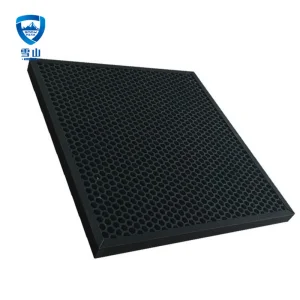
| Honeycomb Activated Carbon | Coconut Shell / Coal Blend | 60% – 90% | Very Low (15–35 Pa at 1.5 m/s) | High-CADR Purifiers, Commercial HVAC, Chemical Gas Scrubbing |
| Carbon Impregnated Foam/Mesh | Polyurethane + Carbon Powder | 35% – 50% | Ultra Low (10–25 Pa at 1.5 m/s) | Primary Pre-filters, Automotive Cabin HVAC, Dehumidifiers |
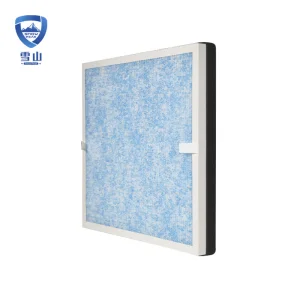
| Pleated Carbon Non-Woven Cloth | Synthetic Fibers + Carbon Pellets | 50% – 70% | Medium (40–80 Pa at 1.5 m/s) | Dual-Effect HEPA/Carbon Composite Replacement Filters |
| Columnar Pellets in Frame | Extruded Coal/Wood Carbon | 70% – 105% | High (80–150 Pa at 1.5 m/s) | Heavy-Duty Industrial Air Scrubbers, Chemical Cleanrooms |
2. Chemistry & Engineering of OEM Activated Charcoal Filters
To achieve superior Information Gain in carbon air filtration procurement, engineering teams must evaluate the underlying physical and chemical properties of activated carbon media. The efficiency of an OEM charcoal filter is determined by its internal pore architecture, total specific surface area, surface chemical functionalization, and mechanical frame design.
2.1 Specific Surface Area & Pore Distribution
Activated charcoal is synthesized through thermal activation (carbonization followed by steam or chemical oxidation) of raw carbon sources such as coconut shells, bituminous coal, or wood. This process creates an intricate network of internal pores, generating specific surface areas ranging from 800 m²/g to over 1500 m²/g. Pores are classified according to IUPAC standards:
- Micropores (diameter < 2 nm): Essential for trapping small volatile molecules such as benzene, toluene, and low-molecular-weight organic gases. Coconut shell activated carbon inherently possesses a dominant micropore structure, making it the premium choice for residential OEM air purifier filters.
- Mesopores (diameter 2 nm – 50 nm): Provide transport pathways for larger gas molecules and facilitate rapid adsorption kinetics under dynamic airflow conditions.
- Macropores (diameter > 50 nm): Serve as entry channels, allowing gas streams to penetrate deep into the carbon particle matrix.
2.2 Chemical Impregnation for Targeted Gas Removal
Standard non-impregnated activated carbon relies solely on Van der Waals physical adsorption. However, physical adsorption is reversible and exhibits poor binding affinity for light polar molecules or specific toxic gases. Leading OEM manufacturers overcome this limitation through precise chemical impregnation:
- Catalytic Formaldehyde Removal: Carbon impregnated with amine functional groups or transition metal catalysts (such as manganese dioxide, TiO2, or noble metal complexes) chemisorbs formaldehyde (HCHO), catalytic breaking it down into harmless H2O and CO2 at ambient room temperatures without saturation risk.
- Acidic Gas Neutralization (H2S, SO2, HCl): Carbon treated with alkaline reagents such as potassium hydroxide (KOH) or sodium carbonate (Na2CO3) chemically reacts with acidic gases via acid-base neutralization.
- Ammonia & Basic Compounds Removal: Impregnation with phosphoric acid (H3PO4) or citric acid creates acidic binding sites that trap basic amine compounds and ammonia efficiently.
Coconut Shell Carbon
Highest micro-porosity structure with micropore ratios exceeding 85%. Superior hardness minimizes carbon dust shed in clean environments.
Honeycomb Structural Matrix
Polypropylene, paper, or aluminum honeycomb cores filled with uniform granular carbon, offering maximal CADR and minimal static pressure loss.
Dual-Stage HEPA Composites
Single-pass filtration combining True H13 HEPA meltblown layers co-tackified with non-woven carbon cloth for space-constrained units.
3. China Factory Manufacturing Efficiency & OEM Value Chain Advantages
As the global manufacturing center for environmental control equipment, China accounts for over 70% of global OEM/ODM air purifier and replacement filter production. China-based filtration exporters provide distinct structural competitive advantages to international brands and industrial buyers across four core dimensions:
3.1 Complete Supply Chain Integration & Upstream Sourcing
China's mature industrial ecosystem hosts world-class raw material refineries for high-purity coconut shell activated carbon, non-woven meltblown synthetic substrates, aluminum frames, and eco-friendly hot-melt adhesives within localized geographic clusters (such as Guangdong, Jiangsu, and Zhejiang provinces). This localized supply chain eliminates multi-tier international transit delays for raw carbon, drastically reducing raw material procurement lead times and guaranteeing consistent CTC grades.
3.2 Automated Robotic Assembly & Precision Pleating
Leading Chinese OEM factories have aggressively migrated from manual assembly to fully automated production lines. Automated pleating machines with heat-sealing edge bands ensure precise pleat spacing and uniform carbon loading density (measured in g/m²). Robotic adhesive dispensing ensures airtight perimeter seals between the carbon media matrix and outer frame structures (such as ABS, cardboard, or extruded aluminum), preventing air bypass—a critical failure point in inferior aftermarket filters.
3.3 Rigorous Quality Assurance & Test Chamber Verification
Top-tier OEM exporters maintain in-house testing laboratories equipped with TSI 8130A automated filter testers, gas chromatography-mass spectrometers (GC-MS), and standard CADR testing chambers compliant with GB/T 18801-2022, AHAM AC-1, and ISO 16890 standards. Quality control routines follow strict four-stage verification:
- IQC (Incoming Quality Control): Testing carbon iodine values, moisture content, ash content, and substrate tensile strength.
- IPQC (In-Process Quality Control): Continuous monitoring of pleat height, glue weight, and structural frame squareness.
- FQC (Final Quality Control): 100% visual inspection, dimensional tolerance check (±0.5 mm), and batch-level pressure drop testing.
- OQC (Out-Going Quality Control): Drop-testing packaged cartons, moisture-proof seal verification, and pallet stability audits prior to container loading.
4. Localized Industrial & Commercial Application Scenarios
Air purifier charcoal filters are engineered to solve specific gas-phase pollution challenges across diverse sectors. Understanding these localized application requirements is vital for B2B sourcing agents configuring OEM product lines.
4.1 Premium Smart Household & Office Air Purifiers
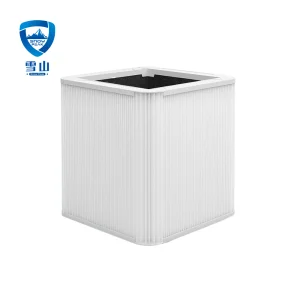
Consumer expectations for home purifiers demand silent operation, high Clean Air Delivery Rates (CADR for formaldehyde and smoke), and long replacement intervals (6 to 12 months). OEM replacement filters for brands such as Honeywell, Blueair, Coway, and Levoit utilize custom-molded honeycomb charcoal panels integrated with True H13 HEPA media. By optimizing honeycomb cell diameters (typically 1.5 mm to 3.0 mm), factories achieve CADR ratios exceeding 300 m³/h for gaseous VOCs without overloading blower motor thermal boundaries.
4.2 Commercial HVAC & Building Air Handling Units (AHUs)
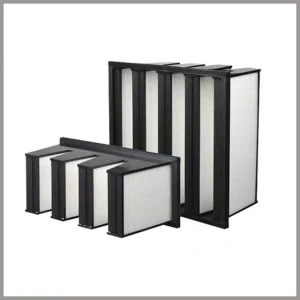
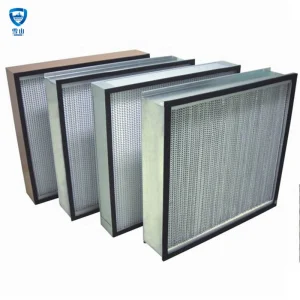
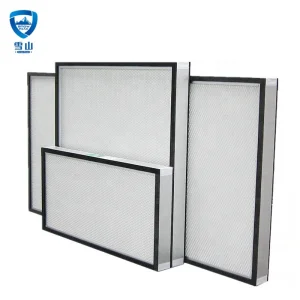
Commercial office buildings, airport terminals, and shopping malls face intense outdoor pollution ingress and internal odor generation. V-bank and rigid cell charcoal filters installed in primary AHUs eliminate ozone and nitrogen oxides before recirculating conditioned air. High-capacity columnar carbon pellets housed in galvanized steel frames provide high dust-holding and gas-absorption capacities essential for heavy-foot-traffic facilities.
4.3 Precision Electronics Cleanrooms & Semiconductor Fabs
In semiconductor fabrication and micro-display manufacturing, Airborne Molecular Contamination (AMC) even at parts-per-billion (ppb) concentrations can compromise wafer yield. OEM filter exporters produce chemical filters containing specially impregnated synthetic carbon media designed to trap organic silicones, organophosphates, and corrosive trace acids, maintaining Class 1 to Class 100 cleanroom cleanliness standards.
4.4 Healthcare Facilities, Laboratories & Isolation Wards
Hospitals, dental clinics, and histology laboratories generate hazardous concentrations of anesthetic gases, formalin, and ethanol vapors. Dual-stage composite filters combining anti-bacterial impregnated carbon with H14 ULPA/HEPA media provide non-recirculating safe exhaust solutions, protecting healthcare staff and patient safety.
5. Global Enterprise Procurement Blueprint & Sourcing Criteria
Sourcing executives, brand managers, and aftermarket distributor buyers must establish clear technical parameters when selecting an OEM Air Purifier Charcoal Filter manufacturer. To mitigate sourcing risks and guarantee product performance, procurement teams should mandate the following key criteria during vendor evaluation:
- CTC (Carbon Tetrachloride) Adsorption Rating: Ensure the vendor supplies raw carbon test certificates validating a minimum CTC value of 60% for general VOC removal, or 80%+ for high-end chemical grade products.
- Iodine Value Verification: Request ASTM D4607 testing reports verifying an iodine adsorption number of at least 900 mg/g to 1100 mg/g, confirming high micropore density.
- Air Resistance vs. CADR Optimization: Evaluate initial pressure drop (Pa) at rated airflow volumes. Lower resistance translates directly to reduced motor fan acoustic noise and lower power consumption in finished purifier appliances.
- Frame Structural Integrity & Gasket Seals: Inspect frame materials (high-impact polystyrene HIPS, aluminum alloy, moisture-resistant cardboard) and confirm seamless polyurethane gasket application to prevent perimeter air leaks.
- Compliance & Environmental Certification: Verify manufacturer compliance with ISO 9001:2015 quality management systems, ISO 14001 environmental standards, and international regulations including REACH (SVHC compliance), RoHS 2.0, and UL900 fire retardation standards.
- Private-Label Customization Capabilities: Ensure the factory offers custom box design, barcode labeling, laser-printed filter branding, moisture-barrier PE shrink wrapping, and drop-ship ready master carton packaging.
6. Frequently Asked Questions (FAQ) - B2B Buyer Guide
Industrial Filtration & Replacement Series



Partner with a Premier OEM Charcoal Filter Exporter
From customized activated carbon pore engineering to high-speed automated mass production and private-label packaging, our engineering team is ready to scale your air filtration business.