
Engineered precision replacement media, HEPA/Carbon composites, and high-efficiency industrial ventilation components.
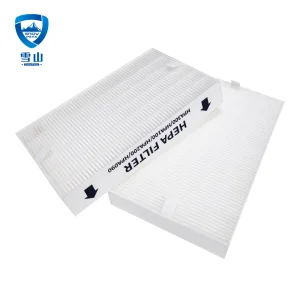




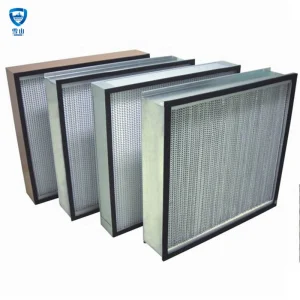
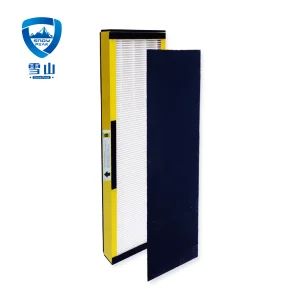

In modern industrial, commercial, and controlled agricultural environments, air purification cannot rely solely on mechanical particulate capture. The co-existence of Volatile Organic Compounds (VOCs), hazardous air pollutants (HAPs), odorous sulfides, and fine sub-micron particulates demands a unified engineering approach. As a premier OEM Carbon Air Filter and Fan Manufacturer & Exporter, our architectural paradigm merges advanced chemical adsorption mechanics with computational fluid dynamics (CFD)-matched ventilation fans.
Standard gas-phase filters often suffer from bypass leakages, uneven dwell time, and high static pressure drops ($\Delta P$) that strain fan motors, resulting in diminished Clean Air Delivery Rates (CADR) and inflated Total Cost of Ownership (TCO). Our integrated carbon-fan systems resolve these kinetic bottlenecks through micro-engineered porous virgin coconut-shell carbon lattices optimized for dynamic bed depth, paired with EC (Electronically Commutated) centrifugal blowers designed to maintain flat airflow curves across varying resistance loads.
Optimized Carbon Bed Kinetics
Utilizing high Iodine values (1050–1200 mg/g) and controlled Carbon Tetrachloride (CTC) activity (60%–80%), our activated carbon matrices ensure maximum micropore volume (<0.7nm) for targeting low molecular weight gases.
Aerodynamic Fan Matching
Integrated backward-curved centrifugal impellers, balanced to ISO 1940 G2.5 standards, provide high static pressure (up to 750 Pa) to overcome filter bed resistance without turbulent stall.
Zero-Bypass Mechanical Seals
Engineered liquid-gel, polyurethane foam, and continuous EPDM gaskets eliminate air bypass around filter perimeters, ensuring 100% processing of target air streams.
Tailored gas-phase and particulate abatement systems engineered for complex regulatory and environmental operational parameters.
Indoor Agriculture & Hydroponics
Challenge: Severe organic odorous terpenes, high humidity levels (up to 85% RH), and continuous 24/7 duty cycles.
Solution: Moisture-resistant impregnated virgin coconut carbon canisters connected via inline mixed-flow EC fans. Outfitted with pre-filter sleeves that prevent fine dust blinding, maintaining >98% odor destruction efficiency over 12 months.
Commercial HVAC & Smart Buildings
Challenge: Recirculating urban pollution, nitrogen dioxide ($NO_2$), sulfur dioxide ($SO_2$), and volatile office off-gassing under strict energy standards.
Solution: Combination MERV 13/15 (F7/F8) pleated filters impregnated with chemical-adsorbent carbon mesh, integrated into low-profile AHU units driven by ultra-quiet PWM fans.
Semiconductor Cleanrooms & Electronics
Challenge: Airborne Molecular Contamination (AMC) damaging sub-nanometer lithography wafers and sensitive optical equipment.
Solution: Chemisorption filter modules utilizing acid- and base-impregnated carbon matrices (targeting ammonia $NH_3$ and acid gas $H_2S$) matched with ULPA/HEPA H14 gel-seal filters.
| Application Sector | Target Pollutant Class | Filter Media Composition | Recommended Fan Type | System Dwell Time |
|---|---|---|---|---|
| Commercial Office / HVAC | VOCs, PM2.5, Formaldehyde | Carbon-Laminated Synthetic Pleat | Backward-Curved Centrifugal (EC) | 0.05 – 0.10 sec |
| Controlled Environment Ag | Terpenes, Humidity, Spores | 4mm Virgin Pellet Canister Bed | Inline Mixed-Flow Fan | 0.15 – 0.25 sec |
| Industrial Spray Painting | Xylene, Toluene, Overspray | 600G Fiberglass + Activated Carbon Mesh | Explosion-Proof Axial / Centrifugal | 0.20 – 0.35 sec |
| Cleanroom (ISO Class 5) | AMC, Acid Gases, Sub-0.1µm Dust | PTFE / Glass Fiber Gel-Seal H14 + Chemisorption Bed | FFU Integrated Brushless Direct Drive | 0.10 – 0.20 sec |
Pioneering the transition toward smart, regenerative, and carbon-neutral air filtration platforms.
4D Nanoporous Carbon
Development of engineered mesopore-rich synthetic carbon matrices with tailored pore geometries to selectively capture specific VOC molecules without premature pore-clogging.
Photocatalytic Regeneration
Integrating TiO2 and cold-catalyst coatings onto carbon substrates, enabling continuous self-regeneration under UV-LED excitation to break down adsorbed VOCs into $H_2O$ and $CO_2$.
IoT Smart Fan-Filter Units
Embedded differential pressure sensors, TVOC sensors, and Modbus/RS485 EC fan controllers providing real-time carbon saturation monitoring and predictive maintenance alerts.
Bio-Based Green Binder Systems
Replacing petroleum-derived adhesives with bio-polyols and lignin-based binding agents, reducing off-gassing and achieving zero carbon footprint in filter production.
Operating from Shenzhen's high-tech manufacturing core, our state-of-the-art facility represents the pinnacle of Industry 4.0 integration in air filtration. Through automated raw material processing, robotic media pleating, precision ultrasonic welding, and real-time computer vision quality control, we deliver uncompromised consistency for large-scale OEM and ODM supply agreements.
By controlling the entire vertical production chain—from raw carbon activation, crushing, and screen mesh lamination to fan housing injection molding and dynamic impeller balancing—we eliminate third-party component markups and lead-time delays. This vertical Integration grants global buyers unprecedented supply chain resilience, ensuring rapid scaling from prototype design to full container shipments.
Automated Carbon Filling & Compaction
Computer-controlled pneumatic vibration tables ensure uniform carbon density and zero settling voids in filter canisters, preventing air channeling during long-term operational vibration.
ISO Class 7 & 8 Cleanrooms
Mini-pleat HEPA filters and gel-seal cleanroom units are assembled and sealed inside positive-pressure controlled cleanrooms to prevent background particle contamination.
100% Automated Leak Testing
Every HEPA filter unit undergoes automated scan testing using photometer particle counters (MPPS verification) according to EN 1822 / ISO 29463 standards prior to packaging.
For international procurement directors, OEM brand managers, and HVAC engineering contractors, specifying the correct carbon air filter and fan combination requires balancing multiple operational metrics. Beyond basic dimensional fit, engineering teams must evaluate chemical adsorption capacity, system pressure drop budgets, motor electrical efficiency, and acoustic output.
1. Airflow vs. Static Pressure Curve
Selecting a fan motor capable of maintaining the target CFM rate against the rising static pressure of a loaded carbon bed. EC fans with backward-curved impellers are strongly recommended for maintaining high efficiency across varying resistance points.
2. Dwell Time & Bed Depth
Adsorption kinetics dictate that target gaseous molecules require a minimum contact time (dwell time) with activated carbon granules. Bed depth must be engineered to ensure a minimum of 0.1 to 0.3 seconds of contact without creating excessive airflow restriction.
3. Total Cost of Ownership (TCO)
Evaluating initial unit procurement cost against operational energy consumption. High-efficiency EC fans paired with low-resistance carbon-laminated media yield up to 40% energy savings over standard AC fan installations.
Exporting high-performance filtration components across North America, Europe, and Asia-Pacific demands strict adherence to regional environmental and safety regulations. Our products undergo rigorous independent third-party laboratory validation to ensure effortless compliance for international distribution.
ISO 16890 / EN 779
Full compliance for coarse, medium, and fine air filtration efficiency classification (ePM1, ePM2.5, ePM10).
AHAM AC-1 CADR
Certified Clean Air Delivery Rates for smoke, dust, and pollen in OEM consumer and commercial air purifiers.
RoHS & REACH
Strict raw material control ensuring zero heavy metals, SVHCs, or toxic off-gassing chemical compounds.
UL 900 Flammability
Fire-retardant synthetic media, carbon frames, and potting compounds meeting stringent building code standards.
Explore our full line of compatible aftermarket purifiers, pocket media rolls, and industrial dust collectors.


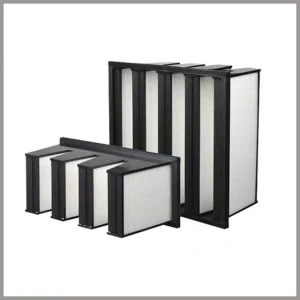
Comprehensive technical insights compiled by our senior filtration systems engineering team.