
Featured OEM & Replacement Filtration Solutions (Part I)
Explore our engineered replacement and industrial air filtration products manufactured under strict quality standards.

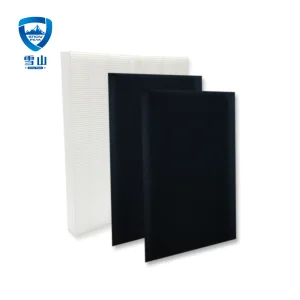

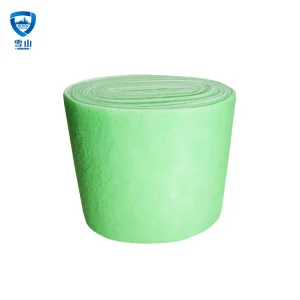
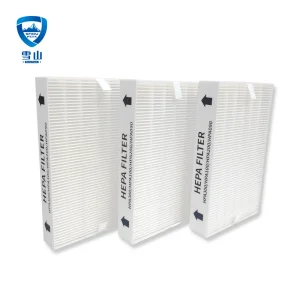

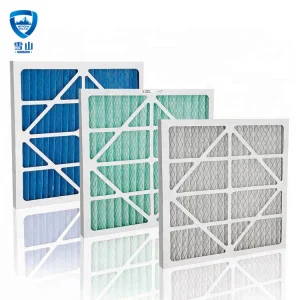
Global Commercial & Automotive Cabin Air Filtration Landscape
Understanding the industry shift from basic particle barrier mesh to advanced gas-phase adsorption and catalytic breakdown in vehicle passenger compartments.
The automotive cabin environment represents one of the most demanding operational domains for air filtration engineering. Passengers in modern passenger cars, commercial vehicles, and electric vehicles (EVs) are exposed to severe localized air pollution spikes. Urban traffic congestion creates concentrated micro-environments contaminated with internal combustion engine (ICE) exhaust particulates (PM2.5, PM0.1), hazardous gaseous combustion byproducts (nitrogen oxides $NO_x$, sulfur dioxide $SO_2$, carbon monoxide $CO$), ground-level ozone ($O_3$), and volatile organic compounds (VOCs). Furthermore, interior trim components—such as synthetic polymers, polyurethanes, leather tanning agents, and structural adhesives—continually outgas formaldehyde, benzene, toluene, and xylene (BTEX) into the enclosed cabin atmosphere.
Historically, automotive HVAC systems relied on single-layer particle filters made of coarse synthetic non-wovens. However, global regulatory frameworks (including ISO 11155 standards, European EN 13779 guidelines, and China’s GB/T 32085 cabin air regulations) alongside evolving consumer health expectations have accelerated the transition toward multi-stage OEM Charcoal Air Filters for cars. Modern automotive OEMs and Tier-1 procurement teams now mandate integrated cabin filters capable of simultaneously capturing airborne dust, pollen, soot, and bio-aerosols while demonstrating high dynamic breakthrough capacity for noxious gases and unpleasant odors.
In the rapidly expanding New Energy Vehicle (NEV) sector, cabin filtration design faces unique engineering constraints. EV powertrains operate almost silently, rendering HVAC blower noise far more noticeable to vehicle occupants. Consequently, OEM charcoal car filters must achieve maximum gas adsorption capacity and sub-micron particle filtration efficiency at significantly lower pressure drops ($\Delta P$). Achieving low flow resistance prevents HVAC blower over-speeding, reduces acoustic noise in decibels (dB), and minimizes energy consumption from the vehicle's high-voltage traction battery, directly preserving driving range.
Technical Architecture & Material Engineering Roadmap
A whitepaper deep-dive into active carbon impregnation, pore architecture optimization, and next-generation catalytic composite substrates.
High-IV Activated Carbon Matrix
We utilize virgin coconut shell activated carbon engineered with an Iodine Value (IV) exceeding 1050–1200 mg/g and a specific BET surface area of 1100–1400 m²/g. The dominant micro-pore structure (< 2nm) maximizes van der Waals physical adsorption of low-molecular-weight VOCs like benzene, toluene, and butane.
Chemical Impregnation & Doping
To capture reactive acidic and basic gases that physical carbon cannot retain, media layers undergo target chemical impregnation. Phosphoric acid ($H_3PO_4$) doping chemically neutralizes alkaline ammonia ($NH_3$), while metal salt impregnation ($Cu, Zn$) converts hazardous nitrogen dioxide ($NO_2$) and sulfur dioxide ($SO_2$) into non-volatile salts.
Low-Resistance Sandwich Construction
Carbon granules (30x60 or 40x80 mesh) are uniformly fixed between synthetic spunbond carrier non-wovens using high-precision hot-melt web adhesives. This structure prevents carbon settling, guarantees uniform mass distribution ($150-300 \text{ g/m}^2$), and prevents localized pressure buildup.
Filter Media Performance Comparison (Automotive Cabin HVAC Standards)
| Filter Media Classification | Particulate Efficiency (PM2.5) | VOC / Odor Adsorption | $NO_x$ / $SO_2$ Removal | Initial Pressure Drop (200 m³/h) | Typical Service Life |
|---|---|---|---|---|---|
| Standard Synthetic Non-Woven | 65% - 80% | Negligible (< 5%) | None (0%) | 15 - 20 Pa | 10,000 km |
| Electrostatic Meltblown Non-Woven | 95% - 99% | Negligible (< 5%) | None (0%) | 20 - 25 Pa | 15,000 km |
| Standard Activated Carbon Composite | 85% - 92% | 75% - 85% (Physical) | 20% - 35% | 30 - 40 Pa | 15,000 km |
| Snow Peak Catalytic Impregnated Charcoal | 98% - 99.5% | 92% - 98% (Chem/Phys) | 85% - 92% | 28 - 35 Pa | 20,000 - 30,000 km |
Future Technology Roadmap: 2025–2030 Horizon
- Phase 1: Advanced Room-Temperature Catalysis (RTO) — Integrating transition-metal oxide catalysts ($MnO_2/CuO$) onto the carbon matrix to continuously decompose formaldehyde into harmless $H_2O$ and $CO_2$ at ambient temperatures without reaching carbon adsorption saturation limits.
- Phase 2: Bio-Based Electrospun Nanofiber Laminates — Combining eco-friendly PLA nanofiber membranes with ultra-fine charcoal particles to capture sub-micron bio-aerosols and virus carriers down to 0.1 microns while reducing synthetic polymer reliance.
- Phase 3: Sensor-Integrated Smart Filters — Developing OEM charcoal filters with built-in impedance micro-sensors that measure gas saturation breakthrough and pressure differential in real-time, communicating directly with vehicle ECU telemetry for predictive maintenance alerting.
Localized Automotive Application Scenarios
Customized engineering formulations adapted to regional environmental demands, climate extremes, and operational duty cycles.
1. Heavy Urban Commuting & Megacity Traffic Gridlock
Operating Environment: Dense metropolitan areas with heavy bumper-to-bumper traffic, underground tunnels, and elevated highways subject to high concentrations of diesel exhaust particles, nitrogen dioxide ($NO_2$), sulfur compounds, and unburned hydrocarbons.
Engineered Solution: High-density coconut shell carbon composite filters with dual-stage electrostatically charged meltblown layers. Rapidly adsorbs sharp VOC concentrations during tunnel transits while maintaining a high Clean Air Delivery Rate (CADR) for recirculated cabin air.
2. Extreme Climate, Agricultural & Dusty Terrains
Operating Environment: Arid, desert regions subject to sandstorms (fine silica dust), high ambient temperatures, and intense UV outgassing, as well as agricultural belts with high atmospheric ammonia ($NH_3$) and airborne chemical pesticides.
Engineered Solution: High dust-holding capacity (DHC) pre-filter non-wovens combined with acid-impregnated charcoal matrices. Resists heat degradation up to 90°C while preventing organic agricultural odors and fine dust cake formation from choking air resistance.
3. Commercial Fleets, Taxis & Ride-Hailing Vehicles
Operating Environment: Continuous 12-to-24-hour daily operation, high passenger turnover, frequent door openings, elevated humidity from breath condensation, cigarette smoke odors, and biological aerosol accumulation.
Engineered Solution: Long-life activated carbon filters infused with broad-spectrum zinc pyrithione / silver-ion antimicrobial coatings. Inhibits bacterial growth and mold mildew on moist filter media surfaces, preventing the release of musty HVAC odors.
China Factory Supply Chain Resilience & Manufacturing Edge
Delivering cost efficiency, scale agility, and strict automotive quality control from our advanced Shenzhen production hub.
Fully Vertical Manufacturing Integration
From raw non-woven media formulation, electrostatic meltblown production, and high-IV carbon impregnation to automated high-speed pleating, robotic polyurethane (PU) frame potting, and ultrasonic side-edge banding. End-to-end process control guarantees tight dimensional tolerances and eliminates sub-tier supplier markup.
Rapid Tooling & Prototyping Agility
Our in-house CAD tooling center enables rapid prototype development for non-standard, custom car models or aftermarket chassis configurations within 7 to 10 working days. Flexible tooling setups support both low-volume specialty OEM orders and mass-production runs exceeding 1.5 million units monthly.
Greater Bay Area Export Hub Logistics
Situated in Shenzhen, China, our manufacturing facility benefits from direct proximity to Yantian and Shekou deep-water container ports. This strategic cluster provides unparalleled access to raw material supply chains, streamlined customs clearance, and cost-effective sea/air logistics to over 50 countries worldwide.
Localized Support, Quality System & Compliance Assurance
Strict adherence to international automotive standards, chemical safety, and multi-stage quality validation protocols.
Automotive cabin filters are safety-critical interior components subject to stringent OEM verification protocols. Shenzhen Snow Peak Clean Technology operates under an audited IATF 16949 Quality Management System—the definitive standard for global automotive supply chains. Every batch of charcoal media and finished filter cartridges undergoes rigorous multi-stage quality control:
IQC (Incoming Quality)
Spectrophotometric testing of activated carbon Iodine Value, moisture content determination, non-woven tensile strength verification, and media mass consistency ($g/m^2$) prior to production release.
IPQC (In-Process Control)
Automated laser sensor monitoring of pleat depth uniformity, pleat pitch, hot-melt adhesive ribbon alignment, PU foam curing density, and dimensional frame tolerances.
FQC & OQC Testing
Fractional particle counting tests according to ISO 11155-1 and dynamic gas breakthrough challenge testing ($n$-butane, $toluene$, $SO_2$, $NO_x$) per ISO 11155-2 guidelines before export packaging.
International Compliance & Regulatory Standard Framework
- ISO 11155-1 / DIN 71460-1: Road vehicles — Air filters for passenger compartments — Part 1: Test for particulate filtration.
- ISO 11155-2 / DIN 71460-2: Road vehicles — Air filters for passenger compartments — Part 2: Test for gaseous filtration ($n$-butane, $SO_2$, $NO_x$, $toluene$).
- REACH & RoHS 2.0 Compliance: Certified free from SVHC (Substances of Very High Concern), heavy metals, polybrominated biphenyls (PBBs), and hazardous chemical outgassing.
- GB/T 32085 / GB/T 39792: Chinese national passenger vehicle cabin air quality and filter efficiency regulations.
Featured OEM & Replacement Filtration Solutions (Part II)
Explore additional high-performance industrial, cleanroom, and activated carbon media solutions from our line.





Frequently Asked Questions (FAQ) for OEM Buyers & Engineers
Addressing technical queries regarding performance metrics, material selection, testing compliance, and OEM procurement workflows.