High-Efficiency Particulate & Media Portfolio
Factory-direct engineered filtration components, cleanroom units, and multi-stage media solutions manufactured to rigorous ISO 16890 and EN 1822 compliance standards.





Navigating the Paradigm Shift in Industrial Air Purification
As global regulatory frameworks tighten regarding Indoor Air Quality (IAQ), cleanroom ISO standards, and ESG environmental metrics, industrial procurement teams are re-evaluating their OEM supplier ecosystems for DHEPA (Deep-Pleat High-Efficiency Particulate Air) and Activated Carbon filtration infrastructure.
Evolving Global Standards
Transition from ASHRAE 52.2 to ISO 16890 demands enhanced sub-micron particulate counting (ePM1, ePM2.5, ePM10). Original Equipment Manufacturers (OEMs) must align media pleating density and electrostatic charge retention with stringent regional codes.
Hybrid Molecular Filtration
Modern manufacturing facilities can no longer separate particulate capture from volatile organic compound (VOC) abatement. Integrated DHEPA-Carbon matrixes solve dual-phase contamination within a single, space-optimized casing.
Total Cost of Ownership (TCO)
Energy accounts for up to 80% of an industrial air filter's life-cycle cost. Advanced low-pressure-drop DHEPA geometries engineered in high-tech Chinese factories reduce HVAC fan power draw by up to 28% annually.
| Filter Class / Technology | Target Pollutant Spectrum | Efficiency Grade (EN 1822 / ISO 16890) | Typical Pressure Drop Range (Pa) | Key OEM Application Fields |
|---|---|---|---|---|
| DHEPA (Deep-Pleat HEPA) | Sub-micron aerosols, bacteria, combustion dust | H13 - U15 (≥99.95% to ≥99.9995% @ MPPS) | 120 - 250 Pa @ nominal flow | Semiconductor fab cleanrooms, Pharma suites, Hospital operating rooms |
| Standard Mini-Pleat HEPA | Fine particulate matter, PM0.3, spores | H13 - H14 (≥99.95% to ≥99.995%) | 180 - 320 Pa @ nominal flow | Commercial air purifiers, Residential HVAC, Laminar flow cabinets |
| Impregnated Carbon Matrix | Acid gases (H2S, SO2), Formaldehyde, Ammonia | Gas Removal Efficiency > 90% initial | 40 - 110 Pa @ 1.5 m/s | Chemical plants, BESS energy storage, Data center corrosion protection |
| Composite DHEPA + Carbon | Particulates + High-concentration VOCs | ePM1 90% + CTC 60-100% Carbon | 140 - 220 Pa @ nominal flow | Smart Home flagship appliances, Automotive cabin filters, Airports |
Why China OEM/ODM Dhepa & Carbon Factories Dominate Global Supply
China's industrial filtration ecosystem has undergone a monumental shift from low-cost assembly to highly automated, precision-engineered cleanroom production powered by advanced R&D.
Complete Upstream Supply Integration
Direct access to world-class synthetic non-wovens, meltblown media, activated carbon block synthesis, and extruded aluminum framing allows Chinese factories to control raw material consistency and reduce overall lead times by 40%.
Automated Deep-Pleating Tech
State-of-the-art robotic pleating machinery maintains uniform pleat spacing and precise hot-melt bead separation, minimizing pressure drop spikes and guaranteeing maximum dust holding capacity (DHC).
Rigorous DOP/PAO Leak Testing
Top-tier Chinese OEM facilities operate Class 100 to Class 10,000 cleanrooms equipped with automated laser particle counters and Dispersed Oil Particulate (DOP) scan testing systems for 100% individual quality assurance.
Rapid OEM/ODM Prototyping
From CAD/CAM gasket tooling to custom polyurethane gel-seal molding, engineering teams can progress from dimensional concept to fully tested sample within 5 to 7 working days.
Engineering Principles: Dhepa vs. Carbon Filtration
Optimizing air purification requires an intimate understanding of the physics governing particle interception and gas-phase adsorption dynamics.
1. Deep-Pleat HEPA (DHEPA) Mechanics
DHEPA filters differ from conventional shallow mini-pleat designs by utilizing pleat depths ranging from 150mm to 300mm separated by continuous corrugated aluminum or specialized paper spacers. This structural architecture yields distinct aerodynamic advantages:
- Extended Surface Area Ratio: Increases filtration area up to 50 times the face dimension, dramatically lowering face velocity across the glass fiber matrix.
- Optimized Impaction & Interception: Sub-micron particles (0.1 - 0.3 microns) are captured via Brownian diffusion, while larger particles are trapped through direct interception and inertial impaction.
- Structural Integrity for High Volume Flow: Aluminum separators prevent pleat collapse under turbulent airflows, handling static pressures up to 1,000 Pa without structural failure.
2. Gas-Phase Activated Carbon Synthesis
Molecular gaseous contaminant removal relies on physical adsorption (van der Waals forces) or chemisorption on microporous media matrixes engineered for target gas profiles:
- Coconut Shell Carbon Core: Superior hardness and micro-pore structure (< 2nm pore size) providing surface areas exceeding 1,000 to 1,200 m²/g, ideal for low molecular weight VOCs.
- Chemical Impregnation: Carbon treated with KI, KOH, or Phosphoric Acid to neutralize targeted industrial gases such as Hydrogen Sulfide (H2S), Sulfur Dioxide (SO2), and Ammonia (NH3).
- Honeycomb & Porous Foam Substrates: Low-resistance carbon-coated substrates designed for minimal pressure drop in high-CADR residential and commercial purifiers.
Localized Application Scenarios & Macro Solutions
High-performance OEM DHEPA and Carbon filter configurations engineered for mission-critical industrial environments.
Semiconductor & Microelectronics
Photolithography and fab cleanrooms demand sub-micron zero-outgas particle control. Gel-Seal DHEPA filters combined with Boron-Free media prevent micro-chip defect risks caused by airborne molecular contamination (AMC).
Bio-Pharmaceutical & Containment
In biological safety laboratories (BSL-3/BSL-4) and sterile filling suites, liquid gasket gel-seal DHEPA filters are integrated with Bag-In/Bag-Out (BIBO) housings to prevent pathogen escape during filter change-outs.
BESS Energy Storage Cabinets
Outdoor Battery Energy Storage Systems (BESS) require heavy-duty hydrophobic pre-filters combined with active chemical carbon media to resist moisture, salt fog corrosion, and battery off-gassing degradation.
Commercial HVAC Retrofits
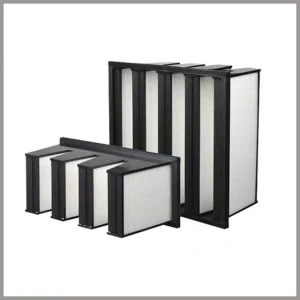
V-Bank compact HEPA units and high-capacity MERV 13 to F9 pocket filters allow commercial office buildings and hospital campuses to upgrade indoor IAQ without exceeding existing fan motor pressure limitations.
Consumer Smart Home OEM
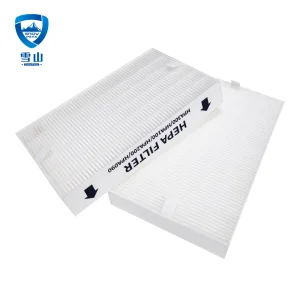
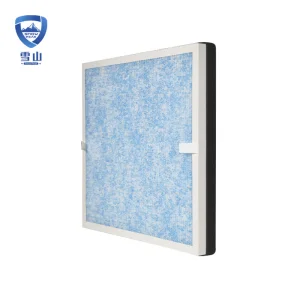
Custom multi-layer replacement filters designed for international brand air purifiers (Honeywell, Coway, Levoit, Blueair). Features integrated RFID chip housing, custom plastic moldings, and retail packaging.
Industrial Spray Paint Booths
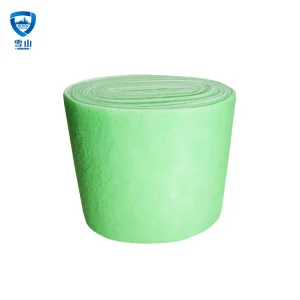
Progressive-density fiberglass floor paint-stop rolls paired with high-efficiency ceiling diffusion cotton ensure laminar airflow, zero particulate paint defect rates, and exhaust VOC filtration compliance.
Global Procurement Risk Management Framework
Enterprise buyers must evaluate OEM suppliers beyond basic pricing. Our engineering-driven procurement pathway guarantees quality verification at every milestone.
Specification & Airflow Simulation
Collaborative parameter definition: CFD computational airflow modelling, target gas mass balance calculation, media face velocity balancing, and structural dimensioning.
Rapid Tooling & Prototyping
Precision laser cutting of media, custom aluminum frame extrusion, foam gasket application, and initial DOP leak test validation for sample sign-off within 7 days.
Automated Mass Production
Robotic pleating, potting polyurethane dispensing, continuous moisture monitoring, and batch testing under strict ISO 9001 quality management systems.
100% Final QC & Export Logistics
Laser scan leak detection per EN 1822, custom drop-test protective packaging, moisture barrier wrapping, and direct port dispatch from Shenzhen / Guangzhou logistics hubs.
Frequently Asked Questions for Enterprise Sourcing
Addressing key technical, logistical, and customization inquiries from industrial buyers and brand procurement managers.
Replacement Series, Metal Mesh & Industrial Units
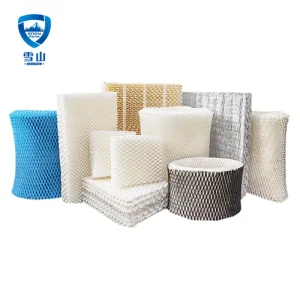
Factory-direct aftermarket consumer refills, metallic pre-filters, cylindrical collector elements, and rolls media engineered for global distributor supply chains.