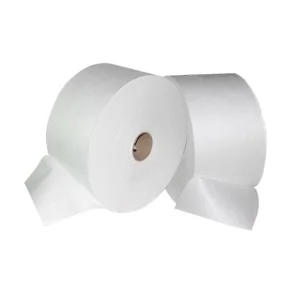
Featured OEM Air Filtration Media & Products
Explore engineered HEPA media, replacement elements, and industrial adsorption solutions customized for heavy-duty contaminant mitigation.








Industrial Lead Dust Mitigation: Macro Regulatory Dynamics & Safety Imperatives
Understanding the global shift toward stringent Permissible Exposure Limits (PEL) and how specialized OEM HEPA filtration systems mitigate catastrophic health risks.
OSHA & Regulatory Thresholds
In industrial environments—ranging from battery recycling plants and brass foundries to shooting ranges and lead paint abatement sites—lead dust (Pb particles) presents an extreme respiratory toxicity hazard. The Occupational Safety and Health Administration (OSHA) mandates a Permissible Exposure Limit (PEL) of 50 µg/m³ over an 8-hour time-weighted average. Achieving compliance requires absolute air containment utilizing certified H13 or H14 grade HEPA filtration media capable of capturing microscopic particulate matter.
Global Compliance Trends
Regulatory bodies worldwide, including the European Chemicals Agency (ECHA under REACH) and the US EPA (Lead RRP Rule), have heightened surveillance on industrial emissions. Procurement executives are moving away from standardized commercial air filters toward custom OEM engineering. OEM HEPA filters built specifically for heavy metal dust must maintain structural integrity under high static pressure drop, humidity variations, and corrosive ambient environments without leakage.
Particle Aerodynamic Dynamics
Lead dust fumes typically range in size from 0.1 to 1.0 micrometers. Particles within this sub-micron spectrum behave like gases, remaining suspended in the airflow indefinitely. Standard coarse filters (G2–G4) or medium pocket filters (M5–F9) fail to trap these respirable hazards. Only true HEPA media featuring high mechanical filtration mechanisms—specifically impaction, interception, and Brownian diffusion—can effectively clean polluted industrial airstreams.
Technical Physics: How OEM HEPA Media Arrests Sub-Micron Heavy Metals
A granular analysis of media morphology, membrane technology, structural pleating, and perimeter sealing integrity.
In the engineering of industrial dust collection systems, the phrase "HEPA" is often loosely applied. However, capturing toxic lead dust demands strict mathematical precision regarding Most Penetrating Particle Size (MPPS). MPPS typically falls between 0.12 and 0.25 microns, representing the size at which filtration efficiency reaches its theoretical minimum. High-performance OEM lead dust filters leverage multi-tiered mechanical capture phenomena rather than relying solely on transient electrostatic charges.
| Filtration Mechanism | Target Particle Size Range | Physical Principle | Relevance to Industrial Lead Dust |
|---|---|---|---|
| Inertial Impaction | > 1.0 µm | Heavy particles fail to negotiate curved streamlines and collide directly with filter fibers. | Captures coarse lead particulates generated during mechanical sanding, grinding, and scraping. |
| Direct Interception | 0.3 µm – 1.0 µm | Particles follow air streamlines within one particle radius of a fiber and adhere to it. | Primary mechanism for catching mid-range lead oxides and process dusts. |
| Brownian Diffusion | < 0.1 µm | Ultra-fine particles collide with gas molecules, moving in erratic paths and contacting fibers. | Critical for trapping lead metallurgical fumes released during smelting or high-heat welding. |
| Electrostatic Attraction | 0.05 µm – 0.5 µm | Charged electret fibers attract polarized or oppositely charged airborne particles. | Enhances initial CADR/flow rates; requires mechanical backing to maintain long-term efficiency. |
Micro-Glass Fibers vs. ePTFE Membranes
Traditionally, borosilicate micro-glass fiber paper has been the gold standard for HEPA media due to its heat resistance and vast dimensional surface area. However, modern industrial OEM lead dust systems increasingly incorporate ePTFE (expanded Polytetrafluoroethylene) membrane laminates. ePTFE offers extremely low airflow resistance, hydrophobic moisture immunity, and superior mechanical durability, preventing media tears under pulsing clean-out pressures.
Zero-Bypass Polyurethane & Gel Sealing
A HEPA filter media is only as reliable as its frame encapsulation. A leak of even 0.01% around the filter edge can compromise safety standards. Our OEM manufacturing process utilizes automated two-component liquid polyurethane gasketing or fluid gel seal channels. This ensures an airtight, seamless bond between the pleated pack, the galvanized steel/aluminum/cardboard frame, and the housing plenum.
Optimized Hot-Melt Pleat Spacing
Uniform airflow distribution across the filter depth is necessary to prevent premature dust loading and localized high-velocity hot spots. Utilizing computer-controlled hot-melt separator beads, OEM pleated packs maintain precise inter-pleat spacing. This maximizes effective media area, keeps initial resistance low, and significantly extends operational service life under high dust-load conditions.
Global OEM Sourcing: Supply Chain Resilience & Custom Engineering
Empowering international equipment manufacturers, brand owners, and industrial distributors with flexible ODM/OEM capabilities.
Custom Dimensional Configurations
No two industrial containment systems share identical physical envelopes. We manufacture OEM replacement HEPA filters in cylindrical cartridge, deep-pleated panel, mini-pleated v-bank, and custom bag-in/bag-out (BIBO) formats. Frame options range from heavy-duty extruded aluminum and stainless steel for corrosive settings to lightweight ABS and rigid beverage board.
Rigorous QA/QC & Individual Scanning
To guarantee absolute reliability for safety-critical lead containment, every production run undergoes thorough quality verification. Individual filters can be subjected to photometer or condensation nucleus counter (CNC) scanning using aerosol challenges such as PAO (Polyalphaolefin) or DEHS. Standardized factory reports detail initial differential pressure, penetration percentages, and rated airflow velocity.
Private Label & Logistics Support
We provide complete private-label manufacturing services, including barcode integration, custom retail/industrial packaging, drop-testing compliance, and multi-lingual documentation. Situated in Shenzhen with direct access to deep-water sea ports, our supply chain guarantees fast turnaround for both small-batch specialized prototypes and mass container exports.
Macro Sector Solutions: Where Lead Dust HEPA Filters are Essential
Tailored filtration architectures for high-risk industrial environments requiring heavy metal containment.
1. Battery Recycling & Manufacturing
Lead-acid battery production and secondary smelting generate dense lead oxide dusts and acid mists. OEM filters in these facilities require chemical-resistant synthetic pre-filtration media (G4/F8 rolls) paired with hydrophobic H13 HEPA downstream collectors to handle moist, corrosive gas streams without media blinding.
2. Environmental Lead Paint Abatement
Contractors executing municipal or commercial building retrofits rely on negative air machines equipped with portable HEPA units. These filters must feature high physical shock resistance, rigid frames, and integrated carbon gas adsorption stages to capture co-located VOCs from paint stripping solvents.
3. Tactical Firing Ranges & Defense
Bullet impact against bullet traps releases significant amounts of airborne airborne lead particles and propellant residues. Range ventilation requires high-volume multi-bank V-Bank HEPA filtration modules capable of continuously processing massive CFM volumes while maintaining low power consumption.
4. Specialized Vacuum Systems (Class H)
OEM manufacturers of industrial Class H hazardous dust vacuums require specialized cylindrical HEPA cartridges. These cartridges utilize robust pleat support cores, conductive wire meshes for static dissipation, and rubber end-caps designed to withstand severe pulse-jet cleaning forces.
Future Technology Roadmap: Advanced Materials & Smart Filtration
Next-generation innovations shaping the future of industrial particulate management and environmental health.
Electrospun Nanofiber Layers
By depositing a ultra-thin web of nanofibers (diameters under 100 nanometers) onto standard substrates, next-generation OEM media achieves surface loading rather than depth loading. This allows lead dust cake to drop off easily during pulse-cleaning, dramatically extending filter element service life and cutting energy consumption by up to 30%.
Smart RFID & Pressure Sensor Integration
Industry 4.0 demands real-time filter condition monitoring. Intelligent HEPA frame designs now incorporate embedded RFID chips and differential pressure sensors. These components communicate directly with building management systems (BMS), alerting engineers before pressure drops exceed safety limits or leak thresholds occur.
Sustainable Eco-Friendly Binders
Addressing global ESG requirements, research is focused on bio-based synthetic polymers and fully recyclable aluminum/cardboard frame architectures. These developments allow used, non-hazardous filter sub-components to be incinerated or recycled with minimal environmental impact.
Frequently Asked Questions (FAQ) for Engineering & Sourcing Teams
Expert answers regarding performance specs, OEM customization, compliance standards, and lead dust filtration protocols.
What is the minimum HEPA grade required for industrial lead dust containment?
To meet regulatory safety guidelines such as OSHA 1910.1025 and EPA RRP, air filtration systems must utilize at least True HEPA H13 filters, which remove a minimum of 99.97% of particles down to 0.3 microns. For critical cleanroom environments or nuclear-grade lead dust abatement, H14 filters (99.995% efficiency) or ULPA media are strongly recommended to eliminate sub-micron lead fumes.
Can standard residential HEPA filters be used for industrial lead dust applications?
No. Standard residential replacement filters lack the structural rigidity, chemical resistance, and heavy-duty frame sealing required for industrial environments. Industrial lead dust exposure generates high static pressure and heavy mass loading that can implode lightweight consumer filter paper, leading to dangerous air bypass. Industrial OEM HEPA units feature heavy-duty polyurethane encapsulation, metal frames, and reinforced pleat geometries.
How does Snow Peak support custom OEM/ODM sizes and frame designs?
We offer end-to-end OEM customization. B2B procurement partners can specify exact outer dimensions, frame depth, media composition (micro-glass vs. ePTFE), pleat geometry, and gasket placement (gel seal, continuous polyurethane, or neoprene foam). Our engineering facility rapidly generates CAD prototypes, runs computerized flow resistance simulations, and executes initial sample manufacturing within short lead times.
What pre-filtration setup is recommended to extend HEPA filter lifespan in heavy lead dust environments?
A multi-stage filtration strategy is essential. We recommend a G4 primary synthetic filter (or wire-mesh roll media) to capture large debris, followed by an intermediate M6 to F9 fine pocket/bag filter to collect mid-sized particles. This multi-tier setup prevents the primary HEPA filter from loading prematurely, reducing operational maintenance costs by up to 60%.
How are lead dust HEPA filters tested and certified prior to export shipping?
Our quality control protocols follow international benchmarks including EN 1822 and ISO 29463. Filters undergo automated challenge aerosol testing (PAO/DEHS) to verify that local penetration and total overall penetration meet required ratings. Every industrial shipment can be supplied with factory batch test certificates, dimensional inspection records, and custom compliance documentation.
Comprehensive Industrial Filter Range & Media Components
Browse our extended product lineup engineered for cleanrooms, toxic dust containment, HVAC systems, and OEM equipment replacement.