
Featured OEM HEPA & VOC Filtration Products
Explore precision-engineered OEM replace air filters, carbon-infused VOC matrices, and industrial cleanroom HEPA modules designed for global HVAC systems and air purifiers.







Engineering Performance & Quality Standard Indicators
Quantitative benchmarks defining snow peak OEM filtration efficiency, gas adsorbing throughput, and industrial cleanroom standards.
1. The Paradigm Shift in Combined HEPA & VOC Gas-Phase Filtration
In modern industrial manufacturing, indoor environmental control, and cleanroom design, air purification strategies have evolved beyond simple particulate filtration. Historically, mechanical filtration systems were optimized exclusively for particulate matter (PM2.5, sub-micron dust, biological aerosols) using micro-glass fiber or synthetic meltblown non-wovens. However, advanced semiconductor manufacturing facilities, pharmaceutical cleanrooms, modern commercial HVAC systems, and high-end residential air purifiers now demand dual-phase contamination control: simultaneous sub-micron particle capture and volatile organic compound (VOC) molecular remediation.
Volatile Organic Compounds—encompassing chemical vapor categories such as formaldehydes, benzene rings, toluene, xylene, alkanes, and chlorinated solvents—exhibit molecular diameters ranging from 0.3 to 0.9 nanometers. Because standard High-Efficiency Particulate Air (HEPA) filters operating under mechanical mechanisms (interception, inertial impaction, diffusion, and electrostatic attraction) are physically incapable of trapping gaseous phase molecules, specialized chemical adsorption matrices must be structurally integrated into HEPA filter assemblies without introducing unacceptable static pressure penalties across the ventilation train.
Coarse & Fine Particulate Interception
High dust-holding synthetic and fiberglass media engineered to capture PM10 down to PM0.3 particles while maintaining minimal pressure drop.
Chemical Adsorption & Chemisorption
Macroporous activated carbon media, impregnated matrices, and catalytic coatings that break down polar and non-polar gaseous VOC molecules.
OEM / ODM Modular Integration
Custom form factors including mini-pleated packs, honeycomb carbon cassettes, V-bank HVAC modules, and gel-sealed cleanroom housings.
2. Micro-Physics of Particle Retention vs VOC Adsorption Kinetics
To specify an OEM filter assembly accurately, procurement engineers must evaluate the physics governing both solid particulate capture and gas-phase molecule extraction:
Mechanical & Electrostatic Particulate Filtration Mechanics
HEPA filtration (defined under EN 1822 / ISO 29463) relies on four primary physical phenomena within a dense matrix of micro-glass fibers or ePTFE membranes:
- Inertial Impaction: Affects heavy particles (>1.0 µm) unable to navigate streamline curves around micro-fibers, causing them to collide directly with the fiber surface.
- Interception: Applies to mid-sized particles (0.3–1.0 µm) following air streamlines that pass within one particle radius of a fiber.
- Brownian Diffusion: Controls sub-micron particles (<0.1 µm) erratic movement due to gas molecule collisions, greatly increasing the probability of contact with fibers.
- Electrostatic Attraction: Utilizes charged electret synthetic meltblown media to draw polar fine dust without increasing structural media density.
Gas-Phase VOC Capture Mechanisms: Physisorption & Chemisorption
VOC mitigation requires gas-to-solid phase interaction within the internal porous surface of activated carbon or synthetic adsorbents:
- Physical Adsorption (Physisorption): Driven by van der Waals forces, VOC molecules condense inside micropores (<2 nm) and mesopores (2–50 nm) of high-surface-area virgin coconut shell activated carbon (typical BET surface area: 1,000–1,400 m²/g).
- Chemical Adsorption (Chemisorption): For low-molecular-weight VOCs like formaldehyde, acetaldehyde, or sulfur compounds, standard carbon reaches saturation rapidly. Chemisorption media is chemically impregnated with target reagents (e.g., potassium permanganate, phosphoric acid, or metal catalysts) to covalently bond or oxidize VOC molecules into benign compounds like H₂O and CO₂.
| Filter Category / Technology | Target Pollutant Class | Core Physical Mechanism | Efficiency Benchmark | Primary Application Areas |
|---|---|---|---|---|
| H13 / H14 Gel-Seal HEPA | Sub-micron dust, bacteria, viruses | Diffusion, Interception, Impaction | 99.97% to 99.995% @ MPPS (0.12–0.25 µm) | Semiconductor Fabs, Pharma Cleanrooms, Operating Rooms |
| Honeycomb Activated Carbon | High-concentration VOCs, Benzene, TVOC | Van der Waals Physisorption | >95% initial TVOC Removal Rate | Commercial HVAC, Appliance OEM, Paint Spray Booths |
| Sandwich Carbon Composite Fabric | Light VOCs, Odors, Fine PM2.5 | Combined Electret & Carbon Micro-Particles | MERV 13 to H11 Particulate + Gas-phase capture | Automotive Cabin Air, Residential Air Purifiers |
| Cold Catalyst + HEPA Layer | Formaldehyde, Ammonia, H2S | Room-Temperature Catalytic Oxidation | Continuous Degradation without Thermal Regeneration | Office Air Systems, Smart Home Purifiers |
3. Macro-Industry Engineering Solutions & Global Procurement Scenarios
Global procurement directives vary greatly across geographic markets and industry verticals. As a leading China OEM/ODM manufacturer with 15+ years of air filtration expertise, Shenzhen Snow Peak Clean Technology engineers solutions tailored to complex industrial scenarios:
A. Semiconductor Cleanrooms & Lithium-Battery Giga-Factories
Microchip lithography and lithium-cell assembly demand ultra-low outgassing filter components. Traditional polyurethane sealants or low-grade hot-melt adhesives emit Trace Airborne Molecular Contaminants (AMCs), including organosilicones and phthalates, which ruin silicon wafers. OEM cleanroom solutions employ Gel-Seal HEPA / ULPA filters utilizing medical-grade fluid polyurethane or silicone gel grooves combined with aluminum separator frames to guarantee absolute airtight integrity and zero chemical outgassing.
B. Hazardous Material Containment & Biological Exhaust (BIBO Systems)
Facilities handling toxic dust, dangerous viral agents, or hazardous volatile chemicals require Bag-In / Bag-Out (BIBO) safety containment housings. Snow Peak manufactures heavy-duty PVC change bags and custom steel-framed HEPA/Carbon exhaust filters designed for zero-exposure maintenance protocols in Biosafety Level (BSL-3/BSL-4) laboratories and nuclear processing environments.
C. High-Volume Consumer & Commercial Appliance OEM Aftermarket
E-commerce brand owners, HVAC distributors, and home appliance manufacturers require high-volume, cost-optimized, and direct-replacement filter cartridges. Custom mini-pleated HEPA filters bonded with non-woven carbon fabrics offer low airflow resistance, long service life, and strict dimensional tolerances for instant replacement compatibility with major worldwide purifier brands.
4. Technical Roadmap & Future Innovations in Air Filtration
The air filtration industry is undergoing rapid technological innovation. Research and development at Snow Peak focus on three groundbreaking media technologies:
1. Multi-Stage Co-Extruded Nanofiber Membranes
Electrospun nanofiber layers (fiber diameters ranging from 50 to 200 nanometers) are thermal-bonded onto structural non-woven substrates. This technology delivers H13/H14 filtration efficiency with up to 40% less pressure drop compared to traditional fiberglass media, dramatically reducing fan power consumption in HVAC units.
2. Cold Catalyst & Metal-Organic Framework (MOF) Synthesis
Unlike standard activated carbon that reaches physical saturation and can re-release trapped odors under high temperature or humidity, room-temperature Cold Catalyst layers continuously break down VOCs. Metal-Organic Frameworks (MOFs) engineered with customizable crystalline pore structures represent the next generation of gas capture, offering up to 5x the gas adsorptive capacity per gram of conventional media.
3. Smart Sensor Integration & Differential Pressure Telemetry
Modern industrial filters are increasingly integrated with RFID tags and micro-differential pressure sensors. This allows building management systems (BMS) to monitor dust loading and VOC saturation levels in real-time, transitioning maintenance from arbitrary calendar cycles to predictive, condition-based replacement schedules.
5. Quality Assurance, Global Compliance & OEM Manufacturing Guarantee
Reliability is the cornerstone of B2B procurement. Snow Peak operates under a rigorous four-stage quality assurance protocol ensuring strict compliance with global technical benchmarks.
IQC (Incoming Quality)
Raw media testing including fiber density, tensile strength, airflow resistance, and carbon CTC (carbon tetrachloride) absorption value verification before production.
IPQC (In-Process Control)
Automated pleating height consistency, hot-melt bead spacing inspection, frame assembly seal validation, and continuous dimensional monitoring.
FQC (Finished Goods QC)
100% automated scanning test (oil mist / DEHS / PSL aerosol challenge) for HEPA/ULPA filters to verify zero pinhole leakage according to EN 1822 standards.
OQC & Compliance
Full compliance certification including RoHS, REACH, CE, ISO 9001:2015 quality management systems, and ISO 14001 environmental standards.
6. Frequently Asked Questions (Industry FAQ)
Direct technical and commercial answers for OEM buyers, engineering consultants, and procurement managers.
What is the key difference between HEPA filters and VOC removal filters?
HEPA filters are mechanical particulate filters designed to capture solid airborne particles (dust, pollen, smoke, bacteria) down to 0.3 microns with 99.97%+ efficiency. They cannot trap gas-phase molecules. VOC filters utilize activated carbon, chemisorption adsorbents, or cold catalysts to capture or chemically decompose gaseous chemical vapors, odors, and volatile organic compounds at a molecular level. High-performance OEM filters combine both media into a single integrated unit.
Can Snow Peak manufacture custom replacement filters for major consumer brands?
Yes. We provide complete OEM/ODM manufacturing services for compatible aftermarket replacement filters (including Honeywell, Coway, Blueair, Levoit, GermGuardian, and others). We build to exact dimensional tolerances, efficiency grades (H11–H14), frame colors, and private-label packaging requirements. All third-party brand names are used purely for compatibility engineering reference.
How does carbon CTC value affect VOC filter performance?
CTC (Carbon Tetrachloride) value measures the micropore volume and adsorption capacity of activated carbon. Standard commercial carbon features a CTC of 40–50%. Premium industrial-grade carbon used in Snow Peak filters features a CTC rating of 60% to 80%+, delivering significantly higher VOC holding capacity, longer service life, and lower replacement frequency.
What sealing options are available for industrial cleanroom HEPA filters?
We manufacture cleanroom HEPA filters with multiple gasket sealing configurations: Neoprene flat foam gaskets, PU endless fluid gaskets, and specialized Gel-Seal channel grooves (top mount or side mount) engineered for cleanroom ceiling grid systems where absolute zero-bypass leakage is mandatory.
What lead times and minimum order quantities (MOQs) apply for OEM orders?
We welcome small trial orders to facilitate quality testing and engineering verification. Standard lead times for custom OEM samples are 5 to 7 days, while full container production orders are typically fulfilled within 15 to 20 days. Shipments are managed directly via Shenzhen sea and air freight hubs for fast worldwide delivery.
Additional Industrial & OEM Air Filtration Products
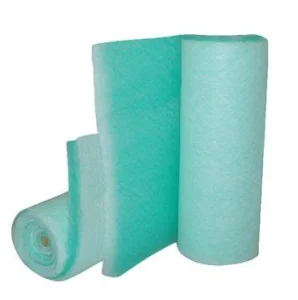
Explore our full range of deep-pleated HVAC modules, spray booth filter media rolls, mini-pleated HEPA cartridges, and pocket bag media.







Partner with a Certified OEM Air Filtration Manufacturer
Send your engineering specifications, drawing blueprints, or custom replacement filter inquiry. Our filtration specialists respond within 12 hours with complete quote estimates and technical data sheets.
Request Engineering Consultation & Quotation