
Featured OEM Replacement & Air Filtration Solutions (Part I)
Explore our certified air purification filters, HEPA replacements, and gas-adsorption media engineered for industrial, commercial, and OEM applications.
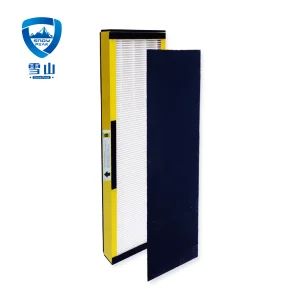

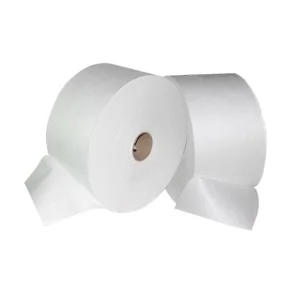





The Global Commercial & Industrial Indoor CO2 Filtration Landscape
As modern architectural standards transition from traditional dilution ventilation to target-specific gaseous contaminant removal, indoor Carbon Dioxide ($CO_2$) scrubbing has emerged as a cornerstone of high-performance HVAC engineering.
Historically, managing indoor air quality (IAQ) relied almost exclusively on Outdoor Air Ventilation (OAV)—introducing large volumes of unconditioned ambient air to dilute human-emitted carbon dioxide. However, in extreme climates, urban environments with high PM2.5/VOC outdoor pollution, or modern airtight LEED/WELL-certified buildings, conditioning outside air incurs an enormous thermal energy penalty. Elevated indoor $CO_2$ levels exceeding 1,000 ppm induce cognitive fatigue, headaches, reduced decision-making performance, and general "Sick Building Syndrome" (SBS).
Today's global commercial market demands specialized, high-capacity OEM Indoor CO2 Scrubbing Filters. By scrubbing $CO_2$ directly from recirculated indoor air via solid amine sorbents, metal-organic frameworks (MOFs), or functionalized chemical impregnated matrix media, HVAC operators can reduce outdoor air intake requirements by up to 60% according to ASHRAE Standard 62.1 IAQ Procedure (IAQP). This results in massive electrical energy savings without compromising occupant cognitive sharpness or regulatory air hygiene compliance.
Cognitive Performance Impact
Harvard T.H. Chan School of Public Health studies confirm that lowering indoor $CO_2$ from 1,400 ppm to 600 ppm increases cognitive scores by up to 101% in office environments. OEM CO2 scrubbing filters actively capture metabolic emissions in real-time.
Decarbonization & Energy Efficiency
Commercial HVAC systems consume over 40% of total building energy. Implementing recirculating indoor CO2 sorbent filters directly shrinks compressor loads, facilitating net-zero building carbon compliance.
Airtight Enclosed Operations
Critical subsea vessels, spacecraft cabins, mining shelters, and urban cleanroom environments demand continuous internal CO2 removal where fresh air exchange is physically impossible or hazardous.
Technical Fundamentals: Chemisorption vs. Physisorption Sorbent Media
Understanding the chemical dynamics of indoor $CO_2$ removal is crucial for procurement engineers specifying custom OEM filter media.
Unlike standard volatile organic compounds (VOCs) or ozone, carbon dioxide is a non-polar, weakly reactive molecule that exhibits minimal adsorption capacity on standard untreated activated carbon at low ambient concentrations (400–2,000 ppm). Therefore, high-performance OEM Indoor CO2 Filters rely on specialized chemical functionalization to achieve high breakthrough retention.
| Filter Media Technology | Primary Reaction Mechanism | Target $CO_2$ Concentration | Regenerability | Pressure Drop ($\Delta P$) Profile |
|---|---|---|---|---|
| Solid Amine Polymer Substrates | Chemisorption (Carbamate Formation) | Low to Medium (400 – 2,500 ppm) | High (Thermal / Humidity Swing) | Low ($\sim 35\text{ Pa}$ at $1.5\text{ m/s}$) |
| Alkali-Impregnated Honeycomb Matrix | Irreversible Acid-Base Neutralization | Medium to High (1,000 – 5,000 ppm) | Single-Use / Disposable Cartridge | Ultra-Low Honeycomb Drag |
| Metal-Organic Frameworks (MOFs) | Co-ordinative Dynamic Physisorption | Ultra-Low (400 – 1,000 ppm) | Vacuum / Low Heat Swing | Moderate (Pleated Micro-fiber) |
| Functionalized Synthetic Zeolites (13X) | Electrostatic Molecular Sieve | High (>3,000 ppm in dry gas) | High (Requires Dry Heat $>150^\circ\text{C}$) | Medium to High (Pelletized Beds) |
Reversible Carbamate Chemistry in Solid Amine Media
Our proprietary OEM solid amine filter formulations bind $CO_2$ through a nucleophilic attack of primary or secondary amine groups ($R\text{--}NH_2$) onto the carbon center of $CO_2$, forming ammonium carbamate species:
This reversible reaction allows the filter cassette to capture $CO_2$ at ambient indoor temperatures ($20^\circ\text{C} - 25^\circ\text{C}$) and release it during mild thermal purging ($60^\circ\text{C} - 80^\circ\text{C}$), paving the way for next-generation Regenerative Indoor Scrubbing Modules integrated directly into commercial AHUs (Air Handling Units).
Localized Industry Application Scenarios
Tailored OEM/ODM form factors designed to integrate seamlessly into diverse commercial and industrial infrastructure.
High-Rise Office Towers & Commercial HVAC
Modular V-Bank and panel CO2 sorbent cassettes retrofitted into standard 24"x24" AHU filter racks. Enables facilities managers to satisfy RESET Air & LEED v4.1 IAQ benchmarks while optimizing chiller electricity consumption.
K-12 Schools & University Lecture Halls
Standalone smart air purifiers equipped with composite True HEPA + Solid Amine CO2 filters. Rapidly mitigates dangerous afternoon CO2 spikes (>1,800 ppm) in overcrowded classrooms, improving student concentration.
Vertical Farms & Controlled Environment Agriculture
Enclosed hydroponic growth chambers require micro-climate CO2 modulation. OEM bio-compatible sorbent filters maintain targeted photosynthetic CO2 levels without introducing external agricultural airborne pests or mold spores.
Medical Cleanrooms & Isolation Units
Hermetically sealed surgical suites and biocontainment facilities utilize multi-stage antibacterial H14 HEPA units fused with amine gas scrubbers to guarantee zero cross-contamination and optimal air purity.
China OEM Efficiency & Shenzhen Snow Peak Engineering Standards
Leveraging Shenzhen's world-class industrial ecosystem to deliver unmatched manufacturing speed, precision quality control, and cost scale for international buyers.
As a recognized National High-Tech Enterprise with over 15 years of specialization, Shenzhen Snow Peak Clean Technology Co., Ltd. bridges advanced material synthesis with high-volume industrial production. Our vertical integration enables direct control over media compounding, pleating geometries, structural plastic/aluminum frame molding, and automated robotic assembly.
Four-Stage Quality Pipeline (IQC → OQC)
Every batch undergoes rigorous quality assurance: IQC tests raw media pore distribution and amine loading capacity; IPQC monitors continuous pleat depth uniformities; FQC validates CADR, gas breakthrough curves, and dynamic pressure drop; OQC enforces export packaging integrity.
Rapid OEM Prototyping & CAD/CAM Agility
Our in-house tooling center produces custom filter housing samples, magnetic seals, and customized media packs within 5 to 7 business days, shortening your product launch cycles for competitive global procurement.
Cleanroom Production Lines
Dedicated ISO Class 7 and Class 8 cleanroom workshops prevent ambient contamination during filter assembly, ensuring cleanroom-grade HEPA and gas-adsorption filters are delivered ultra-clean.
Industry Trends & Next-Generation Innovations
Stay ahead of regulatory shifts and technological advancements shaping the commercial air purification sector.
IoT-Enabled Smart Filter Modules
Integration of micro-printed capacitive sensors directly into the sorbent matrix. Tracks real-time $CO_2$ saturation percentages and alerts building management systems (BMS) for predictive cartridge replacement.
Multi-Contaminant Tri-Layer Composites
Combining H13 True HEPA sub-micron particulate filtration, activated carbon VOC adsorption, and solid amine $CO_2$ chemisorption into a single compact, low-pressure-drop composite cassette.
Low-Temperature Waste Heat Regeneration
Innovations in polymer amine chemistry allow filter desorption utilizing low-grade waste heat ($55^\circ\text{C} - 70^\circ\text{C}$) harvested from HVAC condenser coils or server rack exhaust, drastically cutting operational costs.
Global Enterprise Sourcing & Specification Checklist
Key technical parameters B2B buyers must specify when requesting OEM Indoor CO2 Filter quotations.
1. Dynamic Adsorption Capacity ($g CO_2 / g\text{ Sorbent}$)
Specify total stoichiometric capacity under standard conditions ($25^\circ\text{C}$, 50% RH, 1,000 ppm inlet $CO_2$). Higher loading prolongs service intervals.
2. Initial Pressure Drop vs. Rated Face Velocity
Ensure airflow resistance does not exceed HVAC fan static pressure limits. Target initial $\Delta P \le 45\text{ Pa}$ at standard system face velocities ($1.5 - 2.5\text{ m/s}$).
3. Frame Integrity & Flame Retardancy Compliance
Select frames based on environmental duty: ABS, Galvanized Steel, Aluminum, or UL 900 / DIN 53438 flammability-certified cardboard frames for sustainable disposal.
Featured OEM Replacement & Air Filtration Solutions (Part II)
Complete OEM replacement filters, custom media rolls, and industrial HVAC V-bank solutions exported to over 50 countries worldwide.





Frequently Asked Questions for OEM Indoor CO2 Sourcing
Technical clarity provided by Snow Peak's Senior Air Filtration R&D Engineering Team.