Featured Commercial & Industrial Filter Products
High-efficiency OEM MERV-rated pleated filters, activated carbon composites, and cleanroom solutions directly from our Shenzhen manufacturing center.
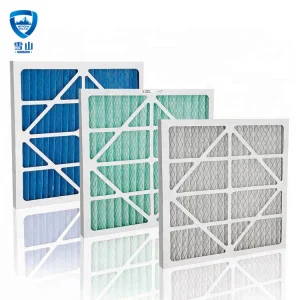
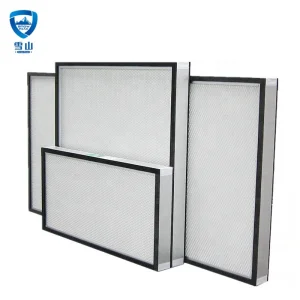
High-Quality China Factory Suppliers Customized G4 MERV 8 Pleated AC Furnace Air Filters
View Details
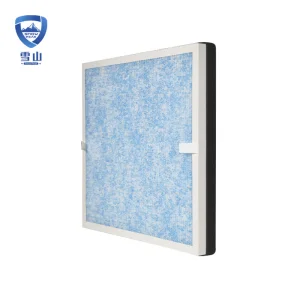


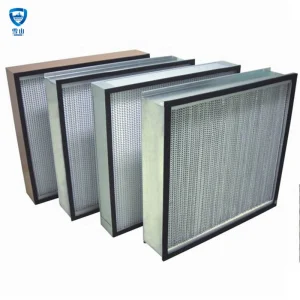


1. Technical Foundations: Gas-Phase Adsorption & MERV Mechanics
Understanding the physics of dual-action air purification: combining electrostatic particle interception with microporous molecular adsorption.
Electrostatic & Mechanical Interception
MERV (Minimum Efficiency Reporting Value) ratings according to ASHRAE 52.2 measure particle filtration efficiency across 0.3 to 10-micron bands. OEM MERV carbon filters utilize meltblown synthetic nonwovens loaded with electrostatic charges. This captures fine particulate matter (PM2.5, pollen, mold spores) via impaction, interception, and diffusion mechanisms without imposing excessive initial static pressure drop on standard HVAC air handlers.
Physical Adsorption Physics (GAC)
Granular Activated Carbon (GAC) impregnated within pleated filter media relies on Van der Waals physical forces. With specific surface areas exceeding 1,000 to 1,200 m²/g and Iodine numbers above 1,050 mg/g, high-grade coconut shell carbon traps Volatile Organic Compounds (VOCs), formaldehydes, benzene, kitchen grease fumes, and urban vehicle exhaust (NOx, SO2) deep inside sub-nanometer microporous structures.
Chemisorption & Targeted Impregnation
For low-molecular-weight gases that bypass standard physical adsorption (such as ammonia NH3, hydrogen sulfide H2S, or acidic gas streams), OEM services provide chemical impregnation. Carbon matrices treated with potassium permanganate (KMnO4), citric acid, or caustic compounds react chemically to neutralize hazardous compounds into harmless solid salts right inside the filter bed.
Technical Performance Comparison: Standard Pleated vs. OEM MERV Carbon Filters
| Filter Rating / Grade | Particulate Efficiency (E1: 0.3–1.0µm) | ISO 16890 Equivalent | Target VOC / Odor Removal | Typical Static Pressure Drop | Primary OEM Application |
|---|---|---|---|---|---|
| MERV 8 Carbon Pleated | 20% – 35% | ISO Coarse 75% | Nuisance Odors, Pet Odors, Light Cooking Fumes | 0.22 in. w.g. (55 Pa) @ 490 FPM | Residential HVAC, Light Commercial Pre-filters |
| MERV 11 Carbon Composite | 50% – 65% | ePM10 70% / ePM2.5 55% | Auto Exhaust, Smog, Formaldehyde, Paint Solvents | 0.31 in. w.g. (77 Pa) @ 490 FPM | Urban Office Buildings, Airports, Commercial Centers |
| MERV 13 Carbon High-Flow | > 75% | ePM1 60% / ePM2.5 80% | Wildfire Smoke (VOCs + PM2.5), Diesel Particulates | 0.38 in. w.g. (95 Pa) @ 490 FPM | LEED Certified Buildings, Healthcare Facilities |
| MERV 15 / H13 HEPA Carbon Combo | > 95% (H13: 99.97% @ 0.3µm) | ePM1 95% / HEPA Class H13 | Industrial Chemicals, Cleanroom Outgassing, Acid Gases | 0.52 in. w.g. (130 Pa) @ 250 FPM | Semiconductor Cleanrooms, IVF Labs, Isolation Units |
2. Global Commercial & Industrial Market Dynamics
Evolving Indoor Air Quality (IAQ) mandates, decarbonization goals, and wildfire smoke challenges driving global demand for carbon-integrated HVAC filtration.
Wildfire Smoke & Climate Resilience
North America and Europe face increasing wildfire emergencies releasing fine particulate matter (PM2.5) paired with toxic gas streams (CO, acrolein, formaldehyde, benzene). Standard particulate filters fail to neutralize gas phase irritants. OEM MERV 13 carbon combo filters have become the default retrofit standard for commercial real estate to maintain occupant safety during ambient smoke events.
LEED v4.1 & WELL Building Standards
Modern architectural standards heavily reward proactive IAQ monitoring and filtration credit points. Integrating MERV 11 to MERV 15 gas-phase carbon filtration allows building managers to significantly lower outdoor intake air volume while complying with ASHRAE 62.1 Indoor Air Quality Procedure (IAQP), reducing building energy consumption up to 20%.
Data Centers & Airborne Corrosion
Under ISA-71.04 contamination standards, airborne reactive sulfur gas and chlorine cause catastrophic micro-corrosion on server circuit boards. Customized industrial carbon filters deployed in data center Makeup Air Units (MAUs) scrub corrosive gaseous pollutants down to parts-per-billion (ppb) levels, protecting mission-critical IT infrastructure.
Hospitality & Commercial OEM Refills
Aftermarket replacement filter distributors and major air purifier OEM brands require scalable, cost-effective replacement elements compatible with Honeywell, Coway, Blueair, and Levoit models. High-volume custom manufacturing bridges exact mechanical tolerances with superior activated carbon odor adsorption.
3. Localized Application Scenarios & Regional Engineering Adaptation
Adapting MERV carbon filter formulations to regional climates, regulatory frameworks, and sector-specific operational demands.
North America: Residential & Commercial HVAC Retrofits
Designed for standard 1-inch, 2-inch, and 4-inch furnace frame dimensions (e.g., 16x25x1, 20x25x4). High-pleat count MERV 8 and MERV 11 carbon filters engineered with beverage-board frame moisture barrier resistance, holding structural integrity across high-humidity summer conditioning cycles in Southern US and coastal regions.
European Union: ISO 16890 & EN 13779 Compliance
Engineered for European Air Handling Units (AHUs) requiring ePM1 55% or ePM2.5 70% rating combined with gas removal. Utilizing synthetic mini-pleat carbon packs bonded to rigid ABS or galvanized steel header frames, ensuring flame-retardant performance under DIN 53438 / EN 779 standards.
Middle East & APAC: Extreme Dust & Desalination VOC Scrubbing
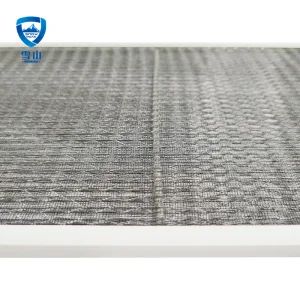
Tailored for high ambient temperatures and severe desert dust loading. Features dual-stage pre-filter metallic mesh combined with heavy-bed GAC matrix cells to prevent fine sand erosion while capturing chemical emissions in oil refineries, chemical plants, and municipal airport hubs.
4. R&D Technology Roadmap & Manufacturing Innovation
The technological evolution of composite carbon air filter manufacturing: moving from loose media to structural nano-composite layers.
Ultra-Fine Carbon Sintering
Thermally bonding micro-granular activated carbon between dual layers of meltblown nonwovens. Achieves zero carbon dust shedding while maximizing air contact surface area.
Ultrasonic Pleating Precision
Computerized ultrasonic pleating lines control pleat height (from 0.8 inches to 12 inches) and spacing uniformity without puncturing the media membrane or breaking carbon bonds.
Catalytic & MOF Integration
Incorporating Metal-Organic Frameworks (MOFs) and room-temperature cold catalysts to continuously decompose airborne formaldehydes into H2O and CO2, eliminating carbon saturation limits.
Automated Leak & Flow Testing
100% automated pressure differential and particle bypass testing using TSI 8130A aerosol testers ensuring certified MERV and HEPA performance prior to export packaging.
5. Supply Chain Resilience & Factory Efficiency Advantages
How Shenzhen Snow Peak Clean Technology Co., Ltd. delivers global OEM competitive advantages through vertical integration, rapid prototyping, and stringent QA.
Vertically Integrated Raw Material Supply
Located in Shenzhen's advanced manufacturing cluster, Snow Peak directly controls nonwoven meltblown extrusions, activated carbon impregnation lines, and frame manufacturing (cardboard, anodized aluminum, galvanized steel, ABS plastic). This eliminates middleman markups and guarantees stable material lead times.
Four-Stage Strict Quality Control (QC)
Every OEM production batch undergoes rigorous quality gates: IQC (Incoming Material Quality Check on raw GAC Iodine levels and nonwoven basis weight), IPQC (In-Process Pleat & Seal Monitoring), FQC (Finished Product Dimension & Airflow Resistance Testing), and OQC (Outgoing Quality Assurance before container loading).
Strategic Ocean & Air Freight Proximity
Minutes from Yantian and Shekou deep-water ports in Shenzhen, Snow Peak provides rapid FCL/LCL container consolidation, expedited air freight for trial runs, and seamless customs documentation clearance for seamless international delivery.
6. Localized Support, Testing Protocols & Regulatory Compliance
Ensuring your custom OEM filter products meet global environmental, health, and fire-safety standards.
International Standard Certification
Filter products manufactured by Snow Peak comply with international testing benchmarks: ASHRAE 52.2 (US), ISO 16890 (Global), EN 779:2012 / EN 1822 (European HEPA standards), and CE Certification for European commercial compliance.
Material Safety & Environmental Compliance
All activated carbon substrates, adhesives, polyurethane gasketing, and frame materials are fully certified under RoHS Directive 2011/65/EU and REACH Regulations (EC No 1907/2006), guaranteeing zero off-gassing of hazardous heavy metals, phthalates, or toxic VOCs during operation.
UL 900 Flammability Ratings
For high-occupancy commercial HVAC systems, fire safety is paramount. Snow Peak supplies non-combustible fiberglass and synthetic carbon media options engineered to satisfy UL 900 Class 1 and Class 2 flammability requirements, self-extinguishing without smoke generation.
7. Technical FAQ: Expert Q&A for Procurement Engineers
Addressing technical questions regarding OEM MERV carbon filter design, performance sizing, and customization options.
What is the difference between a carbon-impregnated pleated filter and a Granular Activated Carbon (GAC) tray?
Carbon-impregnated pleated filters (like MERV 8 or MERV 11 carbon pleats) feature fine carbon particles bonded directly onto synthetic nonwoven media. They offer high airflow, low initial resistance, and dual-action particulate + light odor removal in a thin frame profile (1" to 4"). GAC trays or heavy carbon beds utilize loose coconut shell granules packed into rigid frames; they provide exponentially higher carbon mass (weight) for heavy industrial VOC scrubbing, but demand higher blower pressure.
How do you calculate the lifespan and replacement cycle of an OEM MERV carbon filter?
Particulate lifespan is determined by the final recommended static pressure drop (typically 1.0 in. w.g. or double initial resistance). However, gas-phase carbon saturation occurs independently based on VOC concentrations (ppm), ambient humidity, and total cubic feet per minute (CFM) passed. Under normal residential/commercial conditions, MERV carbon pleated filters are replaced every 3 to 6 months to maintain optimal gas adsorption efficiency before carbon pore saturation occurs.
Can Snow Peak manufacture custom frame dimensions, private-label packaging, and branding for OEM partners?
Yes. Snow Peak offers comprehensive OEM/ODM engineering services. We manufacture custom non-standard frame sizes (imperial and metric tolerances within ±1mm), offer custom frame materials (beverage cardboard, galvanized steel, extruded aluminum, plastic ABS), print private-label brand logos on frames, and provide custom retail or master-carton packaging ready for international distribution.
Does activated carbon addition increase the initial static pressure drop in HVAC systems?
Adding carbon particles incrementally increases media density, which slightly raises initial static pressure. However, Snow Peak’s optimized aerodynamic pleating geometry and engineered gradient-density nonwovens maintain static pressure increases within a low 0.03 – 0.08 in. w.g. window compared to standard non-carbon filters, preserving HVAC system blower longevity and energy efficiency.
What testing and documentation accompany OEM export shipments?
Every shipment can be provided with full Quality Assurance documentation including Certificate of Conformance (CoC), ISO 16890 or ASHRAE 52.2 test report copies, Iodine adsorption test certificates for carbon raw media, RoHS/REACH material compliance statements, and detailed packing list tracking.
Complete OEM Replacement & Specialized Filtration Series
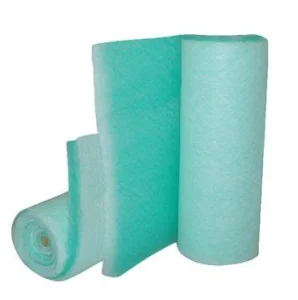
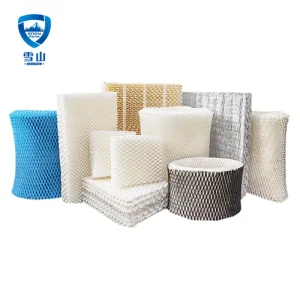
Explore our extended line of air purifier replacement filters, HVAC roll media, humidifier pads, and industrial separation units.