
Featured Air Filtration Units & OEM Filter Fabric Products
Engineered roll goods, pleated elements, and custom HVAC media manufactured under rigid ISO 9001 quality controls.

Wholesale Washable Nylon Mesh Air Filter - Coarse Dust Filter for Air Conditioning
View Technical Details
Wholesale Customized Gel Seal HEPA Filter Mini Pleated Compact Liquid Tank for Clean Room
View Technical Details
Wholesale High Efficiency HEPA Filters Customized for Air Purifiers & Vacuum Cleaners
View Technical Details
ODM High Efficiency 2V 3V 4V 5V 6V Cell Plastic Frame W Shape HVAC V Bank Filter
View Technical Details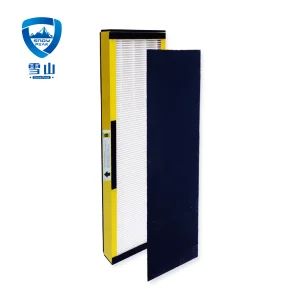
China FLT4825 HEPA Filter B Replacement for Guardian Air Purifier High-Efficiency
View Technical Details
CE Certification Activated Carbon Fabric Air Filter Material for Particle & Odor Removal
View Technical Details
Foldable Activated Carbon and H13 HEPA Replacement Filter for Blueair Blue Pure 211+
View Technical Details
Polyester Laminated Wire Mesh Rolls for Air Filters - Blue White Green Options
View Technical DetailsGlobal Commercial & Industrial Status of MERV Filter Fabrics
Analyzing the macro-shift toward high-efficiency synthetic roll goods in modern HVAC and air filtration systems.
Shift from Fiberglass to Synthetic Non-Wovens
The global filtration media market is witnessing a rapid structural transition. Traditional spun fiberglass media, once the dominant choice for coarse filtration, is being steadily phased out due to concerns over fiber shedding, worker safety during handling, and high mechanical pressure drop. OEM MERV filter fabric manufacturers now rely primarily on advanced synthetic media—combining electrostatically charged meltblown layers with durable spunbond polypropylene or PET backing substrates.
Tightening Indoor Air Quality (IAQ) Mandates
Post-pandemic commercial building codes (including ASHRAE Standard 62.1 and Epidemic Task Force guidelines) strongly recommend upgrading baseline ventilation filtration from MERV 8 to MERV 13 or higher. This regulatory shift has created unprecedented demand for low-resistance, high-dust-holding MERV filter fabric media capable of retrofitting existing commercial Air Handling Units (AHUs) without exceeding blower motor power limits.
Decarbonization & Energy Consumption
HVAC filtration accounts for up to 15% of total building energy consumption via fan static pressure resistance. OEM buyers are no longer seeking filtration efficiency alone; they demand hyper-engineered MERV filter fabrics with optimized pore size distribution and triboelectric electrostatic charges that deliver ultra-low initial pressure drop (<0.15 in. w.g. for MERV 13) to directly reduce corporate Scope 2 carbon emissions.
Technical Insight: Modern OEM MERV filter fabric is not a simple single-layer mesh. It is a composite engineered structure where structural integrity, dust holding capacity (DHC), and particle capture efficiency are individually optimized across multi-stage fiber densities ranging from 10 microns down to sub-micron electrostatic fibers.
MERV Rating Engineering Standards & Performance Matrix
Understanding ASHRAE 52.2 particle size efficiency metrics (E1, E2, E3) and equivalent international standards.
The Minimum Efficiency Reporting Value (MERV) rating system, defined by ASHRAE Standard 52.2, measures a filter fabric's ability to capture specific particle sizes ranging from 0.3 to 10.0 microns. For OEM procurement teams, choosing the correct roll media substrate requires evaluating particle size fraction efficiency across three primary bands: E1 (0.3–1.0 µm), E2 (1.0–3.0 µm), and E3 (3.0–10.0 µm).
| MERV Rating | E1 (0.3 - 1.0 µm) | E2 (1.0 - 3.0 µm) | E3 (3.0 - 10.0 µm) | Target Pollutants Captured | Typical Industrial & OEM Applications |
|---|---|---|---|---|---|
| MERV 8 | N/A | N/A | ≥ 70% | Pollen, dust mites, carpet fibers, lint | Residential HVAC pre-filters, basic commercial AHU |
| MERV 11 | N/A | ≥ 65% | ≥ 85% | Auto emissions, lead dust, pet dander, mold spores | Superior residential, commercial spaces, telecommunication hubs |
| MERV 13 | ≥ 50% | ≥ 85% | ≥ 90% | Bacteria, tobacco smoke, virus carriers, fine smog | LEED-certified buildings, hospitals, schools, cleanroom pre-filters |
| MERV 15 | ≥ 85% | ≥ 90% | ≥ 90% | Prophage viruses, combustion smoke, fine carbon dust | Inpatient care, pharmaceutical packaging, general manufacturing |
| MERV 16 | ≥ 95% | ≥ 95% | ≥ 95% | Sub-micron industrial aerosols, surgical operating rooms | Hospital surgical suites, electronics assembly, cleanroom intake |
Electrostatic vs. Mechanical Filtration Mechanics
OEM MERV filter fabrics achieve particle capture through four primary mechanics: Inertial Impaction, Interception, Diffusion, and Electrostatic Attraction. Mechanical filtration relies purely on physical fiber barrier density, which increases air airflow resistance. Modern MERV 11–15 synthetic fabrics utilize corona discharging or hydro-electret charging techniques to impart stable dipolar charges into polypropylene meltblown microfibers. This allows the fabric to pull sub-micron particles out of the airstream like a magnet without restricting air flow.
ASHRAE 52.2 Annex J & ISO 16890 Cross-Compliance
Global buyers must account for regional testing standards. While ASHRAE 52.2 dominates North America, ISO 16890 is the benchmark across Europe and Asia, categorizing media by ePM1, ePM2.5, and ePM10. Furthermore, ASHRAE 52.2 Annex J introduces an isopropyl alcohol (IPA) conditioning step to discharge electret media and measure baseline mechanical performance. Premium OEM MERV fabric manufacturers design composite fabrics that maintain high post-discharge efficiency through tight gradient fiber matrix structures.
China OEM Factory Efficiency & Technological Advantages
How state-of-the-art Chinese non-woven production lines deliver superior quality, rapid scalability, and cost competitiveness.
Fully Integrated Supply Chains
Leading Chinese OEM manufacturers control the entire production ecosystem—from raw polypropylene resin compounding and masterbatch formulation to spunbond extrusion, meltblown blowing, hydro-charging, frame lamination, and automated pleating. This vertical integration eliminates intermediary margins and guarantees raw material consistency across high-volume production lots.
Hydro-Electret Charging Supremacy
Unlike conventional corona charging which suffers from rapid charge decay under humid conditions, Chinese filtration facilities utilize high-pressure pure water hydro-electret technology. Water jet friction embeds deep dipolar charges into the molecular structure of meltblown fibers, achieving charge retention stability exceeding 95% even after 36 months of tropical storage.
Rapid OEM Customization & Scale
With automated high-speed German and Japanese non-woven lines operating 24/7, Chinese factories offer unmatched agility. Custom specifications—including non-standard roll widths (from 100mm to 3200mm), precise basis weights (GSM 20 to 300), flame-retardant additives (UL 900 class 1/2), and anti-bacterial treatments—can transition from CAD design to mass export shipment in under 14 days.
Localized Application Scenarios for MERV Filter Fabrics
Engineered filtration media customized for specific operating environments and strict industrial demands.
Commercial HVAC & Office Towers
Requires pleated MERV 11 to MERV 13 roll media laminated with wire mesh backings. The fabric must withstand continuous turbulent airflow velocities up to 500 FPM (feet per minute) without pleat deformation or edge bypass, ensuring dust-free supply air and protection for cooling coils.
Residential OEM Air Purifier Replacements
Utilizes ultra-thin composite MERV fabric roll media integrated with activated carbon layers. Designed specifically for brand-name replacement filters (such as Honeywell, Blueair, Coway, and Levoit), offering quiet operation, high CADR (Clean Air Delivery Rate), and low noise levels for residential bedrooms.
Automotive Cabin & Transportation Air
Vehicle HVAC systems operate under extreme temperature fluctuations and humidity shifts. OEM MERV media for automotive cabin filters incorporates hydrophobic synthetic fibers and antimicrobial coatings to prevent mold growth on damp filter surfaces while arresting diesel particulate matter (DPM).
Industrial Spray Booths & Cleanroom Pre-Filtration
Progressive density MERV fabric (such as fiberglass ceiling filter cotton or 600G synthetic rolls) is critical in spray painting facilities to capture paint mist overspray and prevent particle defects on automotive coatings, acting as a crucial pre-stage layer before cleanroom HEPA banks.
Data Centers & Telecom Enclosures
Server farms require MERV 11 to MERV 14 gas-phase combination fabrics. These fabrics remove both airborne particulate matter and corrosive gaseous contaminants (sulfur dioxide, hydrogen sulfide) that cause micro-corrosion on sensitive semiconductor circuit boards.
Global Enterprise Purchasing Requirements & QA Checklist
Key parameters international procurement directors must specify when sourcing OEM MERV filter fabric media.
1. Basis Weight (GSM) & Thickness Uniformity
A variation of more than ±5% in basis weight (grams per square meter) leads to inconsistent pleat spacing, uneven pressure distribution, and localized airflow blowout. Enterprise buyers must require automated online thickness scanning and gamma-ray basis weight control during non-woven extrusion.
2. Dust Holding Capacity (DHC) & Operating Life
High initial efficiency is meaningless if the fabric clogs prematurely. Procurement specifications must mandate ASHRAE 52.2 synthetic dust loading testing. Media with a high DHC rating (measured in grams of dust per square foot of media) extends filter service intervals, reducing field maintenance labor costs.
3. Tensile Strength & Pleatability
When processed on automatic rotary or blade pleating machines at high speed (120+ pleats/min), the filter fabric must exhibit exceptional burst and tensile strength in both Machine Direction (MD) and Cross Direction (CD) to avoid fiber tearing or creasing fracture.
4. Flame Retardancy & Safety Certifications
OEM roll media destined for HVAC building installations must comply with strict fire safety codes, including UL 900 Class 1 or Class 2 flammability ratings and European DIN 53438 / EN 13501 fire resistance standards, producing zero toxic smoke under combustion conditions.
Future Development Trends in Filter Fabric Engineering
Innovation frontiers shaping the next generation of air filtration non-wovens.
Electrospun Nanofiber Lamination
Deposition of sub-micron polymer nanofibers (50–200 nanometers in diameter) onto conventional spunbond MERV fabric substrates creates a surface filtration layer. This ultra-thin membrane intercepts sub-micron pathogens while allowing immediate surface cake discharge during pulse-jet cleaning cycles.
Bio-Based & Recyclable Polymers
To reduce petroleum dependence, OEM research is shifting toward Polylactic Acid (PLA) and recycled Polyethylene Terephthalate (rPET) non-wovens. Biodegradable MERV fabrics maintain structural stability during operational lifetimes while minimizing landfill waste upon replacement.
Functional Multi-Layer Composites
Integrating cold catalyst layers, activated carbon granules, and antibacterial metal-organic frameworks (MOFs) into a single 4-in-1 composite MERV fabric allows simultaneous removal of particulate matter (PM2.5), volatile organic compounds (VOCs), and airborne bio-aerosols.
Frequently Asked Questions (OEM & Technical Procurement)
Comprehensive engineering and commercial answers regarding OEM MERV filter fabric sourcing.
Specialized Industrial Filtration & OEM Replacement Media
High-performance HEPA units, pocket filter rolls, and specialized industrial air treatment products.

OEM Fiberglass Deep-Pleat HEPA Filter High Efficiency with Separator for Clean Room
View Technical Details
Wholesale Painting Room Filters 600G Ceiling Filter Cotton G4 M5 Pre-Medium Media
View Technical Details
ODM G2 G3 G4 Primary Efficiency Green White Air Filter Roll Material Media
View Technical Details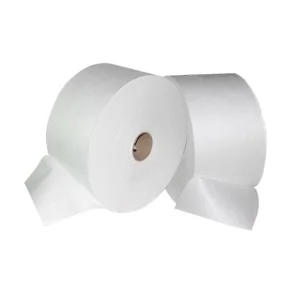
High Efficiency Low Resistance Meltblown (MB) Fabric Air Filter Media Roll
View Technical Details
China Factory G4 M5 M6 F7 F8 F9 Pocket Air Filter for Medium Efficiency Filtration
View Technical Details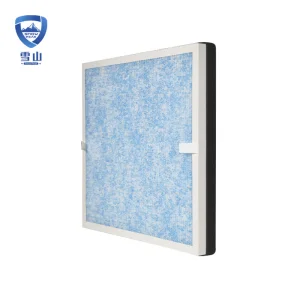
Custom Compound HEPA Filter Replacement for Air Purifiers & Vacuums
View Technical Details
Custom China G4 M5 600G Ceiling Filter Cotton for Painting & Industrial Use
View Technical Details