
Featured VOC Removal & High-Efficiency Filtration Products
Explore our precision-engineered activated carbon filter media, custom pleated panels, and high-capacity replacement modules engineered for industrial and OEM applications.

OEM High-Efficiency Activated Carbon Filter Material with Wire Mesh Laminate for VOCs
View Technical Specs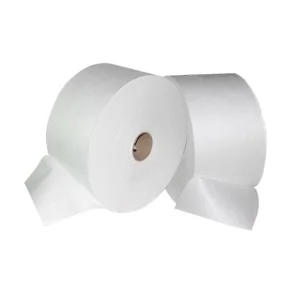
High-Efficiency Low Resistance Meltblown MB Fabric Material for Air Filter Media
View Technical Specs




1. Industrial VOC Abatement Engineering: Physical & Chemical Adsorption Mechanics
Volatile Organic Compounds (VOCs)—including benzene, toluene, ethylbenzene, xylene (BTEX), formaldehyde, chlorinated solvents, and complex organic sulfur compounds—present significant health hazards, environmental compliance challenges, and yield-limiting risks in advanced manufacturing. Selecting the optimal wholesale activated carbon VOC removal factory partner requires a deep understanding of porous carbon chemistry, mass transfer dynamics, and surface modification physics.
Activated carbon functions primarily through physisorption, driven by long-range London dispersion forces within micro- and mesoporous networks. The efficiency of VOC capture is intrinsically linked to the carbon substrate's physical architecture:
Micropore Distribution (< 2 nm)
Micropores account for over 85% of total surface area in high-activity coconut shell carbons. They generate deep potential energy wells ideal for capturing low-molecular-weight organic vapor molecules under ambient relative humidity.
Mesopores (2 nm - 50 nm)
Mesopores function as critical transport arteries. High mesopore volume prevents surface pore-plugging during high-concentration VOC surges, enabling deep molecular diffusion into the carbon interior.
Chemisorption Modifications
Targeted chemical impregnants (KOH, KI, H3PO4, metal catalysts) convert non-reactive or low-boiling point pollutants via irreversible covalent bonding, surface neutralization, or catalytic oxidation.
2. Industrial Media Selection Matrix: Impregnation & Adsorption Parameters
Factory-tested parameters matching chemical impregnants to specific VOC chemical species and airborne targets.
| Target Pollutant Class | Primary VOC Species | Impregnant / Modification | CTC Value (%) | BET Surface Area | Adsorption Mechanism |
|---|---|---|---|---|---|
| Aromatic Hydrocarbons | Benzene, Toluene, Xylene, Styrene | Virgin Coconut Shell | 60 - 85% | 1,150 - 1,350 m²/g | Physisorption via microporous condensation |
| Acidic Gases & VOCs | H2S, SO2, Mercaptans, Acetic Acid | KOH / K2CO3 (4-8%) | 50 - 65% | 950 - 1,100 m²/g | Base-catalyzed neutralization & oxidation |
| Basic Compounds | Ammonia (NH3), Amines | H3PO4 / H2SO4 (5-10%) | 45 - 60% | 900 - 1,050 m²/g | Acid-base salt formation |
| Aldehydes & Low Boilers | Formaldehyde, Acetaldehyde | Amine / KI Impregnation | 55 - 70% | 1,000 - 1,200 m²/g | Nucleophilic addition & catalytic breakdown |
| Mercury & Heavy Metals | Elemental Mercury Vapor | Sulfur Impregnated (10-15%) | 40 - 55% | 800 - 950 m²/g | Covalent mercuric sulfide precipitation |
3. Macro Industrial Solutions: Tailored Engineering Deployment
Scalable activated carbon VOC mitigation architectures optimized for harsh operating conditions across critical industrial sectors.
Semiconductor Fabs & AMC Control
Ultra-pure filter beds designed for Cleanroom Makeup Air Units (MAU) capture trace Airborne Molecular Contaminants (AMCs), organic siloxanes, and acid gases to prevent wafer defectivity down to sub-nanometer nodes.
Automotive Spray Paint Booths
High-velocity, multi-stage filtration panels combining G4/M5 pre-filtration with high-CTC extruded carbon cylinders to capture solvent fumes (MEK, Xylene, Ethylbenzene) while maintaining low system pressure drop.
Petrochemical & Storage Vent Exhaust
Heavy-duty deep-bed carbon adsorbers engineered for corrosive vapor environments, offering high ignition point coal/coconut media rated for explosive atmosphere compliance (ATEX ready).
Commercial HVAC & Air Quality
Synthetic media rolls laminated with micro-pellet activated carbon for standard AHU frames, removing ozone, outdoor urban smog, diesel exhaust, and building off-gassing with MERV 13 to MERV 15 particulate rating.
Pharmaceutical Synthesis
Containment systems utilizing Bag-In/Bag-Out (BIBO) carbon filters to capture toxic active pharmaceutical ingredients (APIs) and volatile process solvents safely without technician exposure.
Municipal Waste Odor Abatement
High-capacity acid gas-impregnated media beds engineered specifically to continuous bio-gas stripping, targeting high concentrations of hydrogen sulfide (H2S) and organosulfur odor compounds.
4. Technology Roadmap & Future Innovations in Carbon Filtration
Pioneering next-generation media architectures to overcome classical limits of pressure drop, moisture interference, and thermal desorptive safety.
Nanofiber-Carbon Composite Lamination
Electrospun polyacrylonitrile (PAN) nanofiber membranes direct-bonded to micro-granule carbon layers. Achieves ultra-low air resistance while simultaneously filtering 99.97% of 0.3μm particulates and gaseous VOCs in a single dynamic sheet.
Room-Temperature Photocatalytic Hybrids
Integrating titanium dioxide (TiO2) and precious metal catalysts directly into activated carbon honeycombs. Organic molecules are adsorb-concentrated and continuously mineralized into CO2 and H2O under ambient LED light, extending filter lifespan by up to 300%.
Smart TVOC Sensor Integrated Filter Frames
Filter frames built with embedded micro-RFID and solid-state metal oxide semiconductor (MOS) VOC sensors, communicating real-time saturation levels, breakthrough curves, and differential pressure data to centralized Building Management Systems (BMS).
5. China Factory 4.0: Precision Manufacturing & Supply Chain Resilience
As a premier Chinese direct manufacturer, our facility pairs advanced automated production lines with rigorous testing suites to ensure consistent batch-to-batch quality, rapid turnaround times, and scale scalability for international buyers.
Gravimetric Carbon Loading Control
Computer-monitored particle dispersal systems guarantee precise carbon weight distribution across synthetic carriers, maintaining a tight ±1.5% tolerance and eliminating air channeling defects.
Class 100,000 Cleanroom Assembly
Cleanroom filter lines ensure HEPA and ULPA carbon composite filters are assembled without cross-contamination, satisfying high-purity requirements for semiconductor and biomedical OEMs.
In-House Gas Breakthrough Testing
Our laboratory utilizes gas chromatography-mass spectrometry (GC-MS) and flame ionization detection (FID) test rigs complying with ISO 10121 and ASHRAE 145.2 standards to report accurate adsorption capacity metrics.
6. Global Procurement Strategy & Total Cost of Ownership (TCO) Optimization
Key metrics enterprise buyers evaluate to balance initial purchasing cost with operational energy savings and lifetime adsorption performance.
1. Initial Resistance vs Energy Costs
HVAC fan energy consumption increases exponentially with pressure drop. Utilizing gradient pleated structures and optimized carbon granule geometry lowers fan static pressure needs, cutting operational power costs up to 28% annually.
2. Mass Transfer Zone (MTZ) Optimization
A shorter MTZ ensures maximum carbon bed utilization before VOC breakthrough occurs. Our custom-blended carbon densities maximize dwell time without inducing unnecessary airflow restriction.
3. Supply Chain Agility & Private Labeling
From custom dimensional frames (cardboard, aluminum, galvanized steel, plastic) to barcode packaging and private label printing, our OEM engineering teams streamline brand integration for global distributors.
7. Global Regulatory Compliance & Certification Guarantee
Navigating international environmental regulations requires full chemical compliance, safe outgassing ratings, and accredited third-party validation. Our activated carbon VOC removal filter products are backed by robust certifications ensuring seamless importation into North American, European, and Asia-Pacific markets.
EU REACH & RoHS Compliant
Strict adherence to Regulation (EC) No 1907/2006. All carbon substrates, binders, laminates, and frame adhesives are fully screened for Substances of Very High Concern (SVHC) and hazardous heavy metals.
UL 900 Flammability Rating
Selected carbon panel configurations meet UL 900 safety standards for air filter units, providing flame-retardant properties vital for commercial HVAC and industrial exhaust safety compliance.
ISO 10121 & ASHRAE 145.2
Adsorption capacity and VOC removal efficiencies validated under standardized test conditions for gaseous contaminant filtration performance.
Specialty Air Purifier Replacement Filters & Composite Media
Direct replacement filter elements, antimicrobial HEPA blends, and custom cooling/humidification filter pads produced to strict OEM specifications.






Industrial Sourcing & Engineering Questions (FAQ)
Clear, definitive technical answers addressing procurement, carbon chemistry performance, and filter life optimization.