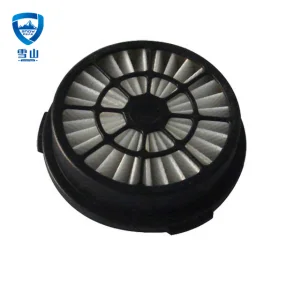
Featured Air Filtration Products & Components
High-performance OEM/ODM replacement elements, primary filter rolls, and specialized activated carbon media engineered directly by China manufacturing leaders.


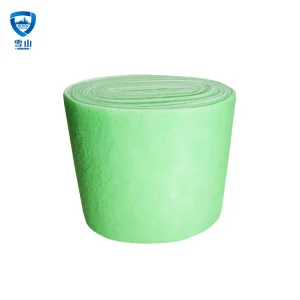
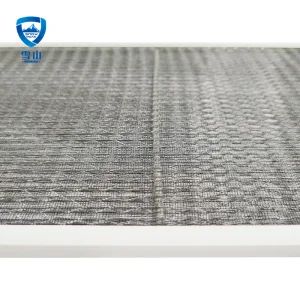



Technical Physics of Household Activated Carbon Air Filtration
An engineering breakdown of gas-phase pollutant capture, pore network distribution, and micro-particle residence time in residential and commercial environments.
Gas-Phase Physical Adsorption Mechanics
Residential indoor air contains complex gaseous contaminants, including Volatile Organic Compounds (VOCs) like benzene, formaldehyde, toluene, as well as cooking odors, pet ammonia, and environmental tobacco smoke. Unlike mechanical HEPA filters that physically trap particulates through interception, impaction, and diffusion, activated carbon air filters function via Van der Waals forces—a physical adsorption phenomenon occurring within an intricate internal micro-pore structure.
When air passes through wholesale carbon filter media, gaseous molecules migrate into the internal channels of the carbon matrix. The effectiveness of this process depends directly on the surface area per gram of carbon (typically ranging from 900 m²/g to 1500 m²/g), the residence time within the carbon bed, and the Carbon Tetrachloride (CTC) value of the raw material.
Chemisorption & Impregnated Carbon Matrix
Standard physical adsorption is often insufficient for light, highly volatile molecules such as formaldehyde ($HCHO$), hydrogen sulfide ($H_2S$), or ammonia ($NH_3$). Leading B2B manufacturers utilize chemical impregnation techniques to enhance capture rates.
By treating coconut-shell carbon with specific chemical catalysts (such as Potassium Permanganate $KMnO_4$, Citric Acid, or Potassium Iodide $KI$), the carbon substrate facilitates a localized chemical reaction (chemisorption). Gaseous pollutants are converted into non-volatile, harmless chemical salts bound permanently inside the pore matrix. For OEM brands, selecting the correct chemical impregnation formulation is crucial for localized regulatory compliance and targeted target-pollutant removal efficiency.
Comparative Benchmark: Raw Carbon Media Grades for Home Air Filtration
| Carbon Material Base | Specific Surface Area | CTC Absorption Value | Target Pollutants | Structural Durability | OEM Application Suitability |
|---|---|---|---|---|---|
| Virgin Coconut Shell | 1,000 - 1,400 m²/g | 60% - 85% | Low MW VOCs, Light Odors, Ozone | High (Low Dusting) | Premium Residential Purifiers, Smart HVAC Refills |
| Coal-Based Bituminous | 800 - 1,000 m²/g | 45% - 60% | Heavy Industrial Smog, High VOC Loads | Medium | Commercial HVAC Whole-House Systems |
| Wood-Based Carbon | 1,200 - 1,600 m²/g | 70% - 90% | Meso-pore Molecules, Large Dye Colors | Lower (Requires Lamination) | Honeycomb Carbon Foam & Dual-Layer Media Pads |
| Impregnated Catalytic | 900 - 1,200 m²/g | 55% - 75% | Formaldehyde ($HCHO$), $NH_3$, $SO_2$, Wildfire Smoke | High (Chemically Sealed) | Medical-Grade Home Air Cleaners, Pet Odor Specialty |
China Factory Supply Chain Ecosystem & Scale Advantages
Unlocking structural cost efficiencies, vertical raw material integration, and automated production consistency for global OEM distributors.
Vertical Raw Material Integration
China's clean-technology manufacturing infrastructure allows direct procurement of high-density non-woven synthetic fabrics, wire mesh substrates, meltblown media, and premium granular activated carbon under a single cluster. By cutting intermediate trader markups, direct factory sourcing reduces unit costs by 18% to 32% compared to regional assembly plants.
Automated Hot-Melt Sandwich Lamination
Advanced production lines utilize computerized meltblown-spraying and thermo-bonding processes to sandwich micro-granular carbon evenly between synthetic pre-filter layers. This prevents carbon settling, eliminates channel bypassing, and ensures consistent pressure drop ($\Delta P$) across every batch produced.
Strict Quality Assurance (IQC to OQC)
From Incoming Quality Control (IQC) of raw carbon iodine values to In-Process (IPQC) pleat pitch inspection, Final Quality Control (FQC), and Outgoing Quality Control (OQC) leak testing, leading factories adhere strictly to ISO 9001 and EN779/ISO 16890 test standards.
Enterprise OEM/ODM Customization & Procurement Protocols
Tailored manufacturing capabilities engineered to fulfill precise physical dimensions, structural framing, airflow dynamics, and private-label packaging requirements.
Custom Dimensioning & Frame Architectural Options
Global HVAC distributors and appliance manufacturers require exact mechanical dimensional tolerances to guarantee air-tight fitment inside air handling units (AHUs), standalone purifiers, or residential furnace slots. Custom manufacturing services provide flexibility across:
- Frame Materials: High-rigidity EVA foam edges, beverage board/cardboard frames, extruded aluminum channels, or injection-molded ABS plastic housings.
- Pleat Pitch Optimization: Computer-controlled pleating geometry ensuring uniform airflow velocity and minimized static pressure drop.
- Integrated Gasketing: Seamless polyurethane (PU) foam seals or rubber gaskets preventing unfiltered bypass air leakage.
Private-Label Branding & Global Logistics Mitigation
Building a recognizable retail brand requires complete packaging customization and supply chain protection. Manufacturing partnerships include complete OEM brand support:
- Custom Retail Packaging: Color box artwork, barcode printing (UPC/EAN), multi-language instruction sheets, and anti-counterfeiting holographic stickers.
- Bulk Packaging Options: Polybag vacuum sealing to preserve activated carbon absorption lifetime during long maritime freight transit.
- Supply Chain Resilience: Flexible MOQs, multi-container consolidation, and strategic export clearance through Shenzhen/Guangdong logistics ports.
Localized Compliance, Certifications & International Standards
Ensuring full regulatory compliance across European, North American, and Asia-Pacific markets with verified third-party laboratory testing.
RoHS & REACH SVHC Compliance
For import into the European Union, carbon air filter materials must be free of harmful heavy metals, phthalates, and Substances of Very High Concern (SVHC). Products are independently verified to guarantee total environmental safety during use and disposal.
UL 900 Fire Safety Classification
Commercial and residential HVAC codes in North America require air filter components to meet UL Class 1 or Class 2 flammability ratings. Carbon impregnated media options are treated with eco-friendly flame retardants to pass rigorous burn resistance trials.
CARB & Ozone Emission Limits
The California Air Resources Board (CARB) mandates strict zero-ozone emission limits for residential air purification systems. Unlike electronic ionizers, passive carbon adsorption filters generate zero harmful ozone ($O_3$) gas, making them fully compliant worldwide.
Localized Application Scenarios & Installation Environments
Deploying carbon air filter solutions across residential homes, smart appliances, commercial real estate, and industrial air handling systems.
Residential Smart Purifiers & Replacement Filters
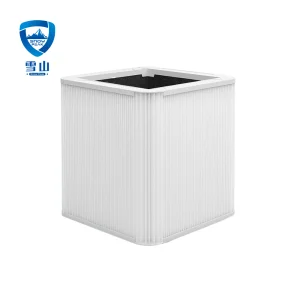
Compatible replacement filters for top consumer brands (e.g., Honeywell, Coway, Blueair, Levoit). Combining H13 True HEPA paper with a high-CTC carbon pre-filter layer protects households against pet dander, cooking smoke, and renovation VOCs.
Commercial HVAC & Office Building Air Quality
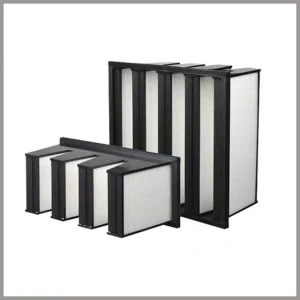
Ducted central air purification systems require low-resistance V-bank or pleated panel carbon filters. These units absorb incoming urban smog, vehicle exhaust emissions, and carpet off-gassing, maintaining healthy indoor workplace air standards.
Industrial Spray Booths & Chemical Odor Control
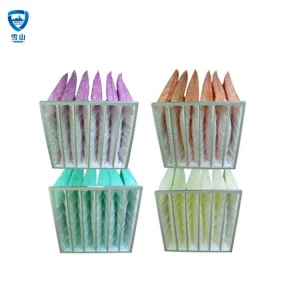
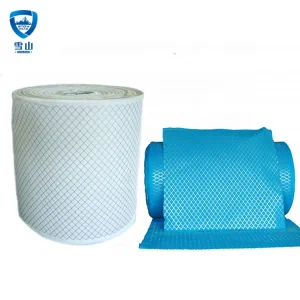
Heavy-duty wire mesh laminated carbon roll media and synthetic pocket bag filters effectively trap paint overspray mist while capturing volatile solvents before air is recirculated or exhausted into the surrounding atmosphere.
Future Trends & Innovations in Air Filtration (2025–2030)
Key technological shifts driving next-generation carbon media development, bio-char sustainability, and smart filter monitoring.
Cold Catalyst & Photocatalytic Hybrid Filter Media
Traditional activated carbon eventually reaches physical saturation, requiring replacement once all pore sites are filled. Advanced manufacturers are integrating Cold Catalyst (multi-metal oxide nano-coatings) alongside carbon substrates. Cold catalysts continuously break down VOCs into water ($H_2O$) and carbon dioxide ($CO_2$) at ambient room temperature, extending filter lifespan by up to 300%.
Eco-Friendly Bio-Char & Zero-Plastic Framed Filters
With environmental sustainability taking center stage globally, OEM buyers are demanding zero-plastic filter assemblies. Innovations include biodegradable PLA fiber matrices, recycled pulp paper frames, and coconut-shell bio-char carbon sourced from agricultural byproduct streams, reducing carbon footprint throughout the manufacturing cycle.
Frequently Asked Questions (B2B Procurement & Technical Q&A)
Answers to common engineering, OEM customization, compliance, and ordering questions from global wholesale buyers.
What is the difference between physical adsorption carbon and catalytic impregnated carbon filters?
How do China carbon air filter manufacturers optimize pressure drop ($\Delta P$) while maintaining high VOC removal efficiency?
What parameters should enterprise buyers specify when placing a wholesale carbon air filter order?
Can customized replacement filters be produced for major air purifier brands like Blueair, Honeywell, or Coway?
How are carbon air filters packaged to prevent moisture absorption and saturation during sea transit?
What is the typical production lead time for custom OEM wholesale container orders?
Complete Wholesale Product Portfolio & Filter Media Rolls
Explore our full line of synthetic bag filters, replacement cartridges, folded carbon HEPA combinations, and industrial filter media rolls.