
Precision OEM Carbon & HEPA Replacement Filters
Direct factory supply engineered to original OEM specifications with certified Carbon Tetrachloride (CTC) activation levels and True H13 particle filtration.

CE Certification Honeywell HRF-AP100 True H13 HEPA Replacement Filter

Wholesale High Purification Efficiency Antibacterial HEPA Air Filter

High-Efficient Activated Carbon Media with Wire Mesh for Pleated Filters
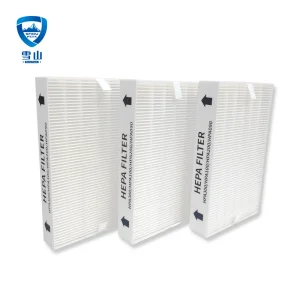
OEM Honeywell HRF-R3 HEPA R Replacement Filter for HPA300 Series
China High-Efficiency Activated Carbon Media with Wire Mesh

OEM Customized Corrugated Humidifier Wick Cooling Filter Pad
High-Quality Customized Corrugated Humidifier Cooling Filter Pad

High-Quality Multistage HEPA Carbon Composite Air Filter
1. Global Market Architecture of Industrial Carbon Filter Ventilation
In modern industrial manufacturing, commercial real estate, and specialized controlled environments, airborne volatile organic compounds (VOCs), hazardous air pollutants (HAPs), chemical vapors, and gaseous odors represent critical challenges to regulatory compliance, worker safety, and process yield. Activated carbon filter ventilation systems serve as the primary defensive barrier against gas-phase molecular contamination. Unlike mechanical HEPA filters designed to capture particulate matter (PM2.5 to PM0.1) via physical interception and impaction, carbon ventilation relies on physical adsorption (Van der Waals forces) and chemical adsorption (chemisorption via catalytic impregnation) to capture gas molecules measuring less than 0.001 micrometers.
The global demand for high-capacity wholesale carbon ventilation filters is accelerating due to stringent environmental regulations, including ASHRAE Standard 62.1 (Ventilation for Acceptable Indoor Air Quality), ISO 16890, and European EN 13779 guidelines. Industrial facilities, pharmaceutical compounding labs, semiconductor cleanrooms, commercial HVAC networks, and commercial indoor agriculture setups require high-efficiency gas-adsorption media capable of maintaining structural stability under continuous, high-volume airflow conditions without generating carbon dust drop-off or excessive static pressure drop.
2. Technical Carbon Media Engineering & Substrate Benchmarks
When procuring wholesale carbon ventilation filters, enterprise buyers must look beyond generic marketing terms and evaluate raw media physics. The gas adsorption effectiveness of an activated carbon air filter is governed by five primary physical characteristics: specific surface area, iodine number, Carbon Tetrachloride (CTC) value, bulk density, and substrate pleat geometry.
| Media Metric | Standard Grade Carbon | Industrial Premium Carbon | Impregnated Chemisorption Carbon |
|---|---|---|---|
| Base Material Substrate | Wood / Coal-Based Granules | Virgin Coconut Shell Granules | Modified Coconut Shell / Synthetic Granules |
| CTC (Carbon Tetrachloride) Adsorption | 40% – 50% CTC | 60% – 85% CTC | 70% – 95% CTC |
| Iodine Value (mg/g) | 600 – 800 mg/g | 950 – 1150 mg/g | 1050 – 1250 mg/g |
| BET Surface Area | 750 – 900 m²/g | 1050 – 1350 m²/g | 1200 – 1500 m²/g |
| Target Gas Removal Specialty | Coarse Odors, General Dust | High-Concentration VOCs, Benzene, Toluene | Acid Gases (H₂S, SO₂), Ammonia (NH₃), Formaldehyde |
| Structure Type | Non-woven Pad Laminated | Honeycomb / Mini-Pleat Wire Mesh | Extruded Pellet Canisters / V-Bank Modules |
Carbon Architecture Options for B2B Systems
Different ventilation setups require specialized physical structures to balance gas residence time against airflow resistance:
Carbon Honeycomb Panels
Utilizes extruded ceramic or paper honeycomb structures filled with micro-grained carbon powders. Offers exceptionally low initial pressure drop, high face velocities (up to 2.5 m/s), and structural rigidity for high-volume commercial HVAC air handlers.
Pleated Media with Wire Mesh Support
Laminates fine activated carbon particles directly between synthetic non-woven layers backed by expanded steel or aluminum wire mesh. Combines particle pre-filtration (MERV 8 to MERV 11) with gas removal in a thin 1-inch to 4-inch deep footprint.
Deep-Bed Pelleted V-Bank Filters
Heavy-duty industrial frames packed with 3mm to 4mm carbon pellets. Engineered for extreme gas challenge concentrations in wastewater facilities, chemical processing plants, and exhaust scrubbing systems where residence time must exceed 0.1 seconds.
3. Sourcing Advantages: China OEM Manufacturing & Supply Chain Scale
As global demand for indoor air quality solutions escalates, international buyers—ranging from HVAC distributors to OEM air purifier brands—require production partners who combine continuous material innovation with rapid mass-production scaling. Chinese manufacturing hubs, specifically localized in advanced industrial cleanroom tech clusters such as Shenzhen, offer distinct operational advantages for wholesale carbon ventilation sourcing.
End-to-End Vertical Integration
Leading Chinese factories control the entire production pipeline: from raw coconut shell activation and chemical impregnation to high-speed ultrasonic pleating, automated frame gluing, polyurethane sealing, and automated leak testing.
Rapid Tooling & Prototype Delivery
Custom OEM sizes, specific pleat counts, non-standard frame depths (cardboard, galvanized steel, aluminum alloy, plastic injection), and multi-stage media combinations can be prototyped in as few as 3 to 5 business days.
ISO 9001 Quality Assurance System
Four-stage rigorous QC protocols—Incoming Material QC (IQC), In-Process QC (IPQC), Finished Product QC (FQC), and Outgoing QC (OQC)—guarantee that every batch meets exact air velocity, pressure drop, and initial efficiency standards.
4. Specialized Field Applications & Implementation Matrix
Carbon filter ventilation systems must be tailored to the specific chemical profiles and environmental conditions of diverse commercial and industrial settings.
Commercial HVAC & High-Rise Offices
Target Pollutants: Outdoor smog (SOx, NOx), ozone, building material off-gassing (formaldehyde), and general occupant odors.
Recommended Solution: Pleated carbon panels or V-bank carbon modules installed upstream of secondary HEPA filters in main Air Handling Units (AHUs).
Industrial Paint Booths & Solvent Exhaust
Target Pollutants: High-concentration VOCs, toluene, xylene, methyl ethyl ketone (MEK), and paint overspray aerosols.
Recommended Solution: Multi-stage systems featuring G4 paint-stop floor fiberglass pre-filters followed by heavy-duty impregnated carbon canister beds.
Precision Indoor Agriculture & Hydroponics
Target Pollutants: Organic terpene odors, botanical VOC emissions, high relative humidity fungal spores.
Recommended Solution: Lightweight aluminum-flange inline carbon filters using high-density virgin coconut carbon with moisture-resistant non-woven outer covers.
OEM Replacement & E-Commerce Aftermarket
Target Pollutants: Pet odors, tobacco smoke, kitchen cooking grease smells, fine pollen.
Recommended Solution: Custom-molded HEPA + Carbon composite filters compatible with leading residential purifier brands (Honeywell, Coway, Levoit, Blueair).
5. Next-Generation Trends in Molecular Filtration Technology
The air filtration sector is undergoing rapid technological advancements driven by energy conservation initiatives and smart facility monitoring. Modern carbon ventilation solutions are shifting from simple passive adsorption to dynamic, low-resistance, and catalytic-active systems.
Key Innovations Transforming the Industry:
- Cold Catalyst & Nano-TiO₂ Composites: Combining activated carbon substrates with cold catalyst coatings allows continuous decomposition of formaldehyde and organic gases into water and CO₂ at room temperature, dramatically extending filter service life beyond traditional carbon saturation limits.
- Ultra-Low Resistance Honeycomb Structures: Traditional loose-pellet carbon beds impose high fan pressure drop, increasing blower energy consumption. Advanced aluminum and ceramic honeycomb carbon matrices reduce airflow drag by up to 40% while preserving high gas contact surface areas.
- Synthetic Carbon Lamination & Wire Mesh Pleating: Using advanced hot-melt adhesive spraying, ultra-fine activated carbon dust is bonded onto synthetic media backings without clogging the carbon micropores. Lamination with structural wire mesh allows precision pleating for high-surface-area compact filter frames.
- Eco-Friendly Recyclable Frame Materials: Modern industrial buyers are transitioning from single-use plastics to recycled aluminum, galvanized steel, and heavy-duty moisture-resistant biodegradable kraft paperboard frames to align with corporate ESG goals.
6. Enterprise B2B Procurement Criteria & Specification Checklist
When selecting a carbon filter ventilation manufacturer, global procurement managers and engineering teams should follow a structured evaluation protocol to avoid premature media saturation, pressure drop bottlenecks, or structural filter failures.
1. Media Quality Verification
Ensure virgin coconut carbon is used rather than recycled coal carbon. Demand certified CTC ratings (≥60% for general VOCs, ≥80% for critical applications) and iodine numbers over 1,000 mg/g.
2. Structural Integrity & Dust-Free Sealing
Verify that carbon media is securely bonded. Loose carbon dusting down the air stream can contaminate downstream HEPA filters or sensitive electronic equipment.
3. Flame Retardancy Compliance
Industrial ventilation filters must meet stringent fire safety standards, such as UL 900 or DIN 53438 class F1 ratings, to satisfy municipal building codes.
4. Dimensional Tolerance & Gasket Precision
Air bypass is the single greatest cause of filtration failure. Ensure seamless continuous foam gaskets or rubber seals are pre-applied to filter flanges.
Frequently Asked Questions for B2B Buyers
Engineering insights into carbon filter specification, replacement intervals, dynamic pressure drop, and factory custom manufacturing.
What is the difference between physical adsorption and chemical chemisorption in carbon ventilation?
How do I determine when an industrial carbon ventilation filter requires replacement?
Why is Carbon Tetrachloride (CTC) value critical when evaluating carbon suppliers?
Can your factory manufacture custom combination HEPA + Activated Carbon filters?
How does high humidity affect carbon filter ventilation efficiency?
What is the typical lead time and MOQ for factory-direct wholesale OEM orders?
Industrial Air Filter Media, Rolls & Special Frames
Complete filtration product line covering mini-pleat HEPA units, VOC carbon mesh rolls, primary G2-G4 media, and high-temperature frames.
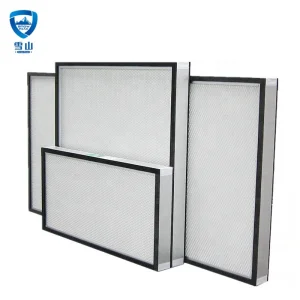
CE Certification High Efficiency HEPA Air Filter Mini-Pleated
High-Efficient Gas Adsorption Material Activated Carbon Media

Custom High-Temperature HEPA Air Filter with Stainless Steel Frame
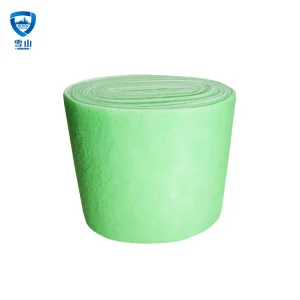
High-Quality G2 G3 G4 Primary Efficiency Green and White Air Filter Roll
China G2 G3 G4 Primary Efficiency Green White Filter Media Roll
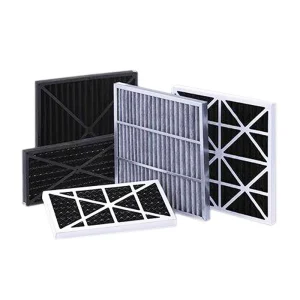
Custom VOCs Removal Carbon Air Filter with Cardboard Frame

ODM Industrial Pre G3 G4 Pleated Panel Air Filter for HVAC
