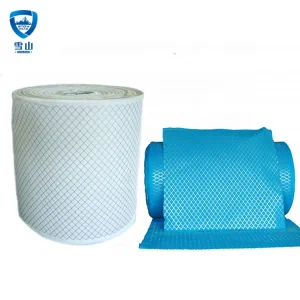
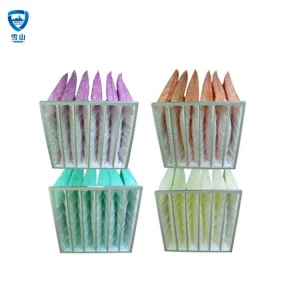
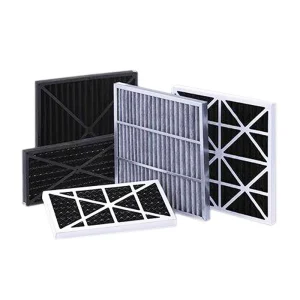
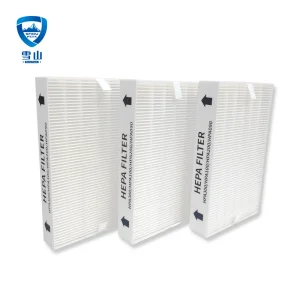
Featured HVAC & Furnace Air Flow Filtration Products
Engineered for minimal static pressure drop, high dust-holding capacity (DHC), and optimized CFM throughput across commercial and residential applications.



Executive Engineering Overview: The Physics of Furnace Filter Air Flow
In modern forced-air heating, ventilation, and air conditioning (HVAC) residential and commercial systems, the furnace filter acts as the primary barrier against particulate contamination while directly modulating the thermodynamic and volumetric efficiency of the air handler blower motor. For global distributors, HVAC equipment original equipment manufacturers (OEMs), and commercial procurement officers, selecting a wholesale furnace filter supplier requires a deep understanding of fluid dynamics—specifically the delicate balance between particulate arrestance efficiency (e.g., MERV, ISO 16890 rating) and initial static pressure drop ($\Delta P$).
Airflow through porous media obeys Darcy’s Law for fluid flow through permeable structures, expanded by the Ergun equation at elevated face velocities:
Where $\Delta P$ represents differential static pressure drop (Inches Water Gauge or Pascals), $\mu$ is air dynamic viscosity, $v$ is media face velocity (FPM), $L$ is filter thickness, $k$ is intrinsic media permeability, $\rho$ is air density, and $C$ is the inertial coefficient of the synthetic or fiberglass matrix. Leading OEM furnace filter air flow factories optimize $k$ and $C$ by controlling fiber diameter distributions, electrostatic charging parameters during meltblowing, and pleat geometry.
Global Procurement Demand: Sourcing High-Flow Furnace Filters
The international HVAC filtration market is witnessing an unprecedented shift driven by stringent indoor air quality (IAQ) mandates post-pandemic, increased wildfire smoke contamination across North America and Europe, and decarbonization policies requiring energy-efficient building operations. Enterprise B2B buyers—ranging from large-scale regional HVAC distributors to commercial property management conglomerates—face a dual mandate: procurement of filters that capture sub-micron particulates (PM2.5, PM1.0, bio-aerosols) while strictly maintaining system airflow velocity to minimize HVAC energy consumption.
Residential Retrofits
High-density residential central forced-air furnaces in North America require 1-inch, 2-inch, and 4-inch deep pleated filters that achieve MERV 11 to MERV 13 performance without exceeding 0.25 in. w.g. pressure resistance.
Commercial HVAC Systems
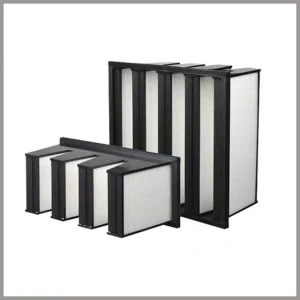
Commercial facilities utilizing V-Bank, pocket, and deep-pleat filter configurations prioritize long service lifespan, high dust-holding capacity (DHC), and structural rigidity under high volumetric airflow (up to 2000 CFM per 24x24 cell).
Specialized Industrial Cleanrooms
Process manufacturing, pharmaceutical cleanrooms, and automated spray painting installations require specialized heat-resistant glass fiber or HEPA V-W shape filters capable of laminar airflow distribution.
Airflow Resistance vs. Particulate Efficiency Comparison
Comprehensive technical comparison of furnace air filter classes manufactured at our state-of-the-art facility.
| Filter Class / Rating | Target Particle Size | Initial Pressure Drop @ 300 FPM | Initial Pressure Drop @ 500 FPM | Nominal Airflow (CFM) | Primary Industrial / Furnace Application |
|---|---|---|---|---|---|
| G4 / MERV 8 | > 10.0 μm (Coarse Dust, Pollen) | 0.08 in. w.g. (20 Pa) | 0.15 in. w.g. (37 Pa) | 1200 - 2000 CFM | Standard Residential Pre-filtration & Basic Furnaces |
| M5-M6 / MERV 11 | 3.0 - 10.0 μm (Mold, Pet Dander) | 0.12 in. w.g. (30 Pa) | 0.22 in. w.g. (55 Pa) | 1000 - 1800 CFM | High-Efficiency Residential & Light Commercial HVAC |
| F7-F8 / MERV 13 | 1.0 - 3.0 μm (Smog, Bacteria, Smoke) | 0.18 in. w.g. (45 Pa) | 0.31 in. w.g. (77 Pa) | 800 - 1600 CFM | LEED-Certified Buildings, Urban Furnace Systems |
| F9 / MERV 16 | 0.3 - 1.0 μm (Fine Bacteria, Carrier Droplets) | 0.28 in. w.g. (70 Pa) | 0.48 in. w.g. (120 Pa) | 600 - 1400 CFM | Medical Clean Spaces, Commercial Clean Air Airflow |
| H13 HEPA (V-W Shape) | ≥ 0.3 μm @ 99.97% Efficiency | 0.65 in. w.g. (160 Pa) | 0.95 in. w.g. (236 Pa) | 1500 - 2500 CFM | High-Flow Commercial Exhaust & Specialized HVAC |
Furnace Filter Air Flow Factory Technical Roadmap (2025–2030)
Achieving ultra-low static resistance while maintaining sub-micron filtration efficiency requires advanced factory automation, high-precision media pleating, and proprietary media formulation. Modern air filter manufacturing factories utilize thermo-bonded meltblown electret media, wire-mesh backings, and continuous automated hot-melt separation line tooling.
Advanced Progressive-Structure Polymer Spinning
Deploying multi-layer co-extruded synthetic polymer webs featuring gradient density—coarse upstream fiber layers to capture large debris, followed by electrostatically charged micro-fibers downstream. This architecture doubles Dust Holding Capacity (DHC) while preserving laminar airflow profiles.
Robotic Auto-Pleating with Hot-Melt Bead Spacing
Eliminating standard rigid wire backings by implementing self-supporting embossed media folds stabilized by controlled hot-melt glue beads. This innovation increases usable effective filtration area by 28% within the same frame footprint, dramatically dropping static pressure drop ($\Delta P$).
Integrated IoT RFID Pressure Sensors & Fully Recyclable Frames
Incorporating passive ultra-thin RFID dynamic differential pressure chips into beverage-board and extruded aluminum frames, providing real-time static pressure telemetry to smart furnace ECM blowers for predictive maintenance and automated speed curve adjustment.
Solving the "MERV vs. Airflow" Dilemma in Commercial HVAC
A primary challenge faced by HVAC engineers and building managers globally is the airflow restriction caused by installing high-efficiency MERV 13+ filters in systems originally designed for MERV 8 filters. When airflow drops below critical CFM thresholds (typically 350-400 CFM per ton of cooling/heating capacity), several system failures occur:
Evaporator Coil Freezing
Reduced air volume across cooling coils prevents proper heat absorption, dropping coil temperatures below 32°F (0°C) and causing solid ice accumulation, liquid slugging, and eventual compressor destruction.
Furnace Overheating
In heating mode, inadequate airflow over the furnace heat exchanger causes heat exchanger temperatures to spike above safety thresholds, cycling the system on high-limit switches and causing thermal fatigue stress cracks.
Excessive Energy Draw
Variable speed ECM blower motors automatically ramp up RPM to overcome duct resistance, increasing power consumption by up to 150 Watts per hour and neutralizing building energy-efficiency goals.
The Factory Solution
Our factory solves this through mini-pleat media construction and low-resistance electret synthetic media formulation, reducing MERV 13 static pressure drop to match standard MERV 8 levels (0.15 in. w.g.).
Rigorous Testing Protocols & Global OEM Support Services
Every batch of furnace filters produced in our manufacturing facility undergoes stringent testing in accordance with international standards, ensuring that structural integrity, flame resistance, and aerodynamic characteristics meet destination market mandates.
ASHRAE 52.2 & ISO 16890 Testing
Our fully automated test ducts measure particle counts (0.3 to 10.0 microns) using potassium chloride (KCl) aerosol, validating MERV ratings and ePM1 / ePM2.5 / ePM10 fractional efficiencies alongside exact differential pressure curves.
UL 900 Flammability Safety
All components—including thermo-bonded synthetic filter media, cardboard moisture-resistant frames, and organic adhesive formulations—comply with UL Class 2 and Class 1 flame retardancy specifications.
OEM Customization & Private Label
We provide end-to-end B2B services: custom dimensional sizing, custom frame printing, private label barcoding, automated shrink wrapping, and drop-ship distribution packaging tailored for global brands.
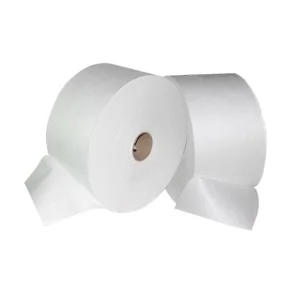
Industrial Air Filtration & Raw Filter Media Rolls
Direct factory supply for specialized dust collection, purifiers, vacuums, and custom HVAC air handling units.