
High-Performance Industrial Filtration Solutions
Explore our factory-direct HEPA filtration media, custom filter pads, and industrial ventilation products engineered to ISO standards.

Wholesale High Absorbent Non-Woven Humidifier Filter Media Pad | China Suppliers & Factory Manufacturer
View Product Specs
High-Quality China G2 G3 G4 Primary Efficiency Green White Air Filter Roll - Quality Media from Trusted Suppliers
View Product Specs
Wholesale Customized Gel-Seal HEPA Filter for Clean Rooms - High Efficiency from China Suppliers
View Product Specs
Custom High Absorbent Non-Woven Wet Curtain Customized Humidifier Filter Media Pad Supplier
View Product Specs
High-Quality High Purification Efficiency Antibacterial HEPA Air Filter – 99.97% Ultrafine Particle Removal
View Product Specs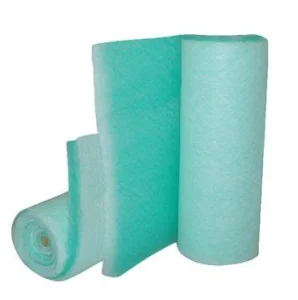
Wholesale China G2 G3 G4 Pre Fiberglass Media Paint Stop Floor Air Filter Roll for Spray Booths
View Product Specs
High-Quality High-Efficiency Fiberglass Deep-Pleat HEPA Filters for Clean Room Air Filtration
View Product Specs
High-Quality China Factory Direct Suppliers of Pocket and Non-Pocket Medium Efficiency Air Filters G4–F9
View Product SpecsGlobal Industrial & Commercial Landscape of HEPA Exhaust Fans
Analyzing the critical role of specialized HEPA exhaust filtration across high-precision manufacturing, hazardous containment, and modern HVAC infrastructure.
Cleanroom & Semiconductor Fabs
Modern semiconductor microchip fabrication and bio-pharmaceutical manufacturing demand strict airborne particle regulation under ISO 14644-1 standards. HEPA exhaust fans remove chemical vapors, sub-micron silica dust, and process fumes while maintaining strict negative differential pressure to prevent cross-contamination into pristine cleanroom bays.
Biosafety Containment (BSL-3/4)
High-level containment biological laboratories, pharmaceutical compounding facilities, and isolation wards utilize HEPA exhaust fan filter units (FFUs) to capture aerosolized pathogens, viruses, and hazardous active pharmaceutical ingredients (APIs). Gel-sealed HEPA frames ensure zero bypass leakage before air discharge.
Heavy Industrial Fume Exhaust
From automated laser welding lines and 3D additive manufacturing to battery electrode coating, industrial HEPA exhaust systems prevent hazardous fine particulate matter (PM0.3/PM2.5) from escaping into the ambient work zone. Multi-stage filtration prolongs motor fan life and meets OSHA/EPA exhaust mandates.
Technical Insight: A standard industrial HEPA exhaust fan operates by drawing contaminated air through a pre-filter stage (G4/M5), followed by a secondary fine filter (F7-F9), culminating in a high-efficiency H13 or H14 glass fiber media filter. This multi-tiered static pressure differential system achieves 99.97% to 99.995% retention of particles down to 0.3 micrometers (Most Penetrating Particle Size - MPPS).
| Filtration Grade | Filter Media Type | Efficiency (MPPS @ 0.3 µm) | Initial Resistance (Pa) | Primary Industrial Application |
|---|---|---|---|---|
| Primary (G2–G4) | Non-Woven Synthetic / Fiberglass | < 65% (Arrestance) | 30 - 60 Pa | Coarse spray booth overspray, HVAC protection |
| Medium (M5–F9) | Meltblown Polypropylene / Pocket Fine | 80% - 95% (Dust Spot) | 60 - 120 Pa | Commercial AHU, electronics pre-filtration |
| HEPA (H13) | Micro-Glass Fiber / Mini-Pleated | ≥ 99.97% | 120 - 180 Pa | Hospital isolation, cleanroom negative exhaust |
| HEPA (H14) | Borosilicate Glass Fiber (Gel Seal) | ≥ 99.995% | 160 - 240 Pa | Semiconductor fabs, BSL-3/BSL-4 containment |
Engineering & Manufacturing Advantages of China-Based Exporters
Why global OEM buyers and engineering contractors rely on Chinese specialized filtration manufacturers for scalable, cost-effective, and certified exhaust systems.
Complete Vertical Supply Chain Integration
Chinese OEM exporters maintain end-to-end control over the production ecosystem. From internal synthesis of wet-laid fiberglass paper and meltblown media to automated aluminum frame extrusion, pleating, and polyurethane potting, vertical integration minimizes lead times and eliminates third-party component markups.
Automated Quality Assurance & ISO Testing
Leading Chinese export facilities utilize robotic hot-melt pleating equipment, computer-controlled gel-filling units, and 100% automated aerosol leak scanning (using MPPS particle counters according to EN 1822 and ISO 29463 standards). Every filter element leaves the factory with verifiable pressure drop and penetration test certificates.
Localized Application Scenarios & Engineering Integration
Tailoring HEPA exhaust fan system configurations to match specific spatial, chemical, and airflow requirements in critical operations.
Gel-Seal vs. Mechanical Gasket Exhaust Housing
In sterile pharmaceutical filling suites and cleanrooms, zero leakage around the frame perimeter is mandatory. Gel-seal HEPA exhaust fan units feature a liquid polyurethane gel channel that forms a hermetic seal around the knife-edge housing flange. This configuration eliminates edge bypass risks inherent to traditional neoprene gasket compression systems under high vibration or fluctuating static pressure.
Industrial Spray Booth & Paint Overspray Recirculation
Automotive spray booths and metal finishing lines generate heavy paint mist and volatile organic compounds (VOCs). Exporters supply multi-stage HEPA exhaust units integrating progressive glass-fiber paint-stop floor rolls (G2-G4) as sacrificial pre-filters, honeycomb activated carbon cells for odor adsorption, and deep-pleat HEPA filters to protect downstream centrifugal exhaust blowers.
Negative Pressure Isolation Wards & Airborne Pathogen Control
During infectious outbreak containment or surgical suite maintenance, mobile negative pressure HEPA exhaust fan units create a continuous inward airflow relative to surrounding corridors. The fan exhausts purified air out of the building envelope, passing through antibacterial H13 micro-glass media that neutralizes fungal spores, bacteria, and viral carrier particles.
V-Bank High-Airflow HEPA Fan Exhaust Systems
When physical plant space is constrained but high CFM airflow is required, multi-v-bank (V/W shape) HEPA filters are integrated into exhaust fan housings. By arranging mini-pleated filter packs in a V-shaped geometry, total effective filter surface area is expanded up to 300% compared to standard box filters, allowing handling of up to 4000 m³/h per cell at minimal initial resistance.
Macro Trends & Technological Trajectory (2025–2030)
The next generation of HEPA exhaust systems combines IoT intelligence, ultra-efficient motors, and advanced nano-composite filtration media.
Smart IoT & Differential Pressure Monitoring
Modern HEPA exhaust units are increasingly fitted with integrated Modbus/BACnet differential pressure sensors. Real-time telemetry alerts facility engineers when dust loading approaches terminal static pressure (typically 450-500 Pa), preventing fan motor burnout and optimizing preventative maintenance schedules.
EC Motor Efficiency Integration
Replacing legacy AC induction motors with Electronically Commutated (EC) brushless DC direct-drive blowers reduces fan electrical power consumption by up to 35-50%. EC fans dynamically adjust RPM to maintain constant exhaust airflow volume as HEPA filter resistance naturally builds over its lifespan.
Low-Pressure Drop PTFE Membranes
Polytetrafluoroethylene (ePTFE) and electrospun synthetic nanofiber media are emerging as alternatives to micro-fiberglass. Offering superior chemical resistance against HF and alkaline vapors, ePTFE membranes reduce initial pressure drop by up to 40%, significantly curbing operating energy overhead.
Global Procurement & Enterprise Sourcing Benchmark Guide
Key technical metrics and compliance criteria procurement teams must evaluate when sourcing wholesale HEPA exhaust fans and filter cells.
Technical Request for Quotation (RFQ) Checklist
- Airflow Volume (CFM / m³/h): Calculate required air change rates (ACH) for your room volume.
- External Static Pressure (ESP): Ensure the fan motor overcomes ductwork losses + filter terminal resistance.
- Housing Material & Finish: Specify SUS304 stainless steel, SUS316, or epoxy powder-coated cold-rolled steel based on corrosive vapor exposure.
- Explosion-Proof Rating: ATEX/IECEx compliance for environments with flammable solvents or dusts.
Logistics, Packaging & International Shipping Standards
Precision HEPA filters and exhaust fan assemblies require robust export packaging to prevent micro-fractures in fragile glass fiber paper during maritime or air transit. Leading China exporters utilize corner-protected heavy corrugated cartons, vacuum foil sealed moisture barriers, and reinforced IPPC-stamped wooden crates with shock indicator tags.
Technical & Procurement FAQ
Direct answers to common engineering, OEM customization, and maintenance questions from international buyers.
What is the difference between an inline HEPA exhaust fan and a standard FFU (Filter Fan Unit)?
A standard FFU is designed for cleanroom ceiling grids to push supply air downward (laminar airflow). In contrast, a HEPA exhaust fan is specifically engineered to pull contaminated air out of a localized enclosure, ward, or machine hood under negative pressure, discharging clean air externally while containing hazardous particulates within sealed ductwork or filter housing.
How often should HEPA filters in exhaust systems be replaced?
Replacement frequency depends on operating dust concentrations and pre-filtration efficiency. Typically, primary G4/M5 pre-filters are replaced every 1 to 3 months to protect the final HEPA stage. Main H13/H14 HEPA exhaust filters last between 12 to 24 months under continuous operation, or when static pressure differential reaches terminal resistance (usually double the initial resistance, e.g., 400 - 500 Pa).
Can Chinese manufacturers produce customized HEPA exhaust fan dimensions and electrical standards?
Yes. Established China OEM factories support full custom fabrication for both physical dimensions (non-standard duct connections, low-profile housings, gel-seal tracks) and electrical configurations. Blower motors can be wound for international power standards including 110V/60Hz, 220V/50Hz, 380V 3-phase, or universal EC motor inputs.
How do gel-seal HEPA filters prevent bypass leaks in negative pressure exhaust fans?
Gel-seal HEPA filters feature a peripheral frame channel pre-filled with a self-healing polyurethane gel. When inserted into the fan housing, a knife-edge metal collar plunges into the soft gel, creating a seamless, air-tight barrier. This design eliminates seal deformation or bypass leaks common in mechanical gasket systems operating under heavy suction or mechanical vibration.
What testing certifications should buyers request for HEPA exhaust exports?
Enterprise buyers should request factory leak test reports compliant with EN 1822-4/5 or ISO 29463. Additionally, electrical safety compliance (CE, UL 507 for fan units) and material flame-retardant standard ratings (UL 900 Class 1 or Class 2) are critical for international import clearance and building code compliance.
Additional Filtration Components & Replacement Media
Browse our complete line of replacement HEPA modules, carbon filters, and specialized ventilation rolls for global wholesale export.

China High Efficiency HEPA Filter with V/W Shape Design for HVAC Air Conditioning Systems
View Product Specs
Wholesale Customized Gel Seal HEPA Filters from China Factory - High-Efficiency Air Filtration for Clean Rooms
View Product Specs
Custom Honeycomb Activated Carbon Filter for Odor and Gas Removal - China Quality Manufacturers
View Product Specs
High-Quality High Performance Customized Cylindrical HEPA Dust Filter Collector from China Suppliers
View Product Specs
China 211+ Foldable Activated Carbon and H13 HEPA Replacement Filter for Blueair Blue Pure 211+
View Product Specs
ODM Industrial pre G3 G4 Cardboard or Metal Frame Pleated Air Filter for Air Conditioning Ventilation
View Product Specs
China High Efficiency HEPA Filter with Separator for Clean Room Air Filtration Solutions
View Product Specs