
Featured Commercial & Household HEPA Replacement Solutions
High-performance replacement filters, pocket media rolls, and specialized industrial air purification products manufactured under ISO 9001 certified cleanroom controls.







Technical Whitepaper: Engineering Next-Generation HEPA Filter Media
An authoritative technical analysis of meltblown nonwovens, glass fiber microstructures, electret charging stability, and industrial scalability in modern air purification systems.
1. Comprehensive Fundamentals of HEPA Media Filtration
High-Efficiency Particulate Air (HEPA) filter media represents the pinnacle of physical separation technology in fluid dynamics. According to international standards including EN 1822:2019 and ISO 29463, a media layer must capture at least 99.97% of airborne particles measuring 0.3 micrometers (μm) in diameter to qualify for True HEPA status (H13 grade). The core mechanisms governing particle entrapment within matrix nonwoven fibers include:
- Interception: Occurs when a particle following an air streamline comes within one particle radius of a fiber matrix and adheres to it due to molecular attraction (Van der Waals forces).
- Impaction: Heavy particles exceeding 1.0 μm cannot adjust to rapid fluid directional changes around dense fibers; their inertia propels them straight into the filter media matrix.
- Diffusion: Sub-micron particles (especially those < 0.1 μm) experience Brownian motion caused by continuous collision with gas molecules. This chaotic trajectory dramatically increases their probability of contacting fibers.
- Electrostatic Attraction (Electret Media): Polypropylene meltblown nonwovens treated via high-voltage corona or hydro-charging possess permanent dipole charge density. This Coulombic force pulls polar and neutral particles without adding physical flow resistance.
Information Gain Insight: The Most Penetrating Particle Size (MPPS) typically ranges between 0.1 μm and 0.25 μm, where the combination of diffusion and interception reaches its physical minimum. Premium Chinese manufacturing facilities utilize dual-stage hydro-charging techniques to maintain electrostatic charges even under extreme humidity and thermal aging stress tests.
2. Comparative Material Matrix: Polypropylene vs. Wet-Laid Micro-Glass Fiber vs. PTFE Membrane
Selecting the optimal HEPA media substrate depends heavily on operating environment parameters, target pressure drops, chemical compatibility, and cost constraints. Below is a comprehensive engineering breakdown comparing modern filter media substrates manufactured across lead Chinese facilities.
| Media Parameter | PP Meltblown (Hydro-Charged) | Wet-Laid Micro-Glass Fiber | ePTFE Expanded Membrane |
|---|---|---|---|
| Efficiency Standard | H10 - H14 (EN 1822) | H13 - U17 (EN 1822) | H13 - U17 (EN 1822) |
| Initial Pressure Drop | Extremely Low (18 - 35 Pa @ 5.3cm/s) | Moderate to High (80 - 140 Pa) | Ultra-Low (12 - 25 Pa) |
| Dust Holding Capacity (DHC) | High (Depth Filtration Matrix) | Superior (Graded Density Structure) | Moderate (Surface Filtration Focus) |
| Humidity Resistance | Good (Requires stabilized electret) | Excellent (Up to 100% RH) | Hydrophobic (Impervious to Water) |
| Chemical & Acid Resistance | High Resistance to Acids/Alkalis | Vulnerable to Hydrofluoric Acid (HF) | Exceptional Inertness Across Spectrum |
| Primary Application Fields | Air Purifiers, HVAC, Respirators, Automotive | Semiconductor Cleanrooms, Pharma, High-Temp | Micro-electronics, Sterile Operating Rooms |
Strategic Competitive Edge of China-Based HEPA Factories
Leveraging the Pearl River Delta industrial ecosystem, Shenzhen Snow Peak Clean Technology Co., Ltd. delivers unparalleled manufacturing agility, technological scalability, and cost optimization.
Full In-House Supply Integration
From polymer masterbatch formulation and high-speed meltblown extrusion to precision ultrasonic hot-melt pleating and automatic sealing frame assembly, Chinese factories eliminate middle-tier logistics delays, granting global clients direct factory pricing.
Automated Quality Assurance Lines
Every batch undergoes rigorous quality gates: IQC raw material density validation, online optical laser scanning for micro-pinholes during pleating (IPQC), and 100% individual particle counter scanning (TSI 8130A test rigs) for MPPS efficiency and initial airflow pressure drop (FQC).
Rapid OEM/ODM Prototyping
Equipped with computerized CNC tooling and custom gasket casting machines, Snow Peak accelerates custom replacement filter sample lead times to 3-5 working days. Private-label packaging, custom frame dimensions (ABS, Cardboard, Aluminum, Galvanized Steel), and tailored media blends are executed seamlessly.
Macro Industry Trends & Next-Gen Filtration Technologies
How global decarbonization goals, energy efficiency standards, and smart cleanroom regulations are shaping the future of HEPA filter manufacturing.
1. Eco-Design Directives and Low-Resistance Aerodynamics
Global HVAC standards (including ASHRAE 52.2 MERV upgrades and European ErP regulations) mandate lower energy consumption for ventilation fans. High-resistance legacy HEPA filters impose substantial static pressure burdens, consuming excessive kilowatt-hours. Consequently, manufacturers are engineering ultra-thin nano-fiber layers laminated onto meltblown substrates. This composite technology reduces system static pressure drop by up to 35% without degrading H13/H14 filtration efficiency.
2. Functional Hybridization: Antimicrobial & VOC Adsorption Integration
Modern commercial purifiers demand multi-pollutant capture capabilities within a single modular filter cassette. Pure particulate filtration is no longer sufficient for healthcare and high-end residential procurement. Advanced factories co-extrude active functional materials directly onto or within the HEPA structure:
- Cold Catalyst & Zinc-Ion Coatings: Decompose formaldehyde, TVOCs, and gaseous pollutants into H2O and CO2 at room temperature without secondary outgassing.
- Copper-Silver Nano-Particle Impregnation: Destroys cell membranes of captured bacteria and viruses, yielding a 99.99% antibacterial rate verified via ISO 18184 test protocols.
- Activated Carbon Composite Layers: Honeycomb and wire-mesh laminated carbon media adsorb volatile organic compounds, nitrogen dioxide (NO2), and industrial odors.
3. Global Sourcing Compliance & ESG Criteria
International B2B procurement teams prioritize suppliers backed by full regulatory compliance. Leading Chinese OEM partners ensure strict adherence to EU REACH standards, RoHS hazardous substance restrictions, UL 900 flammability classifications, and ISO 14001 environmental management frameworks.
Localized Application Scenarios & Engineering Implementations
Tailored filtration configurations engineered to satisfy stringent environmental requirements across demanding commercial and industrial sectors.
Commercial HVAC & Commercial Buildings
Centralized fresh air handling units (AHUs) require multi-stage protection. Coarse G4 pre-filter rolls protect fine F7-F9 bag filters, while final stage mini-pleat HEPA modules purify incoming city air from PM2.5, pollen, and combustion particulate matter. This multi-tier setup prevents coil fouling and extends terminal filter life by 2.5x.
Semiconductor & Cleanroom Manufacturing
Micro-chip production requires cleanrooms rated ISO Class 3 to Class 5. Deep-pleat glass fiber filters utilizing continuous aluminum foil separators deliver uniform air velocity and thermal stability up to 250°C. Zero outgassing organic adhesives prevent silicon wafer chemical contamination.
Consumer Air Purifier Aftermarket Refills
Compatible replacement cartridges designed for global brands (Honeywell, Coway, Blueair, Levoit, GermGuardian). Precision injection molded frames or hot-melt glued perimeter bands ensure 100% leak-proof fit inside original appliance housings.
Industrial Dust Collectors & Powder Recovery
Heavy-duty cylindrical pleated cartridges engineered with spunbond polyester laminated with PTFE membranes handle heavy particulate loading. Features pulse-jet cleaning recovery, high tensile burst strength, and moisture rejection for metalworking, laser cutting, and pharmaceutical powder collection.
Filter Media Rolls & Specialized OEM Assemblies
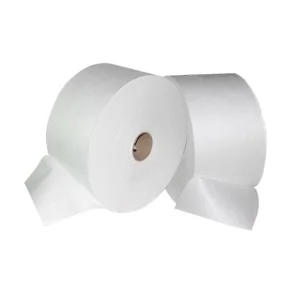
Explore our full line of synthetic bag media, activated carbon wire-mesh rolls, antibacterial HEPA elements, and mini-pleated assemblies.






Technical & Sourcing Frequently Asked Questions (FAQ)
Detailed answers to critical technical, quality control, and procurement inquiries from B2B buyers and OEM partners.