
Featured Industrial HEPA & VOC Removal Products
Precision-engineered filtration units manufactured for high-efficiency cleanroom environments, HVAC systems, and hazardous contamination containment.



Macro Procurement Dynamics in Global Industrial HEPA Manufacturing
How semiconductor fab expansion, biopharmaceutical compliance, and aggressive ESG decarbonization targets are redefining global high-efficiency particulate air filtration procurement strategies.
Semiconductor & Fab Cleanroom Demands
The global surge in sub-3nm semiconductor fabrication plants requires non-outgassing, ultra-low penetration air (ULPA) and HEPA solutions. Modern fabs cannot tolerate airborne molecular contamination (AMC) or trace element off-gassing (such as boron or organic siloxanes) that corrupt silicon wafers. Procurement leaders demand micro-glass and PTFE HEPA filters certified under rigorous ISO Class 1 to Class 5 cleanroom protocols with zero chemical outgassing.
Pharmaceutical & Containment Security
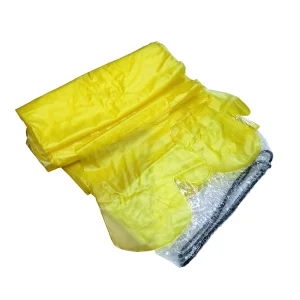
Biopharmaceutical facilities operating under EU Annex 1 revisions require stringent airborne contamination control. Biological containment units handling active pharmaceutical ingredients (APIs) rely on specialized Bag-In/Bag-Out (BIBO) containment housings equipped with PVC change bags and high-integrity HEPA filters. Ensuring zero operator exposure during filter replacement cycles is now a non-negotiable regulatory barrier for global pharma enterprises.
HVAC Energy Expenditure Optimization
Air filtration accounts for up to 70% of an industrial HVAC system’s total energy consumption due to pressure drop resistance. Enterprise facility managers are transitioning away from high-resistance traditional deep-pleat media to low-pressure-drop mini-pleated HEPA designs and electrostatically enhanced synthetic materials. This transition reduces fan energy load while extending service life and compliance with ISO 16890 and EN1822:2019 standards.
EN 1822:2019 & ISO 29463 Testing Rigor
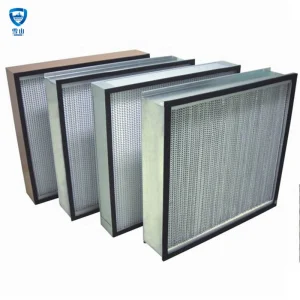
The performance of industrial HEPA filters is defined by their Most Penetrating Particle Size (MPPS), typically falling between 0.12 µm and 0.25 µm. Snow Peak's OEM manufacturing utilizes advanced automated aerosol photometer and particle counting scan test lines, verifying that every single filter cell achieves continuous efficiencies from H13 (≥99.95% at MPPS) to U15 (≥99.9995% at MPPS) without local leakage.
Technical Roadmap & Next-Generation Filter Media
Deep dive into the physical kinetics of particulate capture, chemical gas-phase neutralization, and material substrate structural engineering.
| Filter Media Type | Structural Mechanics | Efficiency Grade Range | Primary Industrial Applications | Key Performance Advantage |
|---|---|---|---|---|
| Micro-Glass Fiber Deep-Pleat | Borosilicate glass fibers bound with acrylic resin, aluminum separators. | H13 - H14 (EN1822) | Cleanrooms, Pharmaceutical, Nuclear Exhaust, High Temp (>250°C) | Exceptional dust holding capacity; structural thermal integrity. |
| ePTFE Membrane Mini-Pleat | Expanded Polytetrafluoroethylene laminated onto spunbond synthetic grid. | H14 - U17 (ISO 29463) | Semiconductor microelectronics, Photovoltaic wet process lines | Zero boron outgassing, ultra-low operating pressure drop (<40% lower). |
| Sandwich VOC Carbon Media | Non-woven fabric dual layers encapsulating coconut shell activated carbon. | G4 Pre-filter + Gas-Phase VOC capture | Air Purifier OEM, Paint Spray Booths, Commercial Building HVAC | Simultaneous PM2.5 capture & high-efficiency VOC/odor adsorption. |
| High-Efficiency Meltblown (MB) | Electret-charged polypropylene microfibers created via thermal extrusion. | M6 - F9 / MERV 11 - MERV 16 | HVAC Pocket Bag Filters, Pre-filtration, Indoor Air Quality units | Superior initial filtration efficiency with minimal physical mass weight. |
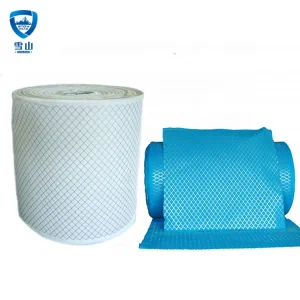
| Wire-Mesh Laminated Synthetic Roll | Polyester G3/G4 synthetic media reinforced with galvanized wire backing. | G3 - G4 (EN779) | AHU Intake, Heavy Machinery Cabinets, Painting Spray Booth Ceiling | Prevents pleat collapse under high turbulent air velocities. |
Particulate Capture Physics
Particulate removal within industrial HEPA media operates via three primary physical mechanisms: Impaction (large particles over 1 µm colliding with media fibers due to inertia), Interception (medium particles between 0.3–1 µm following flow streamlines and contacting fibers), and Brownian Diffusion (sub-0.1 µm particles oscillating violently due to molecular collisions, ensuring capture). Snow Peak engineers optimize fiber diameter distribution to minimize aerodynamic resistance while maximizing capture cross-sections across all three particle dynamic regimes.
Gas-Phase VOC & Catalytic Engineering
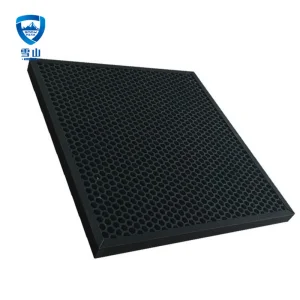
For modern industrial environments, airborne particulate filtration must be combined with gas-phase contaminant control. Our sandwich-structured carbon media and honeycomb catalytic layers utilize high iodine-value activated carbon matrixes impregnated with chemical reagents. This enables target-specific chemisorption of volatile organic compounds (VOCs), formaldehyde, ozone, sulfur dioxide (SO₂), and nitrogen oxides (NOx) alongside mechanical particulate capture.
Cleanroom Structural Frame Integrity
HEPA filter operational integrity is as dependent on structural housing as it is on media efficiency. Industrial HEPA frames manufactured by Snow Peak utilize anodized extruded aluminum, stainless steel 304/316, or heavy-duty galvanized steel. Polyurethane continuous seamless gaskets or gel-seal channels ensure absolute zero-bypass sealing against filter holding frames, eliminating perimeter air bypass leaks in cleanroom ceiling grids.
Turnkey OEM & B2B Solutions for Critical Operations
Tailored technical setups designed to meet exact regional regulatory standards and operational parameters across primary commercial industries.
Automotive Paint Booth & Finishing Lines
Challenge: Paint cratering caused by airborne dust particles larger than 5 µm and volatile solvent fumes degrading finish quality.
Solution: A multi-stage system comprising ceiling diffusion filter cotton (M5/F5 grade) with thermo-bonded synthetic fibers, combined with wire-mesh reinforced G4 pre-filters and downstream carbon fabric banks to capture overspray while maintaining ultra-laminar airflow velocity across spraying zones.
Hazardous Containment (BIBO Systems)
Challenge: Replacing contaminated filters in high-containment biohazard labs, cytotoxic drug manufacturing, and radioactive processing facilities without exposing operators.
Solution: Custom-engineered Bag-In/Bag-Out (BIBO) PVC replacement bags featuring high-tensile elastic retention cords, integrated work gloves, and tear-resistant transparent PVC sheeting designed for sealed change-out procedure compliance (ISO 14644-3).
Commercial HVAC & Aftermarket Brand Replacements
Challenge: B2B e-commerce brand owners and commercial building suppliers needing reliable OEM/ODM replacement air filters for legacy brands (Honeywell, Coway, Blueair, Levoit).
Solution: Precision dimensional reverse-engineering and mass assembly lines producing H13 True HEPA filters, honeycomb activated carbon cartridges, and foldable composite filters designed for exact physical fit and equivalent CADR performance.
Global Compliance & Quality Assurance Infrastructure
Snow Peak’s commitment to institutional quality control safeguards global supply chains and guarantees seamless regulatory clearance in target export markets.
4-Stage Quality Control Protocol
Every industrial production lot undergoes four mandatory quality checks: IQC (Incoming Quality Control testing raw fiber media density, tensile strength, and outgassing), IPQC (In-Process Quality Control monitoring robotic pleat spacing, adhesive dispensing, and frame squareness), FQC (Finished Goods scan testing for pinhole leaks), and OQC (Outgoing Quality Control verifying drop-test packaging and export pallet integrity).
International Certification Compliance
Our OEM manufacturing facilities hold ISO 9001:2015 Quality Management and ISO 14001:2015 Environmental Management accreditations. Individual filter product lines conform to CE directives, UL 900 flammability classifications (Class 1 and Class 2 fire resistance rating), and European RoHS/REACH chemical safety standards, ensuring friction-free customs clearance in North America, the EU, and the Middle East.
Logistics & Local Supply Chain Support
Strategically headquartered in Shenzhen, China—adjacent to Yantian and Shekou deep-water container ports—Snow Peak provides optimized freight loading, custom palletization, private-label packaging artwork design, and flexible FOB/CIF/DDP shipping options. Dedicated account teams assist enterprise purchasers with customs documentation, HS code classification, and automated order tracking.
Industrial HVAC, Media & Replacement Filter Series
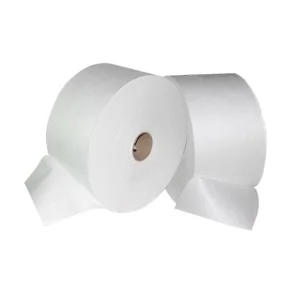
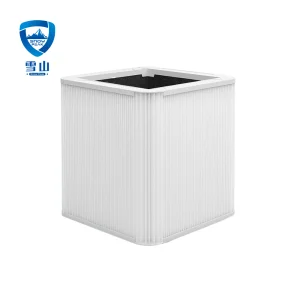
Explore our comprehensive catalog of HVAC panel filters, high-temperature HEPA units, filter media rolls, and compatible aftermarket purifier replacements.



Frequently Asked Technical & Procurement Questions
Direct answers to crucial technical queries submitted by B2B buyers, cleanroom engineers, and procurement specialists.
What is the core engineering difference between Micro-Glass Fiber and ePTFE HEPA media?
Micro-glass media consists of fine borosilicate fibers bound mechanically and chemically. It provides exceptional dust holding capacity and thermal resistance up to 250°C+, making it the standard for high-temperature applications and heavy particulate environments. In contrast, ePTFE (expanded Polytetrafluoroethylene) is a synthetic membrane featuring extremely fine web structures. ePTFE offers up to 40% lower operating initial pressure drop, zero chemical outgassing (crucial for boron-sensitive semiconductor fabs), and superior resistance to chemical degradation, though it generally carries a higher material cost.
How does Snow Peak perform leakage scanning on H13 and H14 cleanroom filters?
In full compliance with EN 1822-4 and ISO 29463-4 standards, every single finished HEPA/ULPA filter undergoes automated robotic probe scanning in an ISO Class 5 cleanroom. We generate a DEHS or PAO aerosol challenge upstream and pass a micro-orifice probe across the downstream face at a defined scan speed (typically 2-5 cm/s). Any localized particle count exceeding 0.01% of the upstream concentration triggers an automatic leak detection flag for immediate rejection or certified micro-repair.
Can Snow Peak manufacture customized non-standard dimensions and OEM frames?
Yes. OEM and ODM manufacturing represents over 60% of our production volume. We custom-fabricate filter frame depths ranging from 20 mm to 300 mm using extruded aluminum, stainless steel, galvanized sheet metal, or ABS plastic. Additionally, we support customized pleat counts, faceguard protection screens, continuous PU foam gasket placement, and private-label packaging artwork tailored to client branding requirements.
What is the standard production lead time and Minimum Order Quantity (MOQ) for B2B orders?
For standard replacement filters and stock filter media rolls, our production lead time is typically 10 to 15 business days following sample approval. For customized industrial HEPA frames or specialized BIBO containment orders, lead time ranges from 15 to 25 business days. We maintain flexible MOQ policies: standard replacement filters require a minimum of 500 units per model, while specialized cleanroom HEPA filters have lower MOQs (as low as 20-50 units) to accommodate project-based cleanroom installations.
How do sandwich-type carbon fabric filters handle both particulate and VOC filtration?
Our sandwich carbon media encapsulates high-activity coconut shell activated carbon granules between non-woven synthetic meltblown layers. The outer synthetic layer acts as a mechanical pre-filter capturing fine airborne dust (PM2.5), protecting the microporous carbon core from dust blinding. As gas molecules pass through the center layer, the extensive internal surface area of the activated carbon (over 1000 m²/g) physically adsorbs volatile organic compounds, chemical fumes, and unpleasant odors, providing dual-stage purification in a single compact pleated module.
What certifications and test reports are provided with industrial HEPA shipments?
Every industrial shipment includes a comprehensive Factory Acceptance Test (FAT) packet. This includes individual EN1822 unit scan test certificates (verifying initial resistance, air volume capacity, and localized efficiency), material batch compliance certificates (COA), RoHS/REACH compliance documentation, and UL900 fire resistance certification where applicable.
How do Bag-In/Bag-Out (BIBO) PVC replacement bags function in hazardous applications?
BIBO replacement bags are heavy-duty, highly transparent PVC enclosures equipped with a high-tensile elastic boundary cord and integrated heavy-duty glove ports. The bag is clamped securely over the flange of a hazardous containment housing. Maintenance technicians work through the glove ports to unbolt and pull the spent, contaminated HEPA filter into the PVC bag, seal the bag using a thermal wire crimper, and cut the bag cleanly—ensuring that hazardous biological, radioisotope, or toxic chemical dust is never exposed to ambient room air or personnel.
What is the recommended replacement frequency for industrial HVAC pre-filters vs. secondary HEPA filters?
Under standard commercial air handler operating conditions, primary panel pre-filters (G3/G4) should be replaced every 1 to 3 months. Secondary pocket or bag filters (M6–F9) typically require replacement every 6 to 12 months. Terminal ceiling HEPA filters (H13/H14), when protected by properly maintained upstream pre-filtration, carry a operational service lifespan of 3 to 5 years, or until differential pressure gauges indicate that terminal resistance (typically double the initial pressure drop, e.g., 500 Pa) has been reached.