
Featured Industrial Air Filter Systems & Media
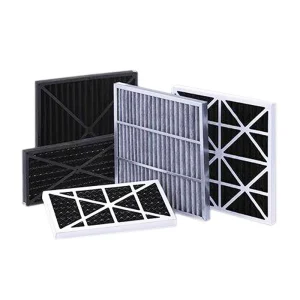
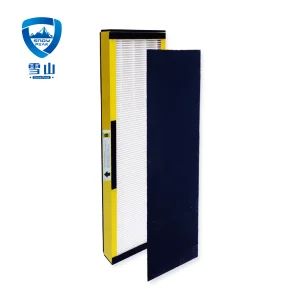
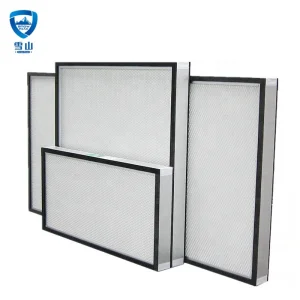
Explore our top-tier manufacturing outputs including washable metal mesh pre-filters, high-efficiency HEPA elements, and laminated carbon media engineered for maximum dust holding and odor control.
-
 China Stainless Steel Metal Washable Mesh Primary Air Filter - Industrial Factory SupplierView Product Details
-
 High-Efficient Activated Carbon Media Laminated with Wire Mesh for Pleated FiltersView Product Details


Wholesale MERV 13 Filter Fabric: Technical Architecture & Filtration Physics
In modern HVAC systems and commercial air purification engineering, MERV 13 filter fabric represents the critical benchmark balancing high sub-micron particle arrestance with low operational static pressure. Standardized under ASHRAE 52.2 and recognized under international frameworks such as ISO 16890 (ePM1 50%–65%), MERV 13 media is specifically designed to target microscopic airborne contaminants—including fine particulate matter (PM2.5), wildfire smoke, bacteria, carrier droplets, pollen, and mold spores.
Technical Benchmark Insight: According to ASHRAE 52.2 standards, MERV 13 media must demonstrate a minimum particle size efficiency (PSE) of at least 50% for 0.3 to 1.0 micron particles (E1 range), over 85% for 1.0 to 3.0 micron particles (E2 range), and over 90% for 3.0 to 10.0 micron particles (E3 range). Achieving this without choking system airflow requires advanced electrostatic meltblown technologies coupled with low-density synthetic carrier backings.
Comparative Filtration Performance Matrix
To assist global procurement managers and HVAC design engineers in selecting the optimal nonwoven roll goods, the technical matrix below highlights the performance parameters of MERV 13 media against other standard media grades:
| Performance Parameter | MERV 8 Synthetic | MERV 11 Composite | MERV 13 Electrostatic Meltblown | HEPA H13 (EN1822) |
|---|---|---|---|---|
| Target Particle Range | 3.0 - 10.0 µm (Dust, Lint) | 1.0 - 3.0 µm (Pet Dander, Auto Dust) | 0.3 - 1.0 µm (Smoke, Bacteria, PM2.5) | ≥0.3 µm (Viruses, Ultra-fine Dust) |
| E1 Efficiency (0.3–1.0 µm) | < 20% | 20% – 35% | 50% – 75% | ≥ 99.95% |
| Initial Pressure Drop (5.3 cm/s) | 12 - 18 Pa | 18 - 25 Pa | 22 - 32 Pa | 120 - 220 Pa |
| Primary Fiber Material | Coarse Spunbond Polyester | Carded Thermo-bonded Polypropylene | PP Electrostatic Meltblown + PET Substrate | Micro-glass Fiber / PTFE Membrane |
| HVAC Energy Impact | Ultra-Low Fan Load | Moderate Fan Load | Optimized Low-Resistance Performance | High Pressure Drop (Requires Specialized Blowers) |
China Factory Ecosystem: OEM/ODM Advantages in MERV 13 Media Production
Sourcing MERV 13 filter fabric directly from leading Chinese manufacturers provides global distributors, filter converters, and OEM brands with unprecedented competitive advantages in cost efficiency, material customization, scale, and technical compliance.
Advanced Hydro-charging & Corona Charging Tech
Our domestic facilities leverage high-voltage corona charging and water-jet electret treatment to embed deep static charges into polypropylene microfibers. This ensures long-term charge stability without early efficiency decay under humid ambient conditions.
End-to-End Vertical Supply Chain
From raw virgin polypropylene polymer resin procurement to high-speed meltblowing extruders, spunbond carrier lamination, slit-roll cutting, and wire-mesh reinforcing lines—integrated manufacturing drastically reduces production overheads.
Cleanroom Production & Quality Assurance
Fabricated in automated clean workshops utilizing real-time automated optical inspection (AOI) to detect pinholes, density fluctuations, and structural defects. Every batch is validated using TSI 8130 automated filter testers.
Macro Industry Trends Shaping Air Filtration Materials
The global air filter market is undergoing a structural transition driven by stringent indoor air quality policies, energy conservation imperatives, and post-pandemic ventilation upgrades.
1. Decarbonization & Low Pressure Drop Media
Commercial building HVAC energy consumption accounts for a significant portion of operational carbon footprints. Newer MERV 13 nonwovens focus heavily on reducing initial resistance by 20–30%, directly translating to lower fan energy consumption without sacrificing particulate capture efficiency.
2. Multi-Functional Composite Media (Carbon + MERV 13)
Modern applications increasingly demand simultaneous particulate and gaseous pollutant removal. Laminating activated carbon granules or carbon-impregnated nonwovens onto MERV 13 electrostatic fabric creates single-pass solutions for VOCs, odors, and PM2.5.
3. Antimicrobial & Bio-functional Coatings
Infusing nonwoven matrices with non-leaching antimicrobial agents (such as zinc or silver ion complexes) prevents bacterial colonization and mold growth on filter pleats operating in high-humidity environments.
4. Wildfire Mitigation & Urban Smog Resilience
North American and East Asian municipalities are mandating higher baseline IAQ filtration for public venues, schools, and residential complexes to counteract seasonal wildfire smoke events containing hazardous fine combustion particles.
Target Application Scenarios & Industrial Solutions
MERV 13 fabric serves as the core filtration layer across a wide variety of commercial, industrial, and residential air management environments.
Commercial Office Towers & LEED Buildings
Upgrading standard MERV 8 filters to MERV 13 media enables commercial building owners to gain critical credits under LEED v4/v4.1 IAQ guidelines while safeguarding occupants against airborne allergen transfer.
Healthcare Facilities & Outpatient Clinics
Used as pre-filtration stages to extend the operational life of downstream cleanroom HEPA filters by capturing airborne bacteria, fine dust, and moisture droplets before reaching critical operating suites.
OEM Household Air Purifiers & HVAC Mini-Splits
Custom slit rolls and wire-backed laminated fabrics engineered specifically for automated filter pleating lines, producing replacement filter cartridges compatible with global appliance brands.
Data Centers & Tech Infrastructure
Preventing sub-micron particulate accumulation on sensitive server circuitry, mitigating short-circuit risks caused by corrosive fine ambient dust in free-cooling economizer ventilation units.
Global Procurement Specification Guide: Ordering MERV 13 Fabric
When placing bulk OEM/ODM orders for MERV 13 roll goods or custom pleated panels, enterprise procurement teams should specify the technical tolerances below to ensure seamless compatibility with automated pleating lines:
| Specification Property | Standard Industry Value / Option | Custom Factory Range Available |
|---|---|---|
| Basis Weight (GSM) | 70 g/m² – 140 g/m² | 50 g/m² to 220 g/m² (Custom Composites) |
| Roll Width (Slit Sizes) | 500mm, 600mm, 1200mm, 1500mm | 100mm to 2100mm Precision Slitting |
| Composite Structure | PP Meltblown + PET Spunbond Substrate | Optional Wire-Mesh Backing / Activated Carbon Layer |
| Air Permeability | 600 – 1200 L/m²/s @ 200Pa | Adjustable based on pleat depth & velocity |
| Thickness | 0.6mm – 1.2mm | Custom Calendering Available |
| Roll Length | 300m / 500m / 1000m Standard Master Rolls | Custom Length per Spool Spec |
Additional OEM/ODM Air Filter Solutions
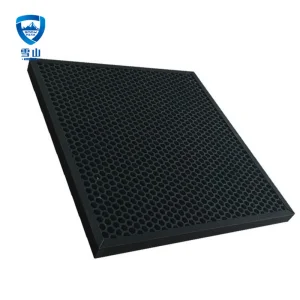
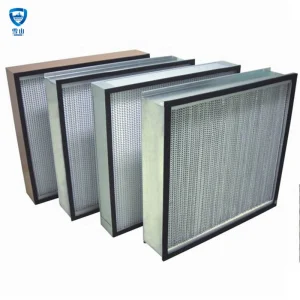
Complete your wholesale procurement line with our specialized carbon filters, cleanroom HEPA modules, and custom replacement cartridges.


Frequently Asked Questions (FAQ) for B2B Procurement
Engineering and procurement insights regarding MERV 13 fabric standards, testing protocols, and OEM manufacturing customization.
What is the difference between electrostatic MERV 13 and mechanical MERV 13 fabric?
Electrostatic MERV 13 fabric relies on electric charges embedded in polypropylene meltblown microfibers to attract sub-micron particles with minimal airflow resistance. Mechanical MERV 13 relies purely on dense fiber webs to physically block particles, which often results in higher initial pressure drop. Electrostatic media provides superior energy savings in standard HVAC setups, provided the charge is stabilized against humidity.
How does MERV 13 compare to ISO 16890 test standards?
While MERV ratings stem from ASHRAE 52.2 (predominant in North America), ISO 16890 is the international standard categorizing filters based on ePM1, ePM2.5, and ePM10 filtration. A standard MERV 13 filter fabric generally corresponds to an ISO ePM1 50% to 65% or ISO ePM2.5 65% to 80% rating, depending on the specific GSM and media density.
Can MERV 13 fabric be laminated with wire mesh or activated carbon?
Yes. As a leading manufacturer, we provide multi-layer composite laminations. We can hot-melt laminate MERV 13 electrostatic fabric with expanded wire mesh (galvanized steel or aluminum) for pleat stability, or integrate an activated carbon layer to provide simultaneous VOC and odor adsorption.
What are the minimum order quantities (MOQ) and lead times for wholesale rolls?
Standard slit roll goods typically have an MOQ of 500 kg per width specification. Custom GSM or specialized composite developments carry an MOQ of 1,000 kg. Typical production lead times range from 10 to 15 business days, shipped directly via sea cargo from Shenzhen ports.
How is quality control maintained across large wholesale batches?
Every roll production lot undergoes strict four-stage quality assurance (IQC, IPQC, FQC, OQC). We measure pressure drop and particle efficiency on automated TSI 8130 test equipment at standard airflow speeds. Full inspection certificates (COA) detailing airflow resistance and fractional efficiency accompany every batch export.