
Featured Wholesale Air Filtration Solutions (Part 1)
Explore high-performance MERV 14 pleated filters, pre-filters, replacement HEPA media, and customized HVAC filtration components engineered for commercial and industrial facilities.
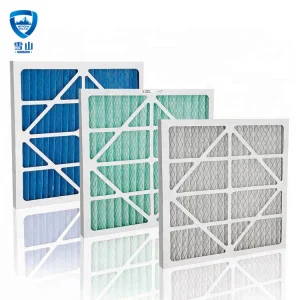
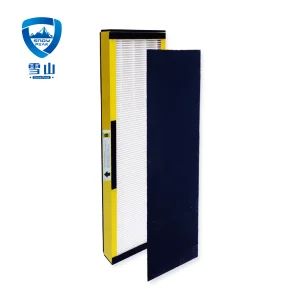
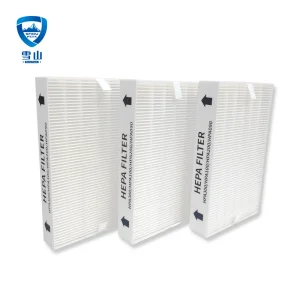

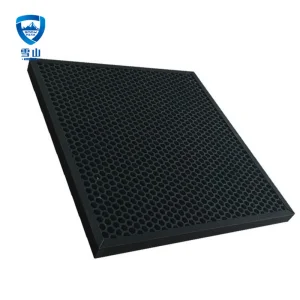



MERV 14 Technical Performance Benchmarks & Standards
Understanding the physics of Minimum Efficiency Reporting Value (MERV) 14 air filters under ASHRAE 52.2 and their international standard equivalents.
The standard test procedure for air cleaning devices, governed by ASHRAE 52.2-2017, classifies filters based on their minimum fractional efficiency across three specific particle size ranges: E1 (0.3 to 1.0 microns), E2 (1.0 to 3.0 microns), and E3 (3.0 to 10.0 microns). A verified MERV 14 filter serves as a critical tipping point in commercial heating, ventilation, and air conditioning (HVAC) systems. It bridges the performance gap between general dust-loading pre-filters (MERV 8-11) and ultra-clean HEPA filtration solutions (H13-H14).
| Standard Framework | Rating Classification | Target Pollutants Captured | Primary Commercial Application |
|---|---|---|---|
| ASHRAE 52.2 (USA) | MERV 14 | Bacteria, droplet nuclei, fine auto emissions, oil mist, smoke | Commercial Real Estate, Cleanroom Pre-filtration, Hospitals |
| ISO 16890 (Global) | ISO ePM1 70% – 85% | Sub-micron urban smog, combustion particles, soot, pollen | Advanced HVAC Units, Data Centers, Semiconductor Sub-fabs |
| EN 779:2012 (Legacy EU) | F7 / F8 Fine Filter | Fine particulate matter (PM2.5 / PM1.0), microscopic spores | Industrial Air Handling Units (AHUs), Pharmaceutical Plants |
| Eurovent 4/11 | Class B / Class A Energy Rating | Operational energy efficiency optimization per pressure drop | LEED & WELL Certified Smart Green Buildings |
Many low-cost wholesale MERV 14 filters rely heavily on temporary electrostatic charges (electret treatment) applied to coarse synthetic fibers. While initial test results show high efficiency, continuous exposure to sub-micron airborne oil mists and high ambient humidity degrades the charge, causing the operational rating to drop to MERV 10 or lower. Premium B2B manufacturers utilize mechanically stable nanofiber laminates or microglass matrix structures that maintain true MERV 14 efficiency throughout their entire operational life cycle.
Global Commercial & Industrial Status of MERV 14 Filtration
Examining macroeconomic demand, regulatory compliance drivers, and regional adoption rates across key global markets.
North American HVAC Mandates
Driven by updated ASHRAE Epidemic Task Force guidelines and indoor environmental quality (IEQ) standard revisions, North American commercial properties are transitioning from MERV 8 baseline filters directly to MERV 13 and MERV 14. Buildings adhering to LEED v4.1 Operations and Maintenance (O+M) earn higher points by specifying MERV 14 media to capture bio-aerosols and PM2.5 contaminants effectively.
European Union Energy Regulations
In Europe, the EN 16798-3 ventilation standard strictly links indoor air quality (IDA classes) with outdoor air quality (ODA classes). Under ISO 16890, MERV 14 equivalents (ISO ePM1 70%-80%) must balance particle capture with minimal fan power consumption. Manufacturers exporting to EU markets must provide low-pressure-drop synthetic media rated under Eurovent energy efficiency classes A+ to B.
Asia-Pacific Industrial Expansion
Rapid industrialization across China, Southeast Asia, and India has surged wholesale demand for MERV 14 filters as pre-filters for semiconductor wafer fabs, high-density data centers, and pharmaceutical manufacturing facilities. High ambient dust concentrations require MERV 14 media with superior dust-holding capacity (DHC) to prevent early blinding of expensive downstream terminal HEPA filters.
Localized Application Scenarios & System Integration
Detailed macro-level engineering solutions designed for specific critical environments and commercial building architectures.
Commercial Healthcare & Isolation Facilities
Hospital patient rooms, outpatient clinics, and surgery center waiting areas require continuous mitigation of airborne pathogens, bacteria, and virus-carrying nuclei (0.3 to 1.0 micron range). MERV 14 filters serve as primary recirculating filters in multi-stage Air Handling Units (AHUs), providing high-efficiency protection while avoiding the excessive static pressure drop associated with HEPA upgrades.
Hyperscale Data Centers & Server Rooms
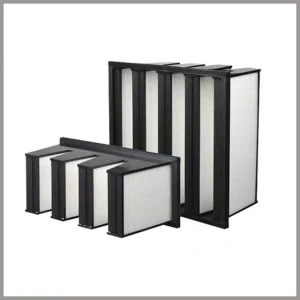
Particulate matter contamination inside server rooms can cause severe equipment damage through conductive anodic filament (CAF) formation and thermal insulation on microprocessors. Installing MERV 14 compact V-bank or pleated filters in direct expansion (DX) and chilled water cooling systems removes corrosive particulate matter, ensuring 99.9% uptime compliance.
Automotive Spray Paint Booths & Industrial Finishing
Surface coating operations require ultra-clean supply air to eliminate cratering, dust nibs, and surface defects on paint finishes. MERV 14 multi-pocket bag filters or mini-pleated panel filters are installed in fresh-air makeup units to capture incoming atmospheric particulate down to 0.3 microns before air reaches the spray zone.
In wholesale HVAC procurement, the initial purchase price of a MERV 14 filter accounts for only 10-15% of its total operational cost. The remaining 80-85% is driven directly by fan electrical energy consumption dictated by the filter's pressure drop (ΔP). Selecting engineered low-resistance MERV 14 media (initial resistance ≤ 0.28" w.g. at 500 FPM) saves thousands of kilowatt-hours per AHU annually:
Energy Cost ($) = [Airflow (CFM) × Avg Pressure Drop (in. w.g.) × Operating Hours × 0.746] / [6356 × Fan Efficiency × Motor Efficiency] × Energy Rate ($/kWh)
Technical Roadmap & Next-Generation Manufacturing Outlook
Innovations shaping the future of industrial filtration: from gradient-density synthetic meltblowns to IoT smart sensor integration.
Dual-Layer Gradient Nanofiber Technology
Traditional single-layer media blinds quickly as surface dirt accumulates. Next-gen MERV 14 manufacturers employ multi-stage electrospinning to create gradient-density media. The outer layer traps coarse particles (3.0–10.0 μm) while the inner ultrafine nanofiber matrix captures fine particles (0.3–1.0 μm), effectively doubling the dust-holding capacity (DHC) while maintaining low initial resistance.
IoT-Enabled Dynamic Pressure & RFID Tracking
Smart building automation systems (BAS) are adopting RFID-embedded MERV 14 filter frames paired with wireless differential pressure sensors. OEM manufacturers are designing custom filter frames equipped with unique electronic identification codes, enabling automated facility management software to monitor real-time dust loading, predict exact filter change-out schedules, and prevent premature replacements.
Bio-based & Recyclable Circular Media
Environmental, Social, and Governance (ESG) mandates are driving wholesale suppliers to transition from petroleum-derived polymers to bio-synthetic Polylactic Acid (PLA) non-woven fibers and fully recyclable aluminum/cardboard frames. These eco-friendly MERV 14 filters offer incinerable disposal options with reduced carbon emissions, assisting corporate clients in achieving Net-Zero carbon goals.
Featured Wholesale Air Filtration Solutions (Part 2)
Explore specialized V-bank HVAC modules, cleanroom gel-seal HEPA elements, composite activated carbon layers, and customized OEM replacement solutions.





OEM/ODM Manufacturing Process & Quality Control Systems
How direct factory partners ensure strict dimensional tolerances, leak-free seals, and consistent fractional arrestance performance across large wholesale production runs.
Automated Pleat-Pack Precision
Modern wholesale MERV 14 production relies on CNC controlled rotary hot-melt pleating machinery. Uniform pleat spacing supported by continuous hot-melt adhesive beads eliminates pleat collapse under high airflow velocities (up to 600 FPM), maintaining an evenly distributed surface area and low static pressure.
Rigid Frame Construction & Sealing
Structural integrity prevents unfiltered air bypass. Factory options include heavy-duty beverage board, galvanized steel, extruded anodized aluminum, and ABS plastic frames. All pleat packs are fully potted in polyurethane sealants around the perimeter to seal against air leaks under turbulent duct conditions.
Four-Stage Quality Control Protocol
Every wholesale batch follows strict quality assurance: IQC (Incoming Quality Control testing on raw meltblown/glass media), IPQC (In-Process QC checking pleat counts and glue bead adhesion), FQC (Finished Goods QC verifying resistance and physical dimensions), and OQC (Outgoing QC inspecting packaging and drop-test resilience).
Wholesale MERV 14 Filters B2B Procurement FAQ
Expert answers to common engineering, retrofit, and wholesale procurement questions.
MERV 13 filters capture 50% to 74% of E1 particles (0.3 to 1.0 microns), whereas MERV 14 filters capture 75% to 84% of E1 particles. For facilities prioritizing bio-aerosol mitigation, virus-carrying droplet nucleus capture, or fine industrial dust protection, MERV 14 offers a significant step up in air clean delivery rate (CADR) with only a marginal increase in static pressure drop.
Not necessarily. While legacy standard MERV 14 filters had high static resistance, advanced synthetic mini-pleat and deep V-bank designs maintain initial resistance levels as low as 0.25 to 0.30 inches water gauge at standard 500 FPM airflow velocities. Ensure system fan curves are evaluated and select high-capacity pleated filters to optimize face velocity.
In standard commercial office environments equipped with MERV 8 pre-filters, MERV 14 secondary filters typically last between 6 and 12 months. In industrial settings, data centers, or high-pollution urban areas, replacement is best dictated by differential pressure gauges when resistance reaches the manufacturer's recommended final resistance limit (usually 1.0" w.g.).
Yes. Direct factory manufacturers offer complete OEM and ODM services. Custom frame depths (1-inch, 2-inch, 4-inch, and 12-inch V-bank modules), custom face dimensions, specialized gasket applications (EVA or neoprene), and private-label packaging are routinely tailored to meet distributor and procurement specifications.
Synthetic meltblown media is shatterproof, moisture-resistant, and highly resilient during handling and installation, eliminating fiber shedding risks. Microglass media offers exceptional mechanical efficiency with zero electrostatic decay dependence, making it ideal for continuous high-humidity or high-temperature industrial environments. Manufacturers select the optimal media matrix based on the client's specific application requirements.