
Featured OEM/ODM Industrial & Commercial Filtration Solutions
Explore our high-efficiency replacement cartridges, custom HEPA elements, and industrial air handling filter media manufactured to international cleanroom and HVAC standards.
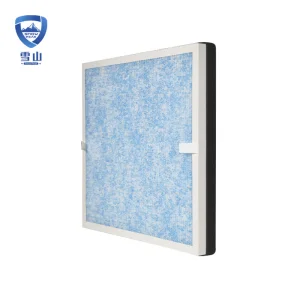


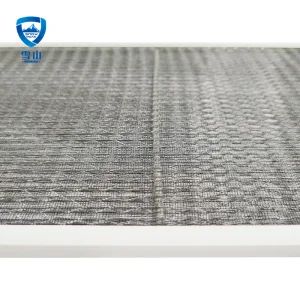
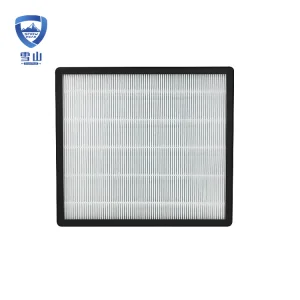
The Engineering Mechanics of MERV 16 Carbon Filtration
A rigorous technical breakdown of dual-phase particulate capture and gas-phase molecular adsorption in critical HVAC environments.
ASHRAE 52.2 MERV 16 Standard
MERV 16 represents the upper tier of standard HVAC filtration. According to ASHRAE Standard 52.2 test procedures, MERV 16 filters must achieve ≥95% efficiency for sub-micron particulate matters in the E1 size range (0.3 to 1.0 microns), rivaling cleanroom-grade HEPA filters while maintaining superior volumetric airflow rate (CFM) across central handling units.
Dual-Mechanism Co-Polymer Media
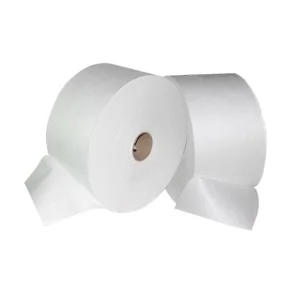
Unlike conventional single-function media, advanced MERV 16 carbon media integrates electrostatically charged synthetic meltblown microfibers with high-surface-area Granular Activated Carbon (GAC) or carbon powder matrix. This hybrid structure captures physical particulate pollutants while simultaneously scrubbing gas-phase VOCs via van der Waals physisorption.
Gas-Phase Adsorption Kinetics
With CTC (Carbon Tetrachloride) adsorption numbers ranging between 60% and 90%, the incorporated carbon matrix chemically traps Volatile Organic Compounds (VOCs), formaldehydes, sulfur dioxide (SO2), nitrogen dioxide (NO2), wildfire smoke residuals, and municipal odors without causing chemical off-gassing under varying humidity.
Information Gain Insight: Minimizing Pressure Drop (ΔP) in Combined Media
Traditional dual-stage filtration systems (a separate MERV filter followed by a heavy carbon tray) often result in severe initial static pressure penalties exceeding 0.75 in. w.g. (186 Pa), increasing fan power consumption by up to 35%. Next-generation MERV 16 carbon composite media engineered by specialized China manufacturers utilizes multi-layer gradient-density pleating. By thermal-bonding carbon micro-granules directly to low-resistance synthetic substrate, initial pressure drop is contained under 0.32 in. w.g. at 400 FPM (2.0 m/s), significantly lowering Total Cost of Ownership (TCO) for facility managers.
| Filtration Parameter | Standard MERV 13 Carbon | MERV 16 Carbon Composite | True HEPA (H13) + Carbon Bank |
|---|---|---|---|
| E1 Capture Rate (0.3 - 1.0 µm) | < 50% | ≥ 95% | ≥ 99.97% |
| E2 Capture Rate (1.0 - 3.0 µm) | 85% - 90% | ≥ 95% | ≥ 99.99% |
| Initial Static Pressure Drop (ΔP) | ~0.22 in. w.g. (55 Pa) | ~0.32 in. w.g. (80 Pa) | ~0.85 in. w.g. (210 Pa) |
| VOC & Odor Scrubbing Efficiency | Moderate (300-400 g/m²) | High (600-900 g/m²) | Extremely High (>1200 g/m²) |
| HVAC Fan Retrofit Capability | Direct Replacement | Direct Replacement | Requires High-Pressure Blower Upgrade |
| Primary B2B Application | Commercial Offices / LEED v4 | Cleanrooms, Healthcare, Fabs | Bio-Safety & Nuclear Facilities |
Global Market Evolution & B2B Sourcing Demand Trends (2025–2030)
Macroeconomic drivers, climate events, and regulatory standards accelerating global adoption of high-tier MERV 16 activated carbon filtration systems.
1. Climate Volatility & Wildfire Smoke
Recurrent wildfire events across North America, Europe, and Australia have transformed air quality management. Wildfire emissions consist of dangerous fine particulate matter (PM2.5) combined with toxic VOCs such as benzene, formaldehyde, and acrolein. Facilities are rapidly migrating from basic dust filters to MERV 16 carbon composite systems capable of arresting both particulate and gaseous fractions simultaneously.
2. ESG & Decarbonization Mandates
Global property developers and industrial conglomerates face aggressive ESG building ratings (WELL Building Standard v2, LEED v4.1, and BREEAM). Installing MERV 16 carbon filters improves Indoor Environmental Quality (IEQ) metrics without necessitating high-horsepower fan retrofits, ensuring compliance with decarbonization goals while protecting occupant health.
3. Semiconductor & High-Tech Manufacturing Growth
As microchip node geometries shrink below 3nm, Airborne Molecular Contaminants (AMC) and sub-micron particulates present existential yield risks to semiconductor fabrication plants. MERV 16 carbon filters serve as essential pre-filtration stages to cleanroom FFU (Fan Filter Units), safeguarding expensive ULPA/HEPA final filters from premature loading.
China Industry 4.0: Supply Chain Resilience & Manufacturing Scale
How advanced manufacturing ecosystems in Shenzhen and Guangdong deliver unmatched precision, capacity, and cost-efficiency to international OEM buyers.
Automated High-Speed Carbon Impregnation
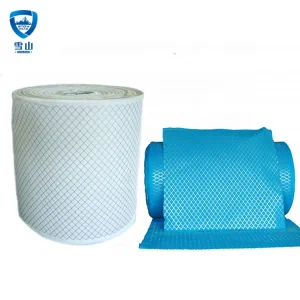
Modern Chinese filtration plants utilize fully automated continuous roll-to-roll impregnation lines. Ultrasonic bonding technology ensures uniform carbon granule distribution across synthetic substrates without using solvent-based adhesives that blind carbon pores. This automated process achieves razor-thin tolerances in basis weight (g/m²) and guarantees consistent gas-phase capacity order after order.
Agile Prototyping & OEM Customization
From custom frame dimensions (moisture-resistant beverage board, anodized aluminum, galvanized steel, or injection-molded ABS plastic) to specialized carbon chemical impregnations (such as KI-impregnated carbon for acid gases or phosphoric acid treating for ammonia), Chinese manufacturers offer rapid engineering turnarounds—delivering prototype samples within 3 to 5 business days.
Rigorous 4-Tier Quality Control Protocol
Tier-1 China manufacturers implement stringent quality control workflows compliant with ISO 9001:2015 standards:
- IQC: Incoming raw media CTC activity testing and Mullen burst strength validation.
- IPQC: Online laser particle counters tracking pleat uniformity and edge-seal integrity.
- FQC: Batch sampling for ASHRAE 52.2 fractional efficiency and pressure drop curves.
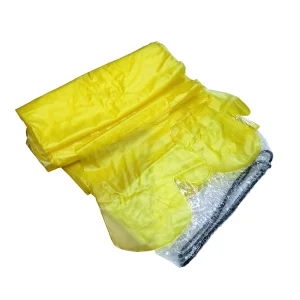
- OQC: Hermetic moisture-proof polybag packing and drop-test packaging certification.
Unrivaled Export Logistics & Port Synergy
Situated in Shenzhen—one of the world's premier shipping hubs—manufacturers leverage seamless multimodal shipping connections via Yantian, Shekou, and Hong Kong ports. This proximity reduces inland transit times, lowers container freight costs, and provides global B2B procurement managers with predictable supply chain lead times even during seasonal demand spikes.
Industrial & Commercial Application Matrix
Specific field deployment blueprints where MERV 16 carbon filters outperform standard HVAC media.
1. Commercial Real Estate & High-Rise Towers
In urban central business districts, fresh air intakes draw in vehicular exhaust (diesel soot, NO2) and restaurant odors. Deploying 4-inch deep-pleat MERV 16 carbon filters in Air Handling Units (AHUs) provides pristine indoor air for tenants, helping property owners achieve high IAQ scores and premium rental yields.
2. Healthcare Facilities & Bio-Pharma Isolation
Hospitals, surgical suites, and pharmaceutical compounding labs require ultra-clean environments. MERV 16 carbon filters capture sub-micron bacterial carriers, spore fragments, and anesthetic gas vapors, operating as reliable pre-filters upstream of final terminal HEPA units.
3. Data Center Micro-Corrosion Control
Data center server halls are vulnerable to airborne gaseous contaminants such as hydrogen sulfide (H2S) and sulfur dioxide (SO2), which cause micro-corrosion on circuit boards. MERV 16 carbon filters maintain ISA Standard 71.04 Severity Level G1 (Mild) environments, protecting critical IT infrastructure from unexpected downtime.
Localized Application & HVAC Retrofit Engineering
Tailored filtration specifications engineered for specific geographical climates and building retrofits.
North American HVAC Retrofit Protocol
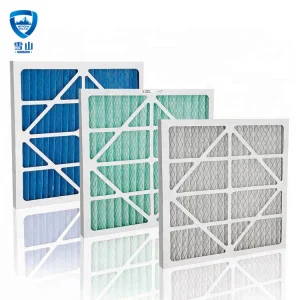
Most commercial buildings in the US and Canada utilize standard 2-inch or 4-inch filter tracks in rooftop units (RTUs). Custom MERV 16 carbon pleated filters allow building engineers to upgrade from basic MERV 8 filters directly to MERV 16 performance without changing filter frames, modifying ductwork, or overloading existing blowers.
European Union ISO 16890 Alignment
For European buyers requiring compliance with ISO 16890, MERV 16 carbon filters map directly to ePM1 90% / ePM1 95% classifications. Furthermore, all materials comply with EU REACH regulations and RoHS restrictions regarding volatile organic compounds and heavy metals in synthetic media adhesives.
Complete Wholesale Catalog & Industrial Media Rolls
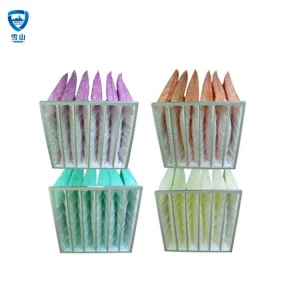
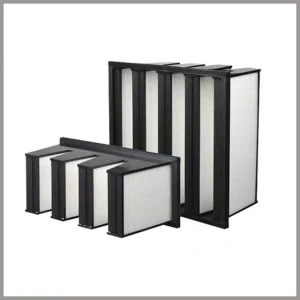
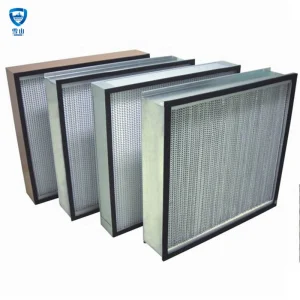
Explore our extended catalog of activated carbon adsorption media, synthetic pocket filters, and specialized cleanroom filter elements available for direct factory export.


Comprehensive B2B Procurement FAQ & Technical Answers
In-depth responses to the most critical technical, commercial, and operational questions asked by global enterprise sourcing teams.