
Explore our primary array of high-performance OEM replacement components, custom micro-structure filter pads, and industrial filtration solutions engineered at Shenzhen Snow Peak Clean Technology Co., Ltd.
-

OEM Customized corrugated humidifier wick cooling filter pad Factory, Service
-

-
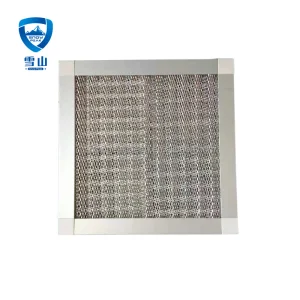
CE Certification Metal Washable Stainless Steel Mesh Air Filter - China Suppliers & Factory
-

Custom China PVC BIBO Filter Replacement Bags - Factory Supplier for Safe and Easy Filter Changes
-
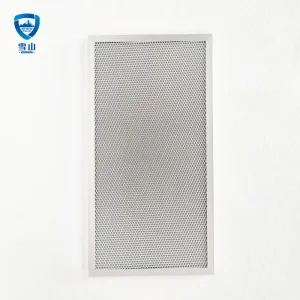
Custom High Performance Aluminum-Based Honeycomb Photocatalyst Air Purifier Filter Media
-

China China G2 G3 G4 Air Filter Roll Material - Green White Synthetic Fiber Suppliers & Factory
-

OEM Fiberglass deep-pleat HEPA filter high efficiency air filter with separator for clean room
-

CE Certification Customized Gel Seal HEPA Filters for Clean Rooms | High-Efficiency Air Filtration
As industrial design shifts toward ultra-compact electronics, wearable medical diagnostics, localized cleanroom micro-environments, and IoT smart home appliances, the global market for the smallest carbon filters has undergone a fundamental technological evolution. Modern procurement teams no longer seek rudimentary pelletized carbon trays; they require micro-engineered, structural gas-phase filtration media with high kinetic reaction speeds and minimal spatial footprints.
Micro carbon filters leverage surface-dominated adsorption pathways. By reducing transport distances inside the porous carbon matrix, adsorption kinetics increase up to 100-fold compared to traditional granular activated carbon (GAC), allowing effective residence times of under 0.05 seconds.
Engineered for constrained housings, miniaturized activated carbon units can be customized to dimensions as small as $10 \times 10 \times 2 \text{ mm}$. These form factors integrate directly into circuit boards, miniature pump manifolds, handheld gas analyzers, and PAPR respiratory hoods.
In semiconductor handling (FOUPs) and medical inhalers, carbon dusting causes catastrophic contamination. Our advanced immobilization techniques anchor carbon nanoparticles into polymeric matrices, eliminating particulate bypass without clogging interstitial airflow pathways.
Shenzhen Snow Peak Clean Technology Co., Ltd. operates a national high-tech manufacturing center equipped with cleanroom assembly lines and automated testing systems aligned with ISO 10121 and ASHRAE 52.2 standards.
Designing the world’s smallest carbon filters requires choosing the correct thermodynamic and physical structure for the active substrate. The table below provides an engineering comparison of micro-filtration media utilized by global OEMs.
| Substrate Technology | Pore Distribution Range | Adsorption Kinetics ($t_b$) | Structural Depth Min. | Primary Industrial Application |
|---|---|---|---|---|
| Activated Carbon Fiber (ACF) | Microporous (< 2.0 nm) | Ultra-Fast (< 0.01s residence) | 0.5 mm - 2.0 mm | Medical PAPR, Wearable Electronics, PCB Exhaust Vents |
| Honeycomb Carbon Monolith | Micro / Mesoporous (2 - 50 nm) | Moderate to Fast | 5.0 mm - 15.0 mm | Mini 3D Printer Enclosures, Laser Fume Extractors |
| Carbon-Impregnated PPI Foam | Macroporous (> 50 nm matrix) | Standard Dynamic Adsorption | 3.0 mm - 10.0 mm | Automotive Sensors, Appliance Pre-filtration |
| Synthetic Meltblown Carbon Composite | Multistage Gradient Pores | High Particle + Gas Dual Mode | 1.0 mm - 4.0 mm | Smart Home Desktop Purifiers, Vacuum Cleaners |
In thin-bed micro-carbon design, predicting volatile organic compound (VOC) breakthrough time ($t_b$) is governed by the Wheeler-Jonas model:
Where $\mathbf{W_e}$ represents dynamic adsorption capacity (g/g), $\mathbf{W}$ is carbon mass (g), $\mathbf{Q}$ is volumetric airflow rate ($\text{cm}^3/\text{min}$), $\mathbf{C_0}$ is inlet vapor concentration, and $\mathbf{k_v}$ is the overall mass transfer coefficient. For small carbon beds, Snow Peak engineers maximize $\mathbf{k_v}$ by functionalizing micropores with metal oxide catalysts (such as $\text{MnO}_2$ and copper complexes) to decompose lightweight gases like Formaldehyde ($\text{HCHO}$), Ammonia ($\text{NH}_3$), and Hydrogen Sulfide ($\text{H}_2\text{S}$) at room temperature.
Snow Peak’s micro carbon solutions cater to high-precision industries where space constraints and gas-phase purity are non-negotiable requirements.
Biocompatible micro carbon inserts protect patients from airborne volatile anesthetics, ozone generation from electrical equipment, and trace organic vapors in CPAP/BiPAP machines and lightweight powered air-purifying respirators (PAPRs).
- UL 900 flame-retardant compliance options.
- Zero chemical outgassing verified via GC-MS testing.
- Low breathing resistance under high flow rates ($< 20\text{ Pa}$ at $85\text{ L/min}$).
Wafer storage pods (FOUPs) and photolithography steppers require continuous removal of Airborne Molecular Contaminants (AMCs) such as organosilicones, acid gases, and dopants. Small carbon filters act as breather units to prevent yield loss.
- Extremely low ion leaching ($\text{Na}^+, \text{Cl}^-, \text{SO}_4^{2-} < 5\text{ ppb}$).
- Custom PTFE/Carbon composite membranes for dual AMC + particle filtration.
- Compact clip-in housing mechanisms.
Additive manufacturing using ABS, PLA, and photopolymer resins releases toxic styrene monomer fumes and ultrafine VOCs. Compact honeycomb carbon modules absorb odors inside small print chambers before room dispersion.
- High Carbon Tetrachloride (CTC) value (> 60% or 80%).
- Integrated HEPA mini-pleat combination filters.
- Long-life adsorption up to 300 printing hours.
Miniaturized desktop purifiers, personal neck-worn air filters, and smart indoor sensors utilize micro carbon screens to scrub ambient odors, tobacco smoke components, and cooking TVOCs in personal breathing zones.
- Custom geometric shapes: Round, oval, ultra-thin rectangular.
- Acoustically silent airflow impedance profiles.
- Automated high-speed OEM production lines.
Snow Peak enforces a stringent 4-stage quality control protocol across every manufacturing batch. Global B2B buyers receive full chemical analysis, structural integrity assurance, and compliance documentation for seamless regulatory approval.
Incoming raw material verification: Activated carbon iodine number testing, surface area analysis (BET), moisture content check, and fiber tensile strength audits.
In-process automated dosing inspection: Carbon distribution uniformity checks, hot-melt adhesive weight monitoring, and geometric laser dimensioning.
Finished product performance: Pressure drop ($\Delta P$) profiling, dynamic gas challenge testing (toluene/HCHO breakthrough), and frame drop-impact testing.
Outbound shipment audit: Vacuum packaging integrity checks, cleanroom dust-free bag sealing, custom label traceability barcode verification.
Get immediate answers to engineering, customization, minimum order quantities (MOQ), and performance specifications for miniature activated carbon filters.
Discover our secondary portfolio of replacement filters, cylindrical HEPA collectors, composite media, and specialized industrial ceiling filters engineered for global distribution.
-

Wholesale Honeywell HRF-AP100 True H13 HEPA Replacement Filter for HPA100 Series
-
CE Certification Customized Corrugated Humidifier Wick Cooling Filter Pad - High Efficiency
-

Custom High Efficiency HEPA Air Filter - Round Design, Factory Price from China Suppliers
-

Wholesale High Performance Cylindrical HEPA Dust Filter Collector - Customized H13 H14
-

Wholesale High Efficiency G4 M5 Pre Air Filter Cotton - 600G Ceiling Filter for Painting Room
-

ODM China Suppliers Factory Multistage HEPA Carbon Composite Air Filter for Air Purifiers
-

Wholesale Washable Nylon Mesh Air Filter - Coarse Dust Filter for Air Conditioning
-
Custom China Suppliers G4 M5 600G Ceiling Filter Cotton - Efficient Air Filter Material
Partner with China's Premier Micro-Filtration Manufacturer
Looking to develop custom smallest carbon filter modules for your next-generation medical device, semiconductor enclosure, or consumer electronic product? Contact Shenzhen Snow Peak Clean Technology Co., Ltd. today for engineering consultations, rapid prototyping, and wholesale OEM factory pricing.